
Nunna mango market lies silent as season begins

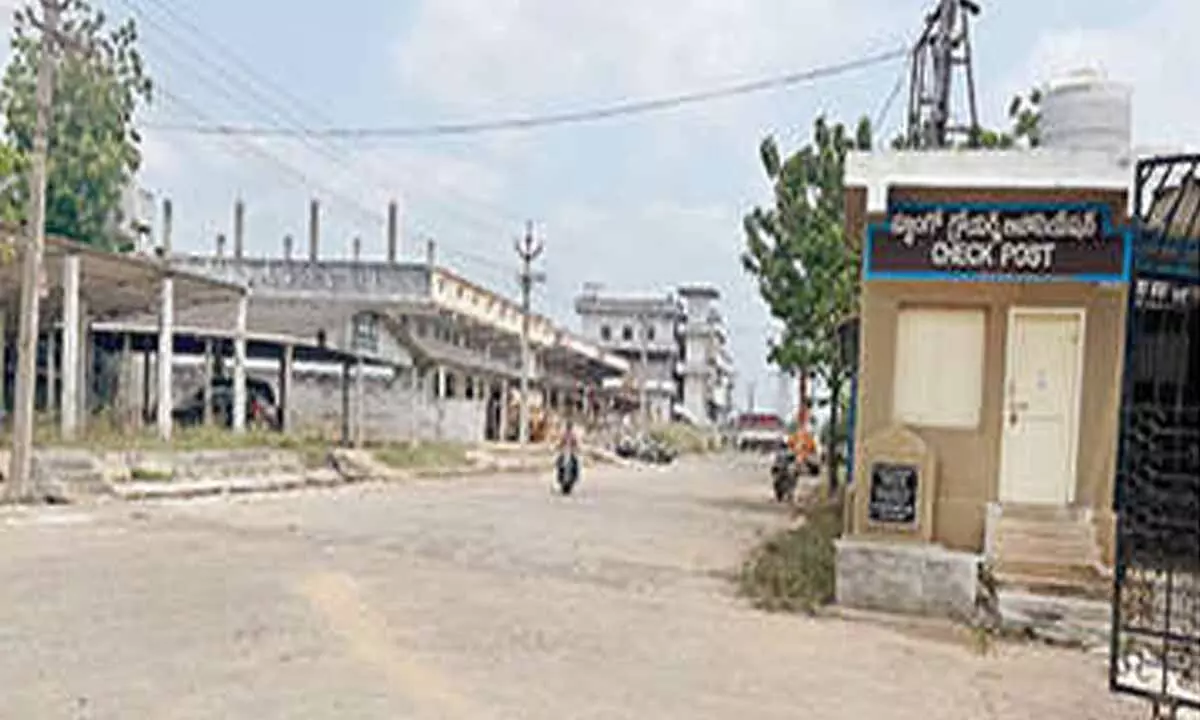
Vijayawada: Despite the onset of the summer mango season, Asia’s largest mango trading hub at Nunna near Vijayawada, is yet to witness the usual buzz of activity, raising concerns among traders and mango growers.
Traditionally, mango trading at the Nunna market begins in early March and gathers momentum by the time of Ugadi, marked by the customary ‘Dastram’ ceremony. However, this year, traders have not even performed the ritual, indicating a lack of enthusiasm and uncertainty surrounding the season. Once a vibrant hub bustling with trade, the market remains unusually subdued. The Nunna mango market, which was shifted from Kedareswarapeta to Nunna in 1999 and is managed by the Nunna Mango Growers’ Association, has historically handled mango trade worth hundreds of crores of rupees each season.
Farmers from the erstwhile Krishna region - now comprising Krishna, NTR, and parts of Eluru districts - as well as from West Godavari in Andhra Pradesh and Khammam in Telangana, have traditionally brought their produce here. The market also attracted buyers from northern states such as Gujarat, Rajasthan, Punjab, Haryana, Delhi, Uttar Pradesh, and Himachal Pradesh, many of whom would stay in Nunna for months to procure and transport mangoes.
However, the scenario has changed significantly this year. Traders cite a sharp decline in mango production and a growing shift towards decentralised trading as key reasons for the slowdown. The number of traders has dropped drastically - from around 80 in previous years to fewer than 30 this season - reflecting reduced confidence and shrinking profit margins.
Another major factor is the changing buying pattern. Many bulk buyers are now visiting mango orchards directly, purchasing produce from farmers, and exporting it without routing it through the Nunna market. This has significantly reduced arrivals at the traditional trading hub.
Farmers, too, are showing less interest in bringing their produce to Nunna. Instead, they are opting to sell in nearby mini-markets and local mandis to cut transportation costs and avoid price uncertainties. The rise of such localised trading centres has further weakened the importance of the once-dominant mango market.
According to officials, mango cultivation across Andhra Pradesh spans nearly 4 lakh hectares, with approximately 62,270 hectares in the erstwhile Krishna district alone. Yet, the expected inflow into Nunna has not materialised so far.
Traders warn that unless production improves and timely interventions are made, the decline could deepen in the coming years. They have urged the government to step in with better infrastructure, transparent pricing systems, and incentives to attract both farmers and traders back to the market. With the peak mango season fast approaching, stakeholders remain cautiously optimistic that arrivals may pick up in the coming weeks, reviving activity at this iconic mango trading centre.When contacted by 'The Hans India', Nunna Mango Growers’ Association general secretary I Srinivas Reddy said that mango trading at the Nunna market is likely to commence by the end of March. He noted that compared to previous years, the number of traders is expected to remain lower this season. He further stated that mango yields have declined, leading to a delay in the start of trading activity this year.


