
Global Helium Crisis Looms as Iran Conflict Chokes Supply Lines

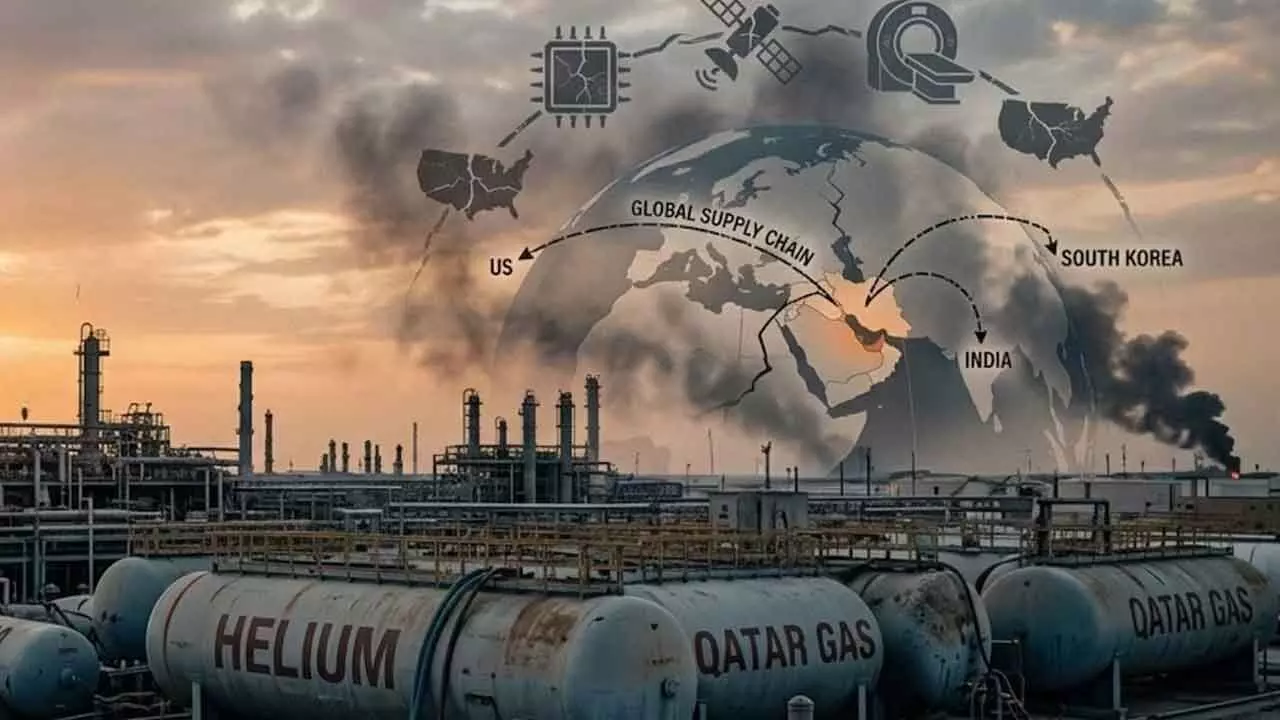
A quiet but catastrophic shortage is rippling through the global economy as the escalating conflict between the United States, Israel, and Iran moves beyond energy markets, threatening the backbone of modern healthcare and high-tech manufacturing.
While the world watches oil and gas prices, industry experts warn that the real "invisible" threat is the sudden disappearance of helium. Unlike natural gas, which can be sourced from various global reserves, helium is a rare byproduct of gas extraction, and the current war has effectively paralyzed nearly one-third of the world’s supply.
The Qatar Connection: A Single Point of Failure
The crisis began in early March 2026, following drone and missile strikes on Qatar’s Ras Laffan Industrial City, the world’s largest hub for helium production. Qatar alone accounts for approximately 30–38% of global helium output.
On March 2, QatarEnergy declared force majeure, halting production indefinitely. Compounding the issue is the effective closure of the Strait of Hormuz to Western shipping. Because helium must be transported in specialized cryogenic ISO containers at a bone-chilling -268.9°C, it cannot easily be rerouted via land or traditional air freight.
"We are looking at the most significant disruption to the helium market in history," says Phil Kornbluth, President of Kornbluth Helium Consulting. "It isn't just about production; it's about the fact that this gas literally evaporates if it sits in a stranded container for too long."
Industries on the Brink
The "Emerging Supply Chain Risks" are no longer theoretical. Three major sectors are currently facing "red alert" disruption levels:
1. Healthcare: The MRI "Quench" Risk
MRI scanners rely on liquid helium to cool superconducting magnets. Without a constant supply, these magnets can "quench"—a process where the liquid helium boils off rapidly, potentially causing millions of dollars in permanent damage to the machine.
* Current Impact: Diagnostic centers in Asia and Europe report spot prices for helium have surged by 70–100% in the last month.
* The Stake: Millions of life-saving scans for cancer, neurological disorders, and cardiac issues are at risk of being postponed.
2. Semiconductors: The AI Build-out Stalls
Helium is essential for cooling silicon wafers and creating the ultra-clean environments required for chip lithography.
* The Chokepoint: South Korean giants like Samsung and SK Hynix are particularly vulnerable, as they import roughly 65% of their helium from Qatar.
* The Ripple Effect: A shortage here delays the production of chips for smartphones, automobiles, and the servers powering the global AI boom.
3. Aerospace and Defense
Space agencies and private firms (like SpaceX and Blue Origin) use helium to "purge" rocket fuel tanks.
* The Risk: Without helium to maintain pressure and clear lines, satellite launches and deep-space missions face indefinite grounding.
A Logistical Nightmare
Shipping companies like Maersk and Hapag-Lloyd have rerouted vessels around Africa’s Cape of Good Hope to avoid the conflict zone. This adds:
* 3,500 nautical miles to the journey.
* 10–14 days of transit time.
* $1 million in additional fuel costs per voyage.
For helium, time is the enemy. Because the gas continuously "boils off" during transit, the extended journey means significantly less usable product arrives at its destination, even if the ships make it through.
The Search for Alternatives
The 2026 crisis has accelerated a desperate search for "primary helium"—deposits where helium is the main target rather than a byproduct. Projects in Tanzania, Canada, and the United States are being fast-tracked, but experts warn these sources won't be online in time to prevent a "helium winter."
As the conflict in the Middle East shows no signs of cooling, the tech and medical worlds are learning a hard lesson: some of the most critical components of the 21st century are the ones we can't even see.


