
With deals at Wings India, Indo-Russian cooperation in civil aviation can fly high

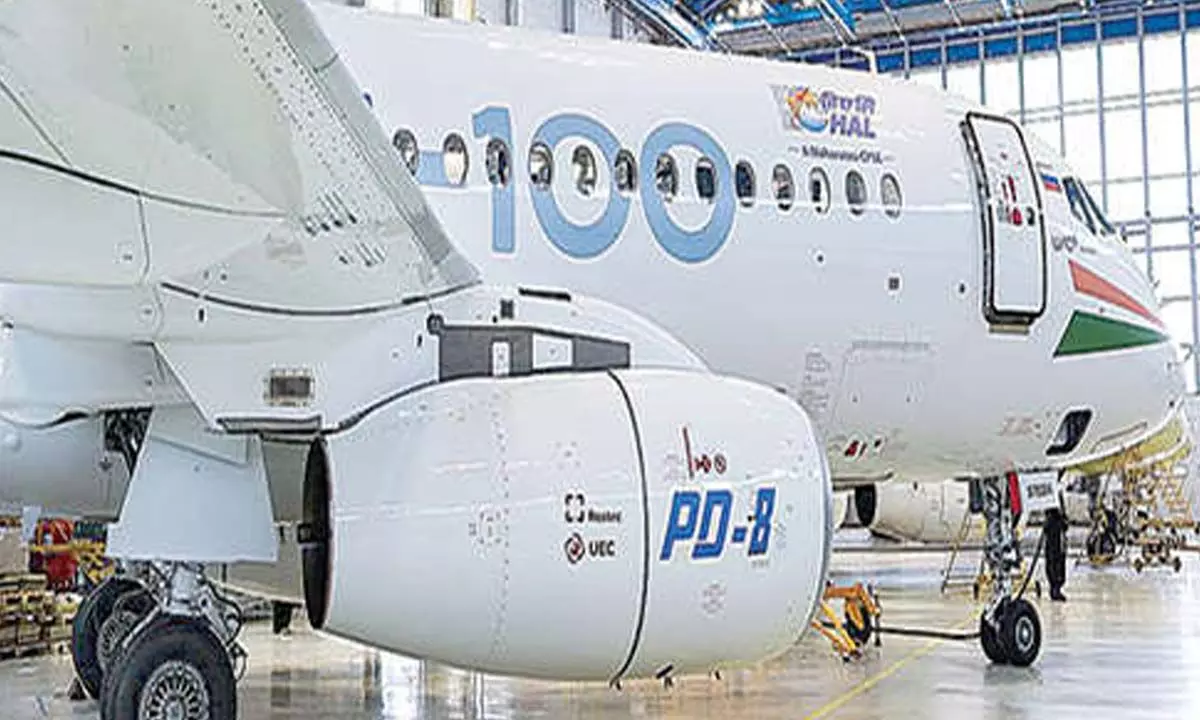
HAL signs MoU with Russia’s UAC to produce SJ-100 civil commuter aircraft in India
Based on recent developments in January 2026, including announcements at the Wings India 2026 exhibition in Hyderabad, the expected Indo-Russian aviation deals are heavily focused on civil aviation manufacturing, regional connectivity, and long-term industrial partnerships, marking a shift from traditional military-only cooperation. Hindustan Aeronautics Ltd (HAL) has signed a Memorandum of Understanding (MoU) with Russia’s United Aircraft Corporation (UAC) to produce the SJ-100 civil commuter aircraft in India. The plan involves initiating a ‘semi-knocked down’ (SKD) assembly in India within three years, with a goal to fully indigenize production later. HAL is in discussions with GIFT City firms to lease 10 to 20 flyaway SJ-100 aircraft from Russia to quickly deploy them in the Indian market.
The 87–98 seat SJ-100 aims to fill a gap in India’s regional, short-haul market, with an estimated demand for over 200 such aircraft in the next decade.
The SJ-100 is an efficient and high-tech commercial aircraft. The deal aims at reducing dependence on imports of civil aircrafts from big western players. The deal puts India’s agenda to emerge as a civil aircraft manufacturer back on track. These SJ-100 will augment regional connectivity, while boosting India’s civil aviation industry. The aircraft targets the higher end of the regional jet market. It competes with smaller aircraft from Embraer’s E-Jet family and is expected to be priced in the $30 million to $36 million range.
UAC will provide technical assistance and, in some cases, support in re-equipping HAL’s facilities in Nashik and Kanpur for civilian aircraft production. The collaboration focuses on creating an ‘import-substituted’ version of Russian aircraft to ensure supply chain stability.
The initiatives are aimed at strengthening the ‘Make in India’ initiative and reducing reliance on Western aerospace suppliers for regional connectivity. The cooperation extends to potential future co-development of longer-haul aircraft. Furthermore, Flamingo Aerospace (India) has signed an agreement with UAC for the supply of six Il-114-300 regional turboprop aircraft. The deal includes technology transfer for setting up Maintenance, Repair, and Overhaul (MRO) facilities in India by 2028. The IL-114-300 is a 68-seat turboprop aircraft designed for short runways and challenging operating conditions. It is positioned as a competitor to aircraft such as the ATR 72-600 and the Dash-8 Q400, which currently dominate India’s regional routes. Industry estimates suggest the aircraft could be priced between $20 million and $35 million once mass production stabilises, broadly in line with existing turboprop options. These deals are being discussed at a time when India is facing a significant demand for regional aircraft, and Russia seeks to expand its civil aviation footprint amid Western sanctions. The partnerships are seen as a “new chapter” in Indo-Russian relations that goes beyond conventional defense ties, aiming to build a full-scale civil aviation ecosystem.
The rampantly growing civil aviation in India is in need of aircrafts. Among salient features about Indian industry is its bulky domestic travel and a large section of middle class travellers.
In order to accomodate them, smaller aircrafts can prove to be game changer. Designed using cutting-edge technologies, SJ-100 typically seats 87 to 108. Currently, it is operated by nine Russian airlines and several Russian and foreign government operators. Russia’s decision to showcase its civil aircraft, the Ilyushin IL-114-300 and the Superjet SJ-100, at Wings India 2026 in Hyderabad marks a new phase in India–Russia economic cooperation, with a clear focus on civil aviation, a report has said. The move signals Moscow’s intent to tap into India’s fast-growing regional aviation market through long-term industrial partnerships rather than a simple aircraft sales push. So far, India’s aviation growth has largely been driven by massive aircraft orders placed by Indian airlines with Airbus and Boeing.
However, beyond these headline deals lies a fast-expanding regional aviation segment that connects tier-two and tier-three cities. Supported by airport expansion and the government’s UDAN connectivity scheme, this segment carries an estimated 18 to 36 million passengers every year and represents a multi-billion-dollar opportunity across aircraft purchases, leasing, maintenance, training and operations. Russia is now aiming squarely at this market. Given the long-standing defence and industrial ties between India and Russia, experts believe New Delhi could be open to allowing Russian manufacturers to set up local production and assembly lines under the ‘Make in India’ programme.
On jobs front, aircraft manufacturing and long-term support create high-skilled jobs in engineering, precision manufacturing, avionics and maintenance, and help build supplier ecosystems that can last for decades. Maintenance, repair and overhaul is expected to be a major focus area if Russian civil aircraft enter the Indian market. Most of an aircraft’s economic value is generated after delivery through spares, upgrades, training and engine overhauls over its 25 to 30-year operational life.


