
After US-Iran talks fail, a longer war looms large

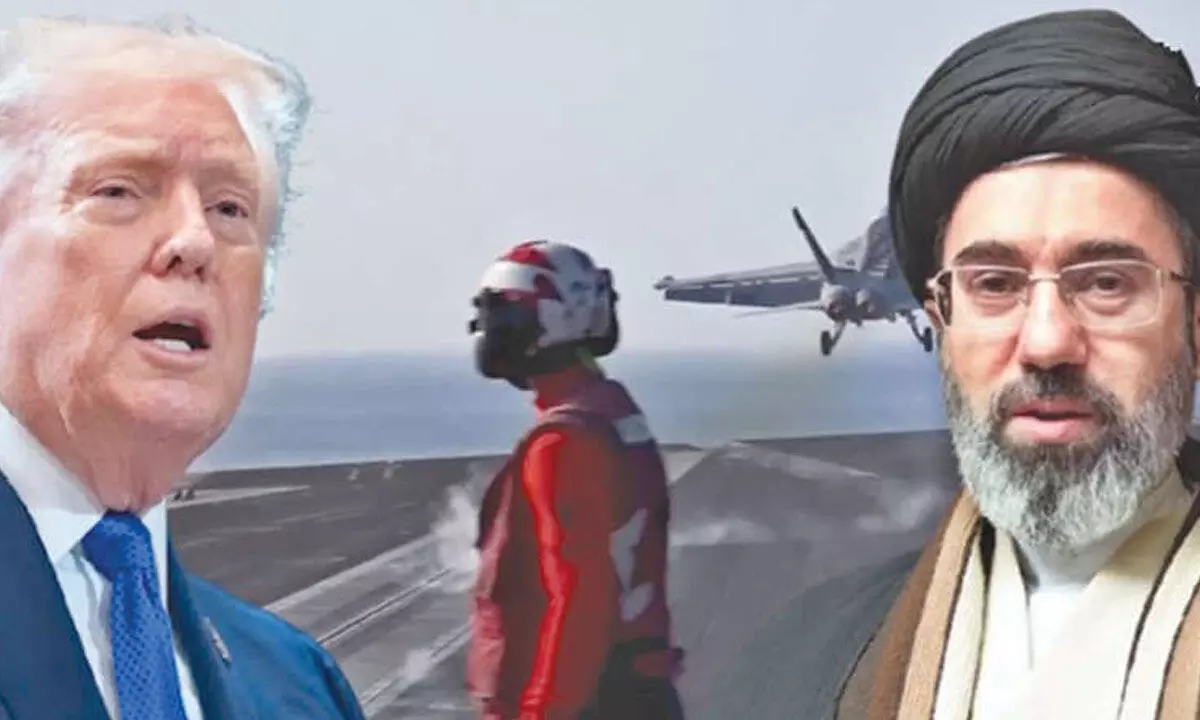
The failure of the 21-hour negotiations between the United States and Iran in Islamabad is not a big surprise, for both countries stuck to their respective positions. Iran’s intransigence over issues like its nuclear programme, control over the Strait of Hormuz, and war reparations vapourised any hopes of the end of hostilities in the Middle East. The US-Israel alliance, meanwhile, didn’t lower its guard; indeed, their war efforts continued, with only the US military halting kinetic action, and that too incomplete. While the US Vice-President J D Vance led talks with the Iranian delegation, two US Navy guided-missile destroyers reportedly attempted to pass through the Strait of Hormuz, evoking a sharp response from the Islamic Revolutionary Guard Corps Navy. Israel, which was not part of the negotiations in Islamabad, continued to pound Hezbollah bases in Lebanon, with its military neutralising at least 180 Hezbollah terrorists. In another development during the negotiations, Pakistan deployed fighter jets to Saudi Arabia. The two nations have a defence agreement, but this is the first time during the weeks-long war in Iran that such a move has been made.
What these developments suggest is that US President Donald Trump, while desirous of peace in the region, was not as desperate for the end of war as most experts and media pundits made it out to be. At any rate, a lasting peace with Tehran, which is absolutely committed to spreading jihad and building nuclear weapons, was never a realistic expectation. Vance said that Washington had put forward its “best and final” offer; the Iranians didn’t think so. They are unlikely to accept any agreement that significantly curtails their regional influence or their nuclear ambitions without substantial concessions in return, including sanctions relief and security guarantees. The absence of these elements, or even the perception that they were insufficient, would have made any agreement politically untenable for Iranian leadership. Moreover, the broader regional context further complicates the prospects for peace. The continued involvement of US allies, particularly Israel, and parallel military developments across the Middle East suggest that the conflict is not confined to bilateral tensions between Washington and Tehran. Instead, it is part of a larger geopolitical contest involving multiple actors with overlapping and often conflicting interests.
In such an environment, even a temporary agreement between the United States and Iran would struggle to produce lasting stability. The implication is that the conflict may evolve into a prolonged phase of managed confrontation rather than decisive resolution. Both sides seem prepared to absorb the costs of continued tension while avoiding full-scale war. This creates a fragile equilibrium, where sporadic escalations are likely, but a comprehensive peace settlement remains elusive. Diplomatic efforts may continue, but unless there is a fundamental shift in the strategic calculus of either side, they are unlikely to yield a breakthrough. In this sense, the failure of the Islamabad talks should not be seen as an endpoint, but as part of an ongoing cycle of negotiation and confrontation. It highlights the limits of diplomacy when underlying conflicts remain unresolved and underscores the reality that, in the current geopolitical climate, peace is often less a destination and more a distant aspiration. In other words, the war in the region may last longer than the world had bargained for.


