
India must expose Iran’s illegality in choking Strait of Hormuz

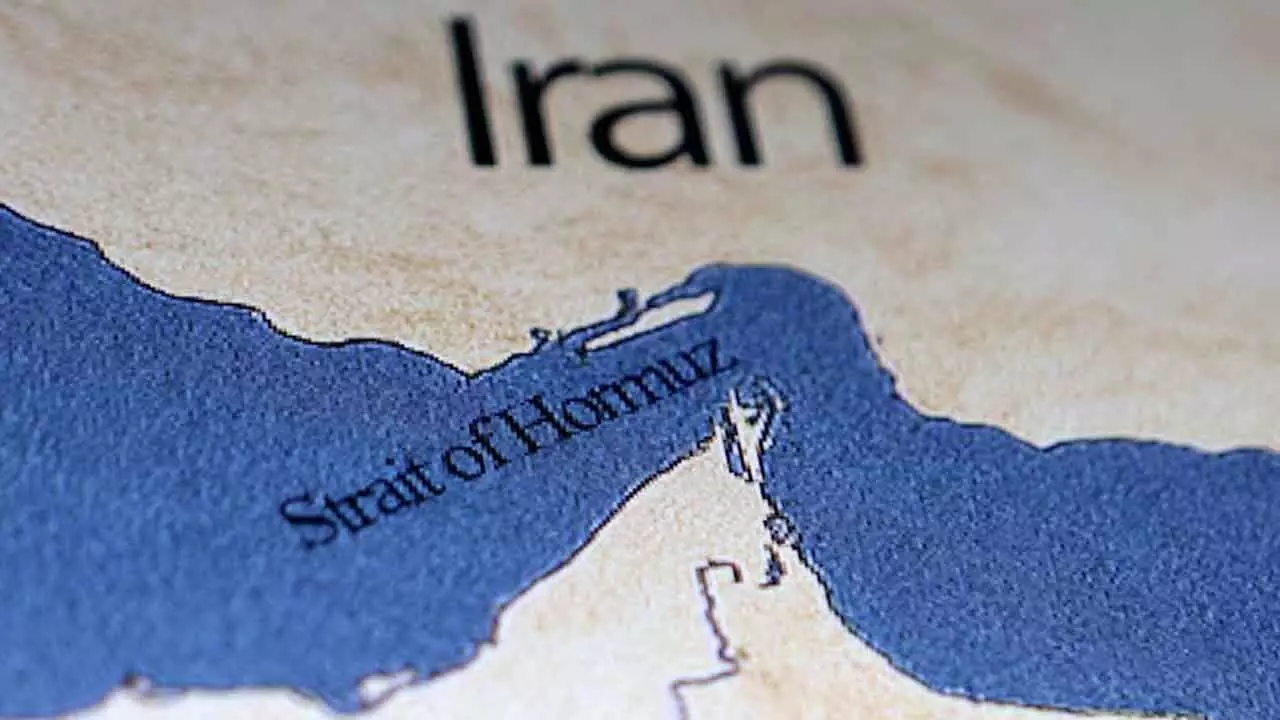
All eyes are on the two-day diplomatic engagement involving the United States and Iran that Pakistan is hosting. The entire world, especially those who depend on imported crude like India, will hope that the issue is resolved peacefully and the ceasefire marks the end of the war. Apart from Tehran’s relations with the US and behaviour in the region, its intransigence to choke the Strait of Hormuz will be on the agenda. Iran’s behaviour violates international law. As per the United Nations Convention on the Law of the Sea (UNCLOS), states bordering straits can neither block them nor demand money simply for allowing ships to pass through. They have the right to collect fees on ships for services such as piloting and tugging.
The reason is that straits are natural waterways—unlike canals that are manmade. Egypt and Panama are allowed to charge fees to pass through the Suez Canal and the Panama Canal. Washington will be represented by a team led by Vice-President J.D. Vance and comprise Donald Trump’s envoy Steve Witkoff and senior adviser Jared Kushner. Parliament Speaker Mohammad Bagher Ghalibaf, a former commander of the hardline Revolutionary Guard, and Foreign Minister Abbas Araghchi are reportedly representing Iran. Pakistani Prime Minister Sharif will also hold separate preliminary meetings with both sides. Incidentally, none of them is bothered about India’s interests.
While criticism of the Narendra Modi regime has been about Islamabad outdoing New Delhi in peace talks, the real failure of our government has been its inability to highlight Iran’s illegal hold of the Strait. India’s marginalisation in these high-stakes discussions underscores a deeper and more structural failure in its foreign policy approach toward West Asia. Despite being one of the largest consumers of imported crude oil and heavily dependent on maritime energy routes, it has not effectively articulated or defended its strategic interests regarding the Strait of Hormuz. This silence is particularly striking given the direct economic and security implications for India.
A substantial portion of its oil imports passes through the Strait, making any threat to its free navigation an immediate concern. Iran’s repeated signalling that it could restrict or choke this vital waterway during periods of heightened tension is not merely rhetorical brinkmanship—it represents a tangible risk to global energy markets and, by extension, to India’s economic stability. Yet, New Delhi has largely refrained from taking a firm and visible position on the legality of such threats under international law.
At a time when global supply chains are increasingly fragile and geopolitical tensions can have cascading economic effects; India must recalibrate its approach. It needs to move beyond passive observation and actively advocate for the principles that safeguard its interests—chief among them the freedom of navigation through international waterways. This would involve not only bilateral engagement with Iran but also coordinated efforts with other major energy-importing nations. In essence, the real test for India is not whether it can compete with Pakistan in the diplomatic theatre, but whether it can assert itself as a serious stakeholder in issues that directly impact its national interests. Until it does so, it will continue to find itself on the sidelines of conversations that shape outcomes critical to its future.


