







- Telangana targets 5 GW data centre capacity by 2029
- Women power crucial to achieving drug-free India: Kishan Reddy
- BRS seeks compensation for rain-hit, withered crops
- Hyderabad public transport hobbled by last-mile connectivity hitch
- 60.49% polling recorded in Krishna panchayat elections
- Online fertiliser enforcement module launched
- AP municipal polls record 62.5% turnout
- Elaborate security, traffic arrangements in place for President Murmu’s 3-day Mizoram visit
Lingering tariff talks to pull down tech spending globally
In Short
All these events have pulled down the global growth in last two years. Already, several nations are reeling under an uncertain tariff environment, which started two years ago after Trump came to power.

Share :
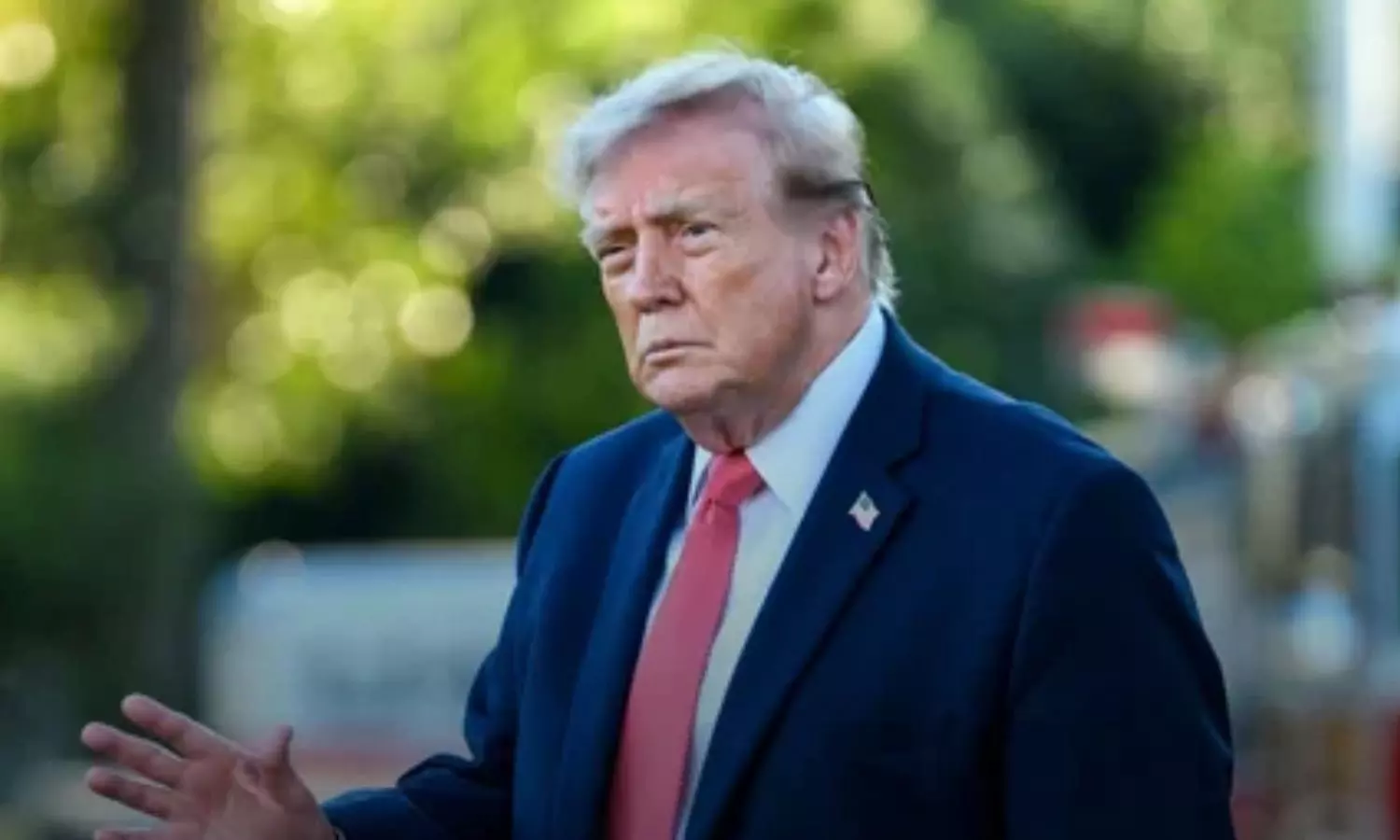
President Donald Trump
Tariff talks are back again with the US administration proposing to impose tariff on major trading partners. After Section 301 investigations into industrial subsidies and structural excess capacity, the USTR (United States Trade Representative) now has proposed tariffs up to 40 per cent on China, 35 per cent of Vietnam, up to 15 per cent for the European Union, Japan, South Korea, Switzerland and Taiwan, and 25 per cent on India. It also said that if a trade deal gets signed between India and the US, then the tariff rate will come down to 17 per cent. After mid-term elections, where the Democrats have gained majority control of the Congress, this is the first instance when the Trump administration has again started discussions about tariffs. This is definitely a worrying factor for the global growth. Already the world is going through a lot of chaotic conditions. With no end in sight to the Russia-Ukraine war and the Iran conflict ongoing, the world is going through a lot of supply chain disruptions. Oil price is ruling at a high, while a lot of commodities are going through supply chain shocks.
All these events have pulled down the global growth in last two years. Already, several nations are reeling under an uncertain tariff environment, which started two years ago after Trump came to power. Now, the tariff ghost seems to have made a comeback. Most experts are of the opinion that tariff imposed by the US at present circumstances will be more damaging than previous years. Because Iran conflict has already complicated the crude oil supply chain ecosystem. If high tariffs are imposed on the US’ trading partners, it will further complicate matters.
In the last two years, manufacturing, retail, automotive, and other sectors have seen low growth environment because of an inflationary environment across the world. Back home in India, tariffs of 25 per cent may not be that damaging as predicted for domestic enterprises with export exposure to the North American country. But it doesn’t augur well for the Indian IT industry. In the last two years, large IT services companies have posted low single digit growth rate owing to low technology spending by enterprises. As more than 60 per cent of revenue for most large and mid-tier IT firms comes from the US and Europe, these geographies determine their growth trajectory.
Since Trump administration’s moves on tariffs, both US and European economies have seen high inflation level, which has pulled down the spending powers of businesses there. Except BFSI (banking, financial services & insurance) vertical, all other business units like retail, manufacturing, hi-tech, and others have shown slow growth or de-growth in some instances. If the tariffs are imposed by US now, growth in these verticals will further suffer. In addition, the ongoing AI (artificial intelligence) wave will add to the risks. Currently, a significant part of enterprise spending is being diverted to purchase tokens from large AI companies like OpenAI, Anthropic and others. This is creating pressure on spending for legacy projects, which constitute a sizeable share of Indian IT firms’ revenue. So, any tariff talk will dampen the sentiment of clients further, who will hold back technology spend.
This definitely doesn’t augur well for the Indian IT companies, which are already navigating a tough situation. It will be better if US signs definitive trade deals with its major trading partners, ending the uncertainty around the whole tariff ghost. That kind of predictability will definitely help and is likely to push up technology spending globally.


