







- Tamil Nadu Government Apologises to Supreme Court Over Thirupparankundram Temple Lamp Row
- Black Friday 2026: iPhone 17 Pro vs iPhone 18 Pro – Where to Get the Best Deals?
- SCR announces special trains from Hyderabad for Sankranti
- Saurav Das moves Delhi High Court after allegedly being stopped from travelling to UK
- Dilip Ghosh mocks Congress over UP seat sharing talks, says party survives on ruckus and statements
- Annanagar wallows in civic neglect as bad roads, dirty water plague dwellers
- No solo rides, embrace shared mobility: CP Dr M Ramesh
- IRISET sharpens railway workforce skills
Modi’s annoyance at India Inc not without merit
In Short
At FICCI in New Delhi, PM Modi questioned India Inc on jobs, salaries, FTAs, and import reliance, while Supreme Court remarks on Vedanta arbitral awards spotlighted investor trust.

Share :
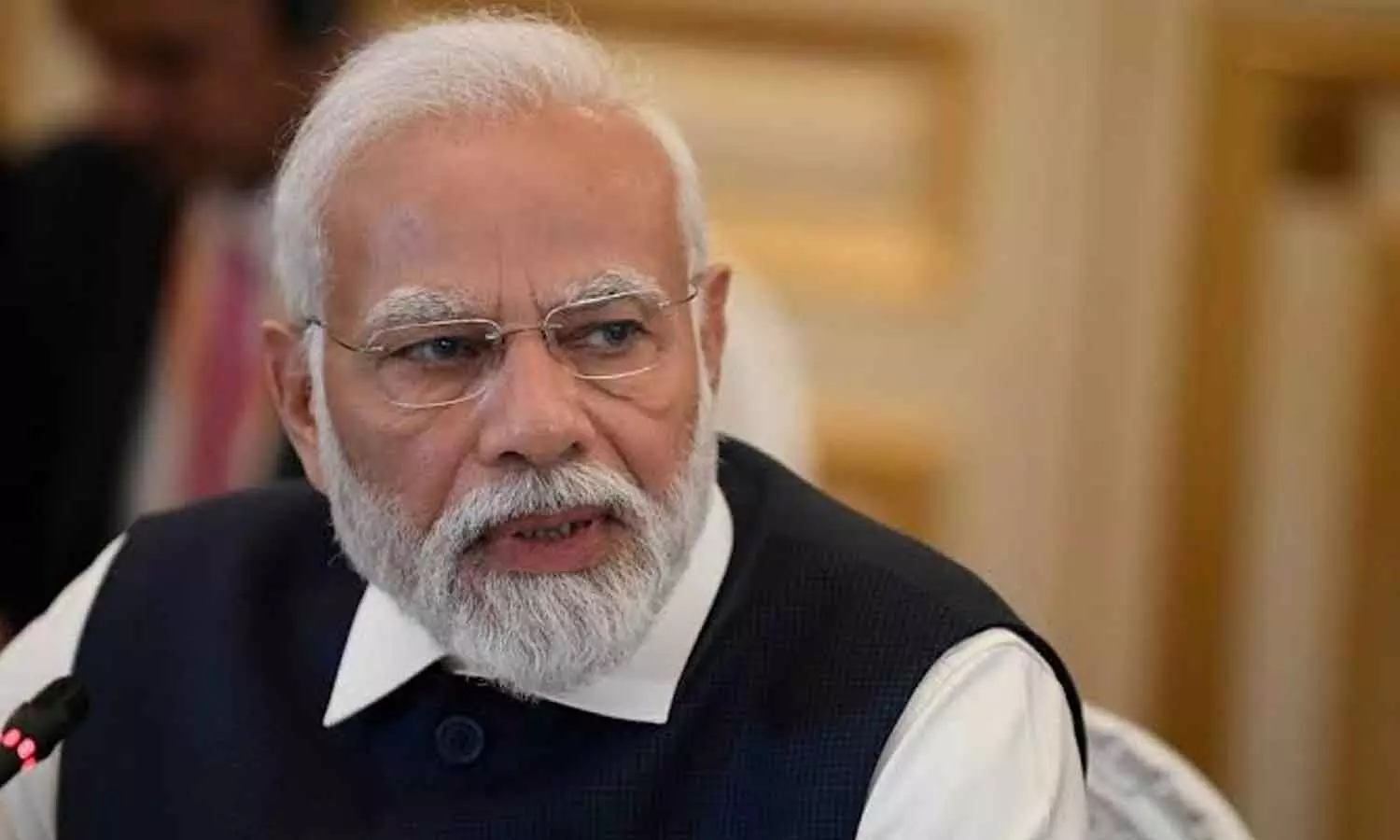
Prime Minister Narendra Modi
Prime Minister Narendra Modi seems annoyed, if not angered, with the corporate sector. Speaking at the annual gathering of the Federation of Indian Chambers of Commerce and Industry (FICCI) in New Delhi, he didn’t mince words to air his disappointment with big businesses. He pointed out that although his government had slashed the basic corporate tax rate from 30 per cent to 22 per cent and exempted income tax on annual salaries up to Rs 12 lakh, these decisions haven’t translated into jobs and higher salaries.
He was also miffed that the Indian industry continues to depend on imports in sectors such as pharmaceuticals and metals. He also doesn’t like the vast domestic market being treated as a “comfort zone”, where product quality may not receive the greatest attention from businesses. The Prime Minister’s annoyance is not without merit, for India Inc does look contented, not complacent, in its comfort zone. It is true that there are challenges at the policy and execution levels, but domestic tycoons must also view things in their historical perspective.
There was a time when they had to seek permission for the most trivial of decisions; today, they can do anything they want to, except, of course, violating the law. There are still issues like regulatory overhang and corruption, but nothing as compared to the situation in the 1970s and the 1980s. Indian businesspersons also don’t look very keen to venture out in the world, despite the government having opened up by signing several free trade agreements (FTAs).
“Over the past few years, India has entered into trade agreements with several countries around the world. Have you, the members of FICCI, ever sat down to reflect on this? When free trade agreements are signed with major global economies, it means that doors have been opened for you,” Modi said. Yet, the Prime Minister was a bit harsh on India Inc. Private expenditure has risen (at constant prices) in the last few years, though not as much as the government would have liked. In 2022-23, it was Rs 28.5 lakh crore, growing to Rs 29.7 lakh crore in 2023-24, and Rs 32.4 lakh crore in 2024-25.
This suggests that corporate India has not been sitting idle, even if the pace of investment leaves considerable room for improvement. Moreover, investment decisions cannot be divorced from the prevailing economic and regulatory environment, domestic demand conditions and global uncertainties. Tax concessions, however substantial, do not automatically translate into fresh investment, let alone employment generation. Businesses invest when they anticipate adequate returns and sustained demand. The government, therefore, must also examine whether its policies are creating the conditions necessary for greater private investment. And then there is the issue of attitude.
The Supreme Court recently warned the government that “nobody would trust” it if it continued to frustrate the enforcement of arbitral awards. It made the remarks while dismissing the government’s challenge to the enforcement of two awards in favour of Vedanta Limited and Ravva Oil (Singapore) Pte Limited. The dispute has now dragged on for more than two decades. The prospective investors, domestic as well as foreign, consider everything. The government’s approach to investment should be holistic, with emphasis on policy as well as on attitude towards industry. Businesspersons shouldn’t be treated shoddily after they pour in their money in the country.
PM Modi’s decades-old personal bond with late Parkash Singh Badal draws BJP-Akali Dal closer
Trump, Nvidia and China: The Story Behind Jensen Huang's 11-Day Nvidia Dramatic Comeback as CEO
Polling set for 23 Andhra Pradesh ULBs
Telangana SEC releases draft graduate voter rolls
VHP Demands Stringent Action Against TVK Govt For Insulting Judiciary and Hindus
Tamil Nadu Government Apologises to SC: Shifts Blame To Temple Trust


