






Rahul’s insinuations against TCS are unfortunate
In Short
Examine why opposition leader Rahul Gandhi's targeting of Tata Consultancy Services (TCS) over ECI Form 6 modifications risks damaging corporate and institutional credibility.

Share :
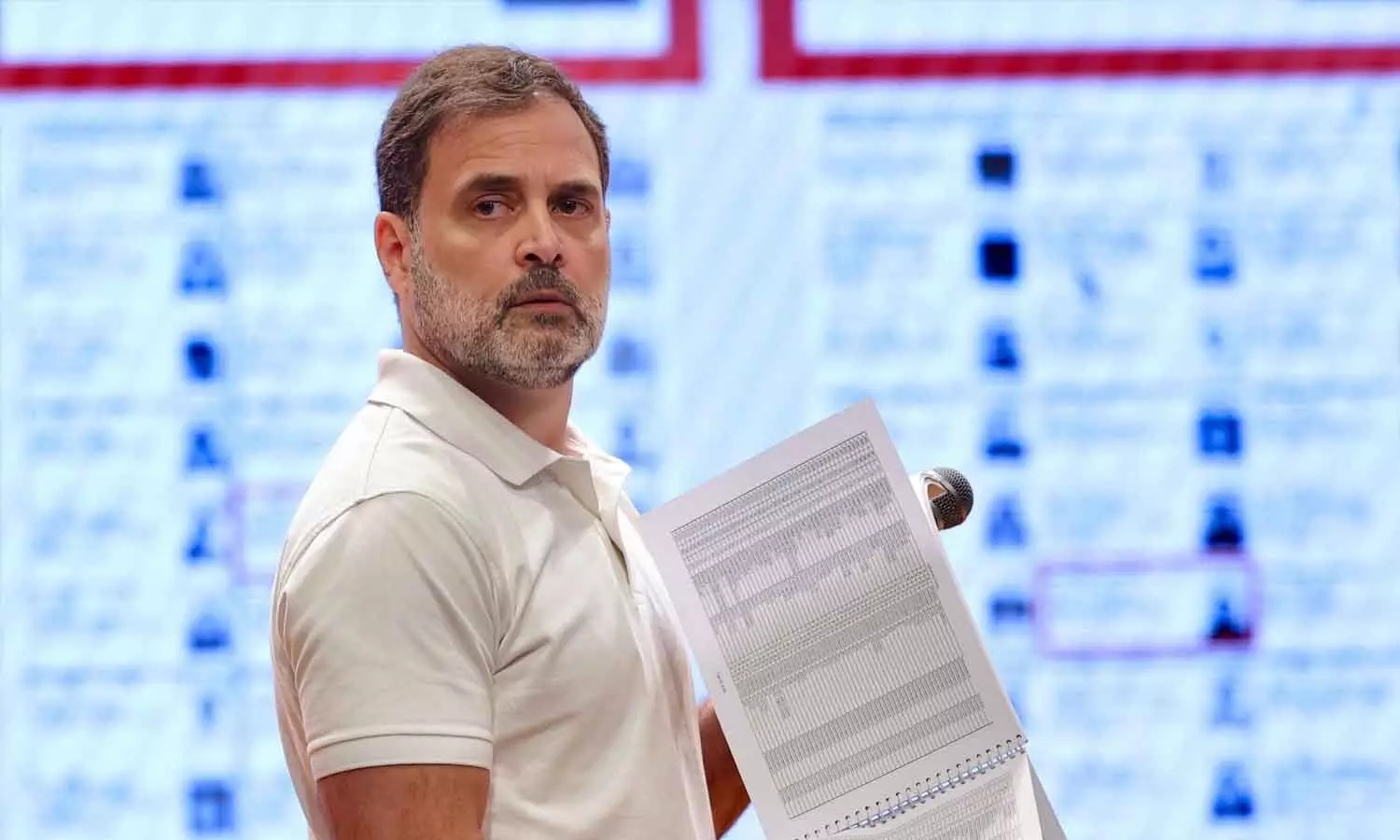
Senior Congress leader Rahul Gandhi
Senior Congress leader Rahul Gandhi sometimes looks irresponsible, if not unhinged. His recent salvo against Tata Consultancy Services (TCS) suggests as much. The country’s biggest software company and a major private-sector employer, TCS handles the core digital backend infrastructure and portal management for the Election Commission of India (ECI), known as ECINET. Gandhi has been castigating Chief Election Commissioner Gyanesh Kumar for quite some time; the criticism is valid because Kumar was seemingly running the constitutional body improperly.
There have been myriad media reports exposing Kumar; he has received a lot of flak for his unilateral functioning of the ECI. Recent developments have indeed vindicated Rahul Gandhi’s stand; his party has also gained traction at the expense of the Bharatiya Janata Party (BJP). Instead of giving impetus to the momentum building up against the Narendra Modi government, the principal Opposition leaders seem inclined to take potshots at the corporate world. For years, Rahul Gandhi has ranted against the Adani and Ambani Groups; now, he is expanding the arc of his firing range. This is unfortunate.
This is not to say that the allegations of crony capitalism are without any correspondence with reality; the politics-business nexus is a fact not just in our country but all over the world. But wildly inveighing against this nexus and targeting a few groups doesn’t do any good to politics, business, or the nation. Responsible politicians and policy makers must examine the phenomenon and strive to formulate a mechanism that curtails, if not eliminates, it. At any rate, Modi did not invent crony capitalism in India; it has always been there, which means that Rahul’s party cannot evade its responsibility, notwithstanding its sanctimonious rhetoric against the proximity between politicians and industrialists.
What is sauce for the goose is sauce for the gander. Dragging TCS is especially unfortunate, because the Tata Group, which owns TCS, is known for upholding the standards of propriety and probity in the corporate sector—that is, to the extent it can be upheld in India. The Group has built its reputation over more than a century through a combination of professional management, ethical business practices, philanthropy, and a commitment to nation-building. While no corporate conglomerate is above scrutiny, the Tatas have generally sought to distinguish themselves from businesses whose fortunes are perceived to depend excessively on political patronage.
Their contribution to India’s industrialisation, technological advancement, scientific research, education, and social welfare is well documented. TCS has emerged as a global technology powerhouse, earning international recognition for its professionalism, operational efficiency, and ability to compete with the world’s top IT companies. Therefore, when a senior Opposition leader targets a company such as TCS without credible evidence, he risks undermining corporate institutions.
Criticism of the government, the ECI, or the relationship between political power and business interests is both legitimate and necessary in a democracy, but it must be grounded in facts, not insinuation or political expediency. Rahul Gandhi has irresponsibly widened the scope of his attacks; this can dilute the credibility of his otherwise valid concerns. A mature Opposition should not confuse between the businesses that warrant scrutiny and the ones that merely perform contractual obligations. Carelessness can vitiate political rhetoric, which in turn can end up damaging the country’s institutional and economic interests.


