
Gau Economics: The untapped revolution waiting in India’s villages

India stands at a pivotal moment. If the Union Government, state administrations, NGOs, and an aspirational Gen Z converge with purpose, the country has the potential to decisively accelerate its journey towards becoming a ‘Vikasit Bharat’ by 2047. The ideas exist. The intent is visible. What remains is execution—and a shift in how we perceive India’s rural strength.
A quiet but powerful idea is gathering momentum: the possibility of a brown revolution rooted in India’s villages. Unlike past transformations driven by industry or services, this one begins with reimagining what we have long overlooked.
At its core lies a simple yet transformative insight—India’s rural economy, constantly in search of supplementary income, already possesses an underutilised asset. The cow, central to agrarian life for centuries, offers far more than milk. From organic fertilisers and bio-pesticides to eco-friendly construction materials, bio-energy solutions, and wellness products, cow by-products present a diverse economic ecosystem. What has traditionally been dismissed as waste can, in fact, be converted into wealth.
Yet, before this potential is realised, there is a conceptual gap—even among policymakers. The distinction between “cow” and “gau” is not merely semantic but foundational. While the former often refers to crossbred, high-yielding varieties introduced during the White Revolution, “gau” signifies indigenous Indian breeds. This difference matters because the economic potential of cow-based industries—particularly in dung and urine-based products—is far more closely aligned with desi breeds.
India’s success in the White Revolution, powered by crossbreeding and institutions like Amul, ensured milk security. But it also led to the gradual sidelining of indigenous cattle. Crossbreeds such as Holstein Friesian and Jersey, often combined with native strains like Sahiwal or Gir, were optimised for higher milk yields. However, they demand intensive care, high-quality feed, and remain vulnerable to tropical diseases.
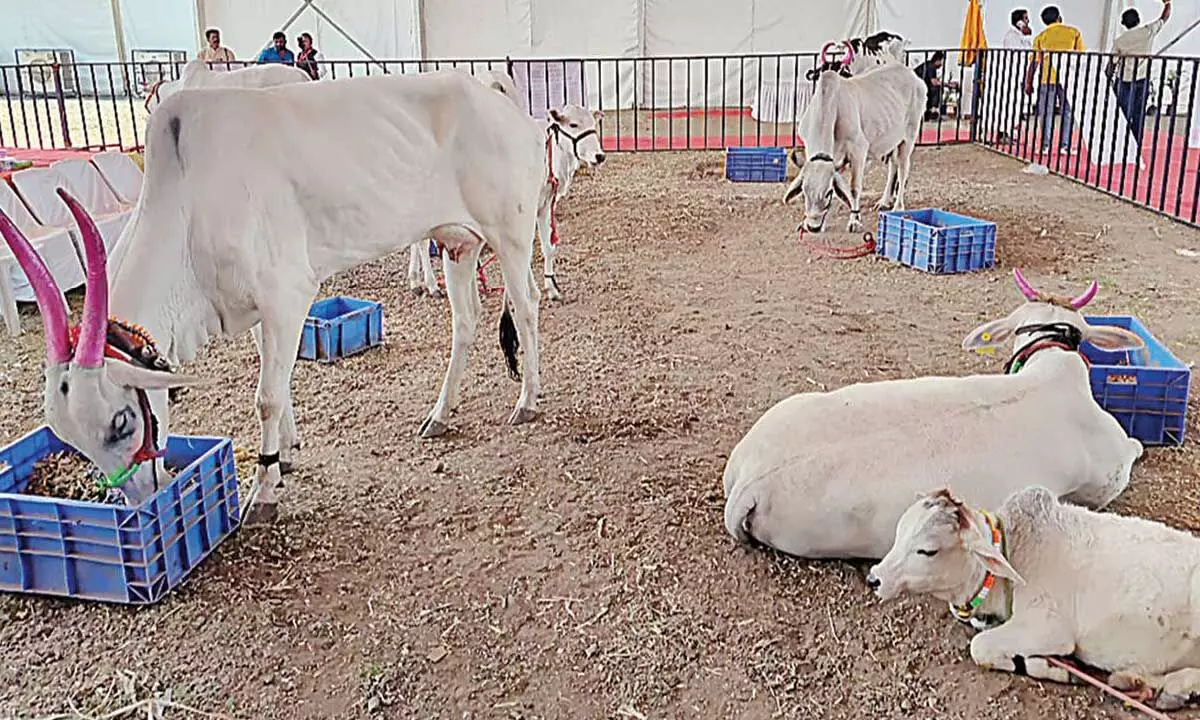
In contrast, indigenous breeds—like the diminutive yet prized Punganur—offer unique advantages. Their milk is rich in fat and valued for medicinal properties, while their dung and urine form the backbone of a growing ecosystem of organic and sustainable products. These breeds, though sometimes expensive, represent long-term economic assets rather than short-term yield machines.
The implications are significant. A rural-led brown revolution could generate employment, encourage reverse migration, and open new frontiers for startups. Already, early signs are visible. In states like Gujarat and Rajasthan, professionals from urban, tech-driven backgrounds are returning to villages, building enterprises around cow-based products. They are tapping into markets that value sustainability, organic inputs, and eco-friendly alternatives—both domestic and global.
The science behind these ventures is evolving rapidly. Panchgavya-based products—derived from cow dung and urine—are no longer confined to traditional uses. Processed scientifically, they are finding applications in agriculture, energy, and even wellness industries. There are emerging examples of degraded lands being rejuvenated through organic inputs, echoing experiments seen in arid regions globally. Demand, too, is growing, with bulk orders from farmers and organic farming networks validating the model.
This shift could also revitalise the small-scale manufacturing sector. Processing cow-based inputs requires specialised machinery and decentralised production systems, opening avenues for rural entrepreneurship. Over time, this may even alter long-held practices—where ageing cattle are no longer seen as economic burdens but as continuing sources of value.
There is, undeniably, a strong logic underpinning this vision. As chemical fertilisers face increasing scrutiny over environmental degradation, natural alternatives are gaining traction. Decentralised production aligns with the broader goal of strengthening local economies and reducing distress migration.
However, optimism must be tempered with realism.
The cow-based economy, for all its promise, faces structural challenges that cannot be ignored. Its importance becomes even more evident during crises—such as disruptions in LPG supply—where decentralised bio-energy solutions could reduce dependence on imports and cushion rural households.
Yet the question of competitiveness looms large. Can cow-based products match industrial alternatives in price, quality, and consistency? Organic fertilisers and eco-products often involve higher costs and face logistical bottlenecks. Without strong branding, credible certification, and reliable supply chains, they risk being confined to niche markets rather than scaling to mass adoption.
Equally critical is policy coherence. While multiple schemes exist for rural entrepreneurship and organic farming, the cow-based economy lacks an integrated framework that connects production, processing, marketing, and finance. Fragmented incentives, however well-intentioned, cannot drive systemic transformation. What is needed is a clear, long-term roadmap backed by institutional commitment and policy convergence.
Ultimately, the success of a brown revolution depends on a shift in mindset. It calls for moving beyond rhetoric and rediscovering value in what has long been taken for granted. India does not lack resources—it often lacks recognition of their true potential.
If harnessed with vision, science, and scale, the rural economy—powered by indigenous knowledge and modern innovation—could well become the engine that drives India towards its 2047 ambition.


