
India’s retail sector to hit $2 trn by 2032 as AI, redefine growth

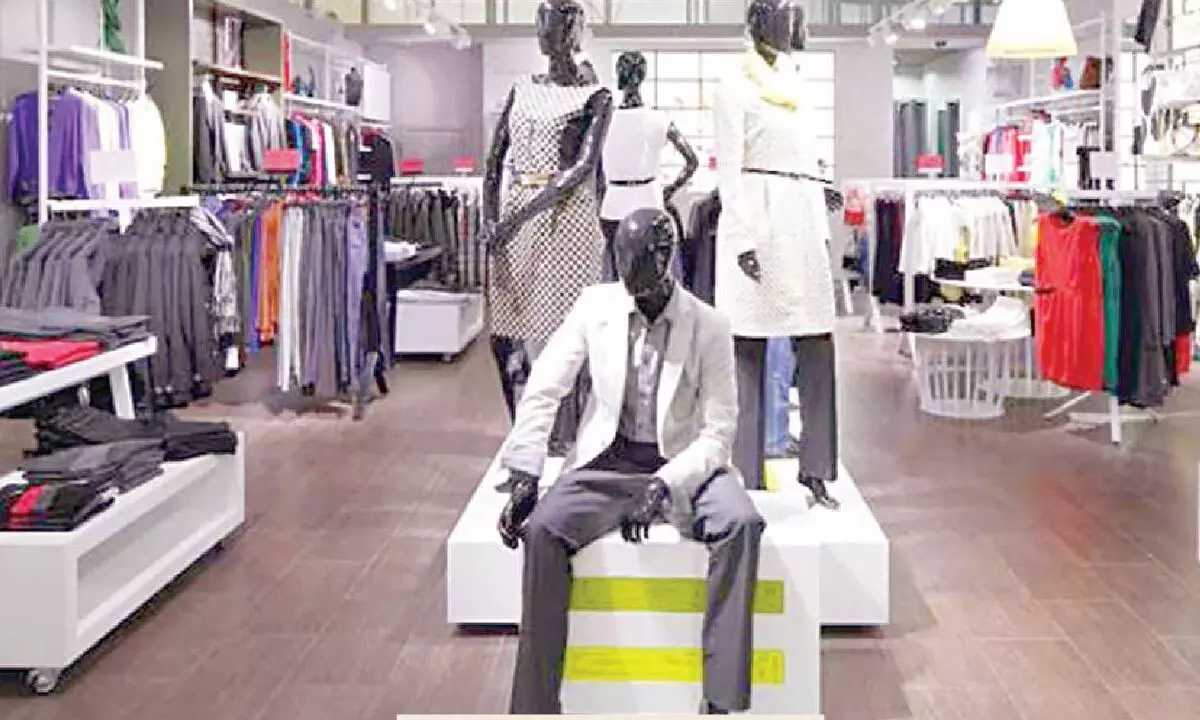
The retail industry in India is experiencing substantial growth. In the global retail market, India ranks fifth. There has also been a constant and steady CAGR of 9 per cent to 10 per cent. It is also expected that the retail sector in India will reach US $2 trillion by 2032. The evaluations are made based on the upcoming retail trends that will change the whole retail scenario in India. Some retail trends are already in full swing; however, some trends are steadily being incorporated by every retail business. The new and upcoming trends are the cornerstone for a successful retail business. Hence, every retail business needs to know, understand, and integrate retail shopping trends.
Key drivers for this growth are growing per capita consumption, rising disposable income, and digital accelerators such as e-commerce and quick-commerce penetration.
Nominal GDP is estimated to grow by 8.0 per cent in FY2025–2026, and private consumption remains the largest component of India’s economy.
To reach these consumers, brands and retailers are eager to rapidly expand their footprint, yet in many cases; simply adding new stores isn’t translating into on-the-ground performance. Vast pools of latent demand remain untapped due to fundamental location mismatch, even as the retail supply continues to expand: about 20 percent more mall space is expected to be added in India’s top eight cities by the end of 2026.3 India’s leading retailers highlight that a mismatch in store location selection resulted in 10 to 15 percent store closures in FY25 for select pan-India retailers.
India’s retail landscape demands tailored strategies across city-tiers, categories, and catchments, as consumption patterns, accessibility, and digital adoption vary.
Differences are even more pronounced across catchments within cities. Even PIN codes located in proximity can have very different demand profiles, cost structures, and format viability, suggesting a need for a “hyperlocal” approach.
The question is no longer just which city. It’s which neighborhood and which format in that neighborhood. While the top eight metros are established retail hubs, nearly 100 hyperlocal growth hotspots—representing about 10 per cent of total PIN codes in metros—remain underserved. Hyperlocal precision. How to shift from a citywide expansion to hyperlocal precision to identify the right hotspots that are currently underserved and rationalise a presence in already saturated high-street clusters
Format strategy. Deciding whether a pocket’s demographic profile demands an upscale experience (driven by higher willingness to pay for differentiated quality, brand prestige, and in-store experience) or an economy format (driven by price and volume). Data shows that the same catchment can be highly attractive to one segment but saturated for another. Assortment curation. How to get the assortment right at a local level, aligned with the consumption patterns and demographic profiles in that specific neighborhood (Category-wise).
A report, unveiled by Boston Consulting Group (BCG) and the Retailers Association of India (RAI) at the Retail Leadership Summit 2026 here underline the strong consumption momentum in the country and highlights how technology, especially artificial intelligence (AI), will play a defining role in shaping the next phase of retail growth.
It examines the structural shifts reshaping Indian retail, evolving consumer behaviour, and the strategic choices retailers must make to remain competitive.
India continues to be one of the fastest-growing major economies in the world.
Strong private consumption, particularly in discretionary and services spending, is driving this momentum.
The report said that India is on track to become the world’s third-largest economy by 2030, creating a significant opportunity for retailers over the next decade.
According to the report, AI is not just improving front-end experiences but also reshaping core retail functions such as merchandising, supply chain, marketing, and customer service.
A full-scale, function-led AI transformation can unlock performance gains of 40 per cent to 60 per cent, compared with just 10 per cent to 15 per cent improvements from isolated use cases.
However, the study emphasised that nearly 70 per cent of the value generated from AI comes from internal capabilities, process redesign, and effective change management rather than technology alone.
Abheek Singhi, Managing Director and Senior Partner at BCG, said India’s retail sector is poised to expand into a nearly Rs200 trillion opportunity over the next decade.
Bharat Mimani, Managing Director and Partner at BCG, said retail is entering a decisive phase where AI is becoming a core driver of competitive advantage rather than a side experiment.
Kumar Rajagopalan, CEO of RAI, said the next decade’s Rs200 trillion opportunity will not be captured by sales growth alone.
He stressed that retailers must embed AI across the shopper journey, rebuild talent and operating models, and treat transformation as a continuous discipline rather than a one-time project.


