
Rural India needs tax reform, not just schemes
Fiscal Push Can Turn Cattle Wealth into National Growth
The road to ‘Viksit Bharat’ does not pass only through smart cities and industrial corridors. It runs through India’s villages—through its gaushalas, fields, and cattle. With the right fiscal push, that journey can be faster, fairer, and far more sustainable. As A. P. J. Abdul Kalam reminded us, dreams must translate into action. If India is serious about achieving Viksit Bharat 2047, it must look beyond conventional growth engines and rediscover its most resilient foundation: rural India.
India has the world’s largest bovine population, yet productivity remains uneven. More worrying is the growing disconnect—particularly among Gen Z—from rural realities and indigenous livestock wealth. Even policymakers often underestimate the transformative potential of this sector. Empower the farmer, incentivise the rural entrepreneur, and strengthen village economies, and the dividends will be national.
The responsibility for creating this shift lies not only with the ruling dispensation but across the political spectrum. The NDA government must lead with policy clarity and intent, but the opposition too must move beyond rhetoric and contribute constructively to rural revival. India cannot afford political distractions when a silent economic revolution is waiting to be unlocked in its villages.
It is not enough to launch schemes like the Rashtriya Gokul Mission (RGM). What is needed is a strong institutional and fiscal ecosystem to support it. The missing link is a bold, targeted push through income tax and GST reforms that can accelerate rural transformation at scale.
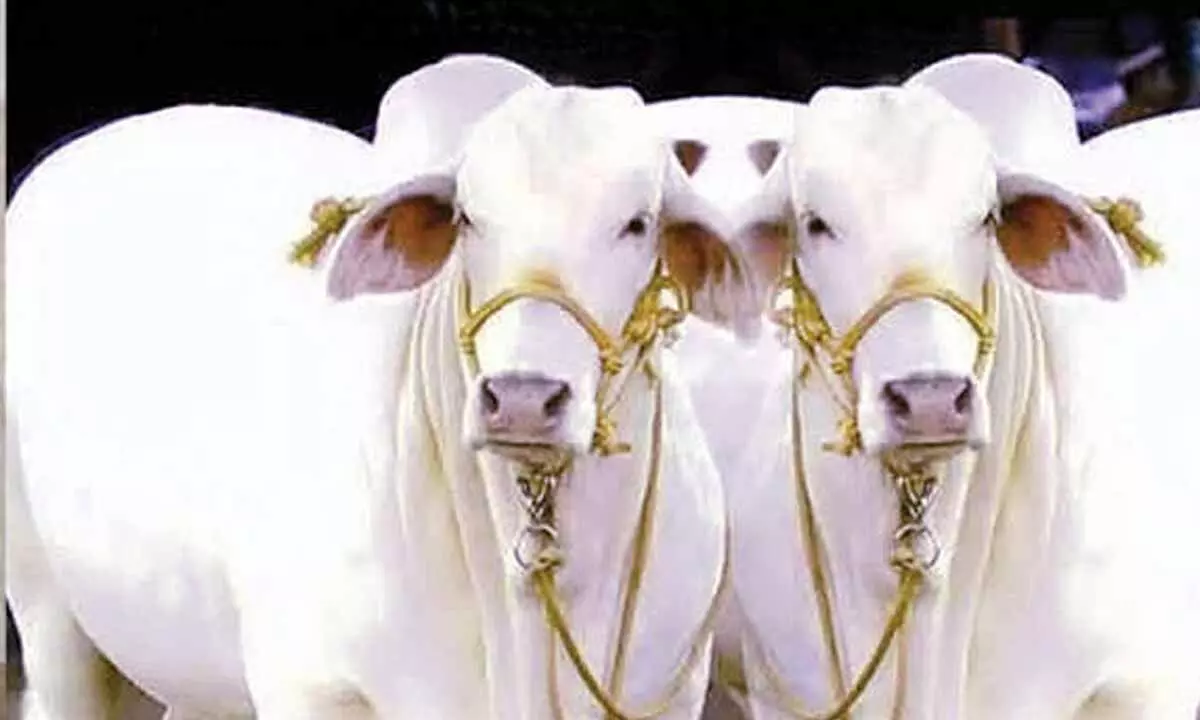
At the heart of this transformation lies India’s indigenous cattle wealth. Breeds such as Punganur cow (Ongole), Gir cattle (Gujarat), Sahiwal (Punjab) and Tharparkar cattle (Rajasthan) are not merely milk producers—they are engines of a circular rural economy.
Take the Punganur cow, one of the smallest breeds in the world. With a modest yield of 2–5 litres per day but high fat content, it thrives on minimal fodder and is ideal for drought-prone regions and small landholders. It represents low-cost, decentralised dairy suited for backyard farming and even urban gaushalas.
Contrast this with the Gir breed from Gujarat, a high-yielding indigenous cow producing 10–15 litres daily. Known for its disease resistance and heat tolerance, it has been central to India’s indigenous dairy resurgence and even contributed to international breeding programmes.
The Tharparkar breed from Rajasthan’s desert region offers a dual advantage—milk and draught power. With yields of 6–10 litres per day and the ability to survive on scarce fodder, it is perfectly suited for arid economies where resilience matters more than volume.
Similarly, the Sahiwal breed from Punjab stands out for its consistent yield (8–12 litres per day), high fertility, disease resistance, and adaptability to hot climates. Its calm temperament makes it ideal for small farmers, and it is widely regarded as one of Asia’s finest dairy breeds.
Given these strengths, a critical question arises: why does rural India continue to struggle despite initiatives like the Rashtriya Gokul Mission?
The answer lies in a policy gap. While the mission has rightly focused on genetic improvement, breed conservation, and scientific breeding, it stops short of addressing the economic viability of rural enterprises. Productivity gains alone cannot transform rural India unless they translate into higher, tax-efficient incomes.
Under the Income Tax Act, 1961, agriculture enjoys exemptions, but allied activities—dairy processing, value-added cow products, and rural enterprises—often fall into a grey zone. They are either taxed or burdened with compliance complexities that discourage scale.
The situation is similar under the Goods and Services Tax (India). While fresh milk is largely exempt, value-added products such as organic manure, bio-pesticides, cow dung logs, and herbal formulations attract varying GST rates. For small farmers and gaushalas, this becomes a barrier rather than an enabler.
This is where fiscal reform becomes critical.
First, targeted income tax relief is essential. Enterprises engaged in indigenous cattle conservation, organic inputs, and panchgavya-based products should be granted partial or full tax exemptions for a defined period. These activities must be formally recognised as agri-allied green enterprises under the tax framework.
Second, GST rationalisation is overdue. Essential cow-based products—organic fertilisers, bio-pesticides, dung logs—should be brought under a zero or minimal GST slab. Simplified compliance mechanisms must be introduced for small rural producers to encourage formalisation.
Third, recognition of rural bio-economy units as MSMEs can be a game changer. Units producing biogas, organic manure, and natural farm inputs should be treated as priority enterprises and extended tax and financial incentives. This will improve grassroots viability and attract youth participation.
The impact of such measures would be far-reaching. They would enhance viability at the grassroots level, where small farmers and gaushalas operate on thin margins. Tax relief directly improves net income and sustainability. They would incentivise value addition. Today, farmers sell raw milk because processing attracts tax and regulatory burdens. Removing these barriers would unlock higher-value product ecosystems.
They would encourage formalisation. Lower compliance costs would bring informal rural enterprises into the formal economy, expanding the tax base in the long run.
They would also support environmental goals. Cow dung-based inputs reduce chemical fertiliser usage, improve soil health, and lower carbon emissions. Tax incentives for such products effectively act as green subsidies aligned with India’s climate commitments.
However, reforms must be calibrated. Blanket exemptions could strain public finances. A targeted approach—time-bound incentives, performance-linked benefits, and strict monitoring—can deliver results without fiscal stress.
Encouragingly, there is growing momentum on the ground. Experts at forums such as Gau-Tech 2026 have emphasised the potential of integrating RGM with fiscal incentives to create cow-based rural clusters, export-ready organic ecosystems, and large-scale rural employment.
States like Gujarat, with its strong dairy cooperative legacy, are well placed to lead this transformation. A successful model here can be replicated across Rajasthan, Madhya Pradesh, Uttar Pradesh, Andhra Pradesh, and Telangana.
The larger point is this: reviving India’s cattle-based rural economy is not a nostalgic idea—it is a strategic necessity. It combines economic growth, environmental sustainability, and social stability in a way few other sectors can.
The Rashtriya Gokul Mission has already laid the foundation. What is needed now is policy alignment—where fiscal tools reinforce developmental goals.
This is not about subsidies. It is about smart, targeted investment in India’s future. If India truly wants to build a Viksit Bharat, it must empower its villages. And if villages must thrive, fiscal policy must become their strongest ally.
(The author is former Chief Editor Hans India).


