






Employment, Employability, and the Future of Work

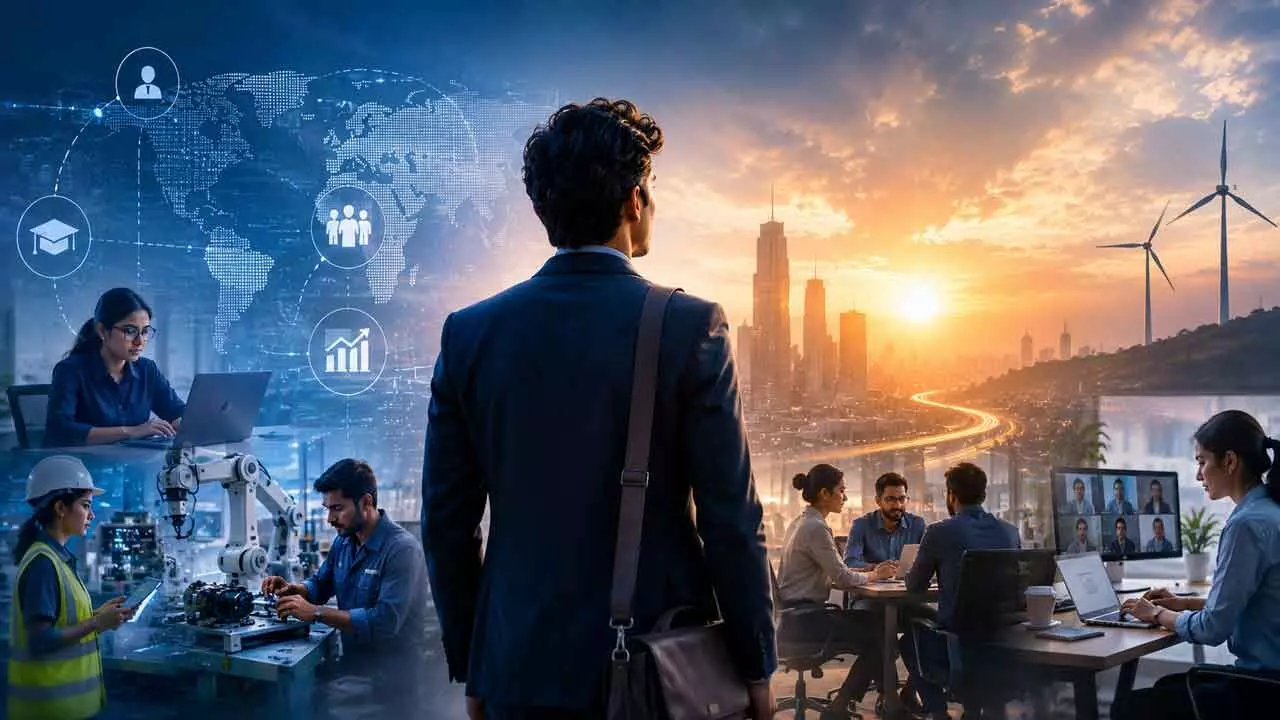
As industry demands evolve, the shift from degree-based hiring to a skills-based approach is redefining career growth. Explore how AI and continuous learning are making "employability" the new cornerstone of the future workforce in this insight by Abhijit Rao (Keka HR).
There is a growing distinction between employment and employability that is becoming increasingly relevant in today's workforce. Employment focuses on filling a role and meeting immediate organizational needs. Employability, by contrast, focuses on an individual's ability to develop skills, adapt to change, and remain effective over time. While organizations have traditionally concentrated on employment, changing economic and technological conditions are placing greater emphasis on employability as well.
For many years, educational qualifications served as one of the primary signals in hiring decisions. Degrees and certifications provided a convenient way to assess candidates, even though they were never a complete measure of capability. However, the pace of change in many industries is challenging the effectiveness of credentials as the dominant hiring filter. Skills can become outdated more quickly than before, while new competencies emerge in response to technological advances, changing business models, and evolving market demands.
As a result, many employers are adopting skills-based approaches to hiring. Rather than focusing solely on academic qualifications or past experience, these approaches seek to understand what candidates can do, how they solve problems, and how effectively they can learn new skills. This represents a shift from evaluating past achievements alone to considering future potential.
At the same time, hiring for skills is only part of the challenge. Organizations must also create environments that support continuous learning and development. Upskilling and reskilling are increasingly important as job requirements evolve throughout a person's career. Effective workforce development is often integrated into everyday work through mentoring, internal mobility opportunities, and targeted learning initiatives rather than being limited to occasional training programs.
The growing use of artificial intelligence is further accelerating these changes. As AI systems automate routine and repetitive tasks, they can create opportunities for employees to focus on activities that require judgment, creativity, collaboration, and continuous learning. The impact of AI therefore extends beyond efficiency gains, influencing how organizations think about capability development and workforce planning.
These developments are also reshaping recruitment and career growth. Employers are placing greater value on adaptability, learning agility, and transferable skills that can be applied across different roles and contexts. Similarly, career paths are
becoming less linear, requiring individuals to update their knowledge and skills throughout their working lives.
The future of work is likely to depend not only on how organizations fill positions but also on how they develop and sustain capability over time. In that context, employability becomes an important complement to employment, helping individuals and organizations navigate an environment defined by ongoing change.
(The author is Abhijit Rao is Vice President and Head of People & Culture at Keka HR)


