
Empowering the Future: UoH Hosts Insightful Panel Discussion on Nari Shakti Vandan Adhiniyam, 2023

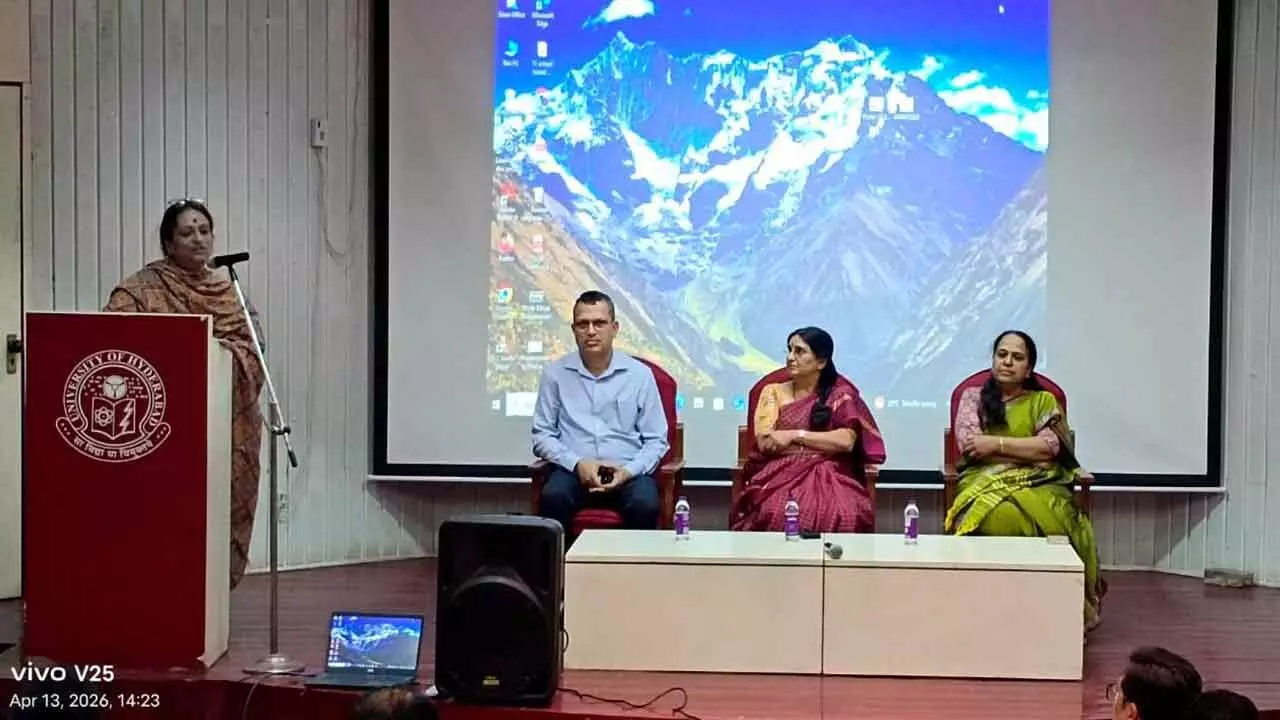
The University of Hyderabad (UoH) hosted a panel discussion on Monday on the Nari Shakti Vandan Adhiniyam, 2023 (Women’s Reservation Bill), jointly organised by the School of Social Sciences and the School of Economics. The program was chaired by the incharge VC Prof J Anuradha who emphasised the timely importance of such discussions, Dean of Social Sciences Prof. Suneetha Rani and the Dean of Economics Prof. D Acharya also made important remarks and insights about the question of gender gap and intersectionality. This event was coordinated by Prof. G Sridevi and Prof. Anurekha Chari Wagh.The event brought an esteemed panel of experts and scholars, attended by faculty, staff, and students for a thoughtful engagement with one of the most significant recent developments in India’s democratic framework.
The discussion situated the Bill within the long history of the women’s movement in India, emphasising that it is the outcome of decades of sustained struggle by women’s organisations who deliberated on this question that has been with us since the constituent assembly debates and resurfaces again and again. The speakers highlighted the frameworks that feminist scholarship offers on the question of substantive equality against systemic barriers. Early demands for political representation, including those raised during the colonial period, were highlighted, along with the transformative impact of reservations in local self-governance. Panelists noted that India’s experience with the 73rd and 74th Constitutional Amendments, which enabled substantial participation of women in grassroots democracy, offers important lessons for the implementation of this legislation.
While acknowledging the unanimous passage of the Bill as a milestone, speakers raised critical concerns regarding “reservation within reservation.” The absence of updated census data was identified as a key challenge, particularly in the context of the demand for a caste census. These have significant implications for equitable representation. The need to centre inclusivity in order to achieve substantive democratic outcomes was strongly emphasised in the context of religious minorities as well, who are sorely underrepresented in the parliament in the present.
The panel also drew attention to research by global and inter-national organisations that gives comparative cases to learn from to enhance women’s political participation, noting that India has a strong foundation to build upon. However, barriers such as lack of financial resources, institutional support, and safe political environments continue to hinder meaningful participation. Strengthening these support systems was identified as essential to ensure not just representation, but impact.
Important questions were raised about the scope of the Bill, including its implications for delimitation and the need to ensure that women’s voices are not overshadowed by political interests. The discussion also foregrounded the inclusion of transwomen referencing legal frameworks that affirm the right to self-identification, while pointing to the recent developments with the trans bill.
The panel concluded by underscoring the importance of deepening democratic commitments to equality and representation, and reflecting on the continued relevance of social justice in shaping inclusive political futures. The focus on power that is ‘shakti’ should not overshadow the promise and visions of equality. Reservation is not an end but the beginning where we can move towards a culture of voluntary reservations within political parties and party structures, in the aftermath of the implementation of the bill. The panel discussion emphasized constitutional equality for women, which is essential to reach Sustainable Development Goal 5.5, which guarantees women full and effective involvement at all levels of decision-making in the political-economic and public domains, as well as the equitable chances for leadership. This aligns with Vikshit Bharat's vision for 2047. The program ended with a vibrant session of Q&A with the panel and the audience.


