
HJ Dora was a rare police ‘leader’

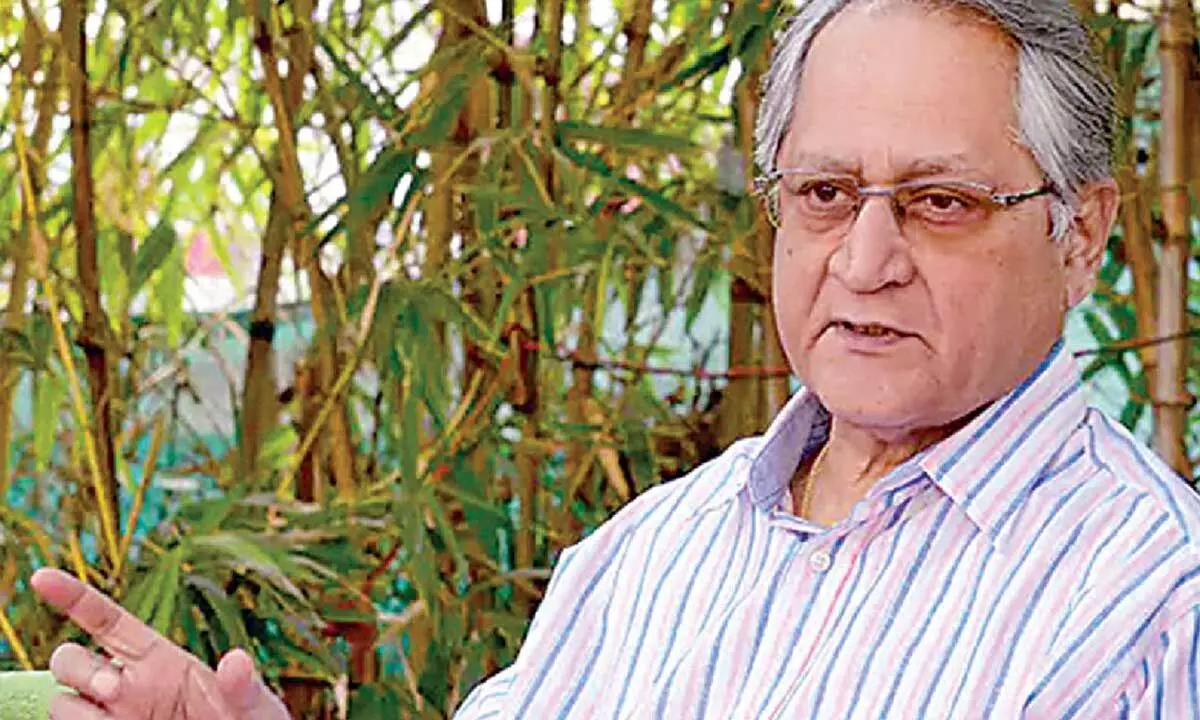
Post-feudalism period and at a time when people generally don’t like to address anyone as “Dora,” many found it natural, respectful and affectionate to call this police officer Dora with reverence. Though some people, who knew him as a man with no enemies, may not have liked him personally — that’s natural — even they could not help but address him as “Dora.” That is what having fortune in a name means.
They say there's fortune in a name. But having fortune in a name is possible only for some names! That luck does not bless everyone.
One such special name is that of H J Dora. He recently left us after scaling the summits of fame — winning the admiration of many, earning a beloved family, and serving exceptionally as the police department’s leader in his capacity as the DGP. His name is well known not only in the two Telugu states but among those who have served or are serving the department across the country.
If you decode the name H J Dora, a few things naturally stand out. ‘H’ stands for Hanumanth and ‘J’ for Jagannayakulu. Hanuman represents strength, power, devotion and steadfastness. Jagannayakulu refers to the supreme leaders of the universe — Brahma, Vishnu and Maheshwara. When his parents named him, combining these two elements with the surname “Dora”, it was like bestowing life and authority on an extremely capable leader.
Post-feudalism period and at a time when people generally don’t like to address anyone as “Dora,” many found it natural, respectful and affectionate to call this police officer Dora with reverence. Though some people, who knew him as a man with no enemies, may not have liked him personally — that’s natural — even they could not help but address him as “Dora.” That is what having fortune in a name means.
Thinking this way shows how much a name can ennoble a person’s character and qualities.
When I was undergoing training as DSP in Anantapur, I first met him—the then district SP. In the police training college, I was doing commentary in a function. He came up to me personally and congratulated me. His warm, affectionate manner naturally earned my respect. For a newly joined police officer like me, it was a great joy that the SP himself had come over to compliment a trainee on a small thing. Even later, when I came to Guntur as probationary DSP, he came to Guntur on some official work to DPO and while seeing me there he spoke to me specifically. My admiration for Dora grew abundantly. I later learned that his being equally approachable to everyone without distinction was his true nature.
When I took charge as Vijayawada Rural DSP under him in Krishna district, he said, “Welcome! As police officers, we often don’t pay attention to children’s welfare and health. I will introduce you to a paediatrician. Give that doctor’s phone number to your family and take his help to ensure your children’s health.” At the time I took that as a personal kindness to me and my family. But when I saw that compassionate foresight reflected in the “bhadratha” scheme— specially introduced for the health and welfare of police personnel, including pensioners as DGP, I understood his foresight that made him a great leader. “Bhadratha” scheme introduced by him will continue in the department and his name is sure to be remembered forever.
For Dora, loyalty, honesty, and decision making were his constant and consistent professional assets.
To recollect an example, while serving as a DIG in a range in Andhra Pradesh, he developed closeness with a young journalist. While going with him one fine morning, he casually remarked “Do you have the habit of taking alcohol first thing in the morning, as we drink coffee or tea?” The journalist was greatly shocked, and that pregnant comment sounded like a warning bell for him to take care of his health. From then onwards the scribe quit the habit, rose to the position of an editor, and all through he has been grateful to Dora. This example shows his impact on others too. Dora will remain in the forefront when it comes to valuing human decency.
When I was serving as an SP in the intelligence branch, I had to spend almost a month in Vijayawada dealing with very difficult situations and reporting to the intelligence IG—Dora—and to the government. Quite gracefully during that period, he and his wife visited my home in Hyderabad and told my wife, “Amma—we only expected him to stay for a few days, but he must remain there longer. Your family is missing him a lot. Do not hesitate to call us in case of any need.” This I came to know in Vijayawada, through my wife, and all the hardship I had undergone vanished in a jiffy. The true reward for hard work is recognition; once that recognition comes, what more would one want?
Putting these experiences aside, I must mention how careful, disciplined and thoughtful Dora was in handling matters. He was responsible for the creation of Greyhounds, which became a fighting force and earned a good name throughout the country. This force was mainly organised to contain naxalism and Dora made use of the services of K S Vyas, a time-tested police officer, who unfortunately was killed by naxals. The force was supervised by DGP Dora, Vyas and one N S Bhatti, a retired counter-insurgent consultant. This apart, several measures taken by Dora as the DGP, particularly training them in the use of weaponry, discipline and public service stood him in good stead as a rare police leader.
I cannot fail to tell the story of the AP police “encounter” with Naxalites at a place called Koppadangi!
I was IG Visakhapatnam. At that time, the local police and Greyhounds had an encounter with Naxals resulting in the death of three policemen and many naxalites in Koppadangi in Orissa. When Dora came to know of the incident in Hyderabad, he told me unequivocally “Let me know the real situation. As different versions are coming, including the place of encounter, whether it was in AP or Orissa. I should present the facts correctly to the government and to the public through the media. If any misinformation goes to them, I will hold you responsible.”
Later in a function while presenting small gifts to men and officers for their good work, he suddenly called me and presented a gift with a smile and said, “you briefed about the incident correctly, enabling me to give a factual report to the government and people. Therefore, take this gift”.
On the day when a function was organised to remember his great services to the department and to the Telugu people, while offering a floral tribute, I looked at Dora’s photo. Suddenly I felt he was alive and smiling at me with a patented twinkle in his eyes. For a while I stood there, later I stepped aside with a heavy heart and blurred eyes, returning to reality.
(The writer is a retired IPS officer, who has served as an Additional DGP of Andhra Pradesh)


