
Polavaram: Decades of delay, emerging progress and the road ahead

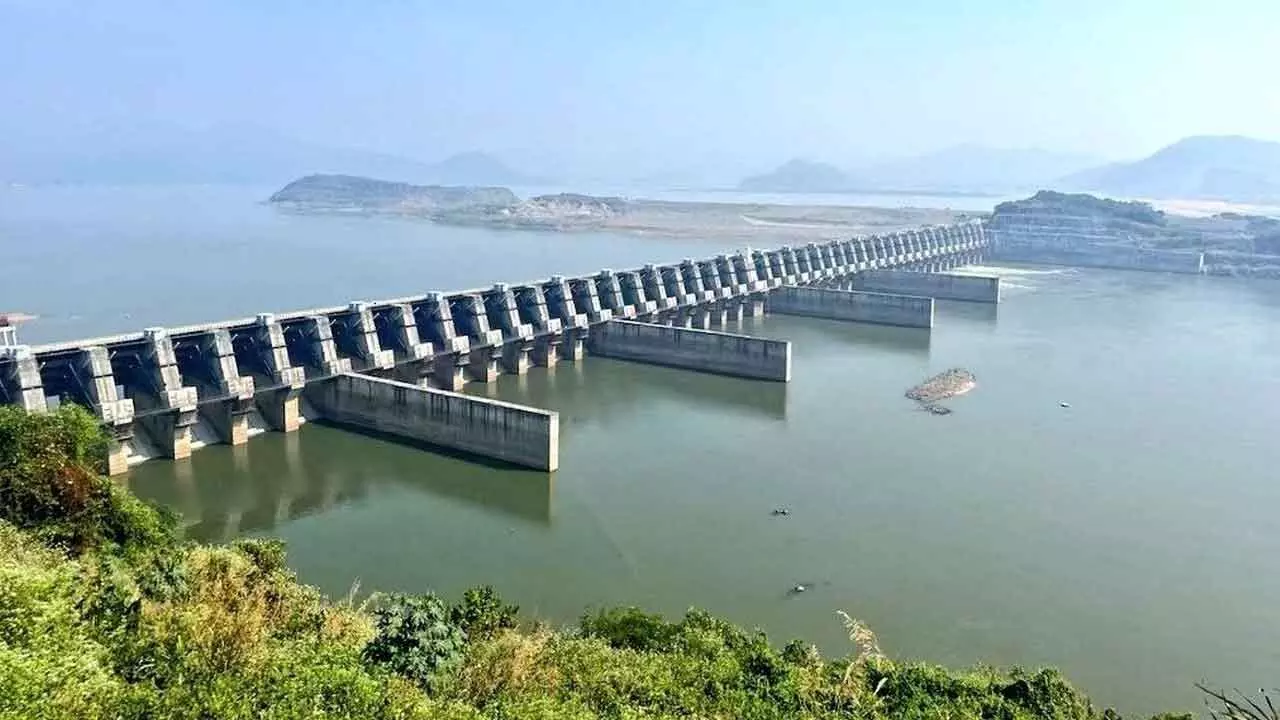
The Polavaram irrigation project has been under contemplation since 1941. Located 42 kilometres upstream of the Sir Arthur Cotton Barrage at Dowlaiswaram on the Godavari River near Ramayyapeta village in Polavaram mandal of Eluru district in Andhra Pradesh, it stands as a multipurpose national initiative. Conceived in line with the Inter State Agreement and the Godavari Water Disputes Tribunal Award of 1980, the project secured National Project status in 2014, The Polavaram Project Authority was subsequently formed under the Ministry of Jal Shakti in January 2015.
The reservoir carries a gross storage capacity of 194.6 TMC at full reservoir level of plus 45.72 metres. It envisages utilisation of 322.73 TMC of Godavari water to irrigate 7.2 lakh acres of new ayacut and stabilise 23.5 lakh acres. The project will generate 960 megawatts of hydropower through 12 units of 80 megawatts each. It will supply drinking water to 540 villages serving 28.5 lakh people along the canals and allocate 23.44 TMC for drinking and industrial needs in and around Visakhapatnam including the Vizag Steel Plant. Approximately, 80 TMC of Godavari water is to be diverted to the Krishna River for sharing among Andhra Pradesh Karnataka and Maharashtra in the respective ratio of 45:21:14 TMC while Odisha and Chhattisgarh can draw five TMC and 1.5 TMC, respectively, from the foreshore.
Clearances arrived progressively, including site and environmental clearances in 2005 wildlife and rehabilitation and resettlement clearances in 2006 and 2007 forest clearances in 2008 and 2010 and the Revised Cost Estimate Phase I approval by the Union Cabinet in August 2024. The layout includes a 1118-metre spillway on the right bank at A Hill with 48 radial gates of 16 metres by 20 metres each operated hydraulically. The river course has been rerouted over 6.6 kilometres through an approach channel of 2100 metres, a spill channel of 2920 metres and a pilot channel of 1000 metres to handle a design flood discharge of 50 lakh cusecs. A fish ladder designed by the Central Inland Fisheries Research Institute, Kolkata, forms the first such ecological feature in India.
The main dam features Earth Cum Rock Fill sections in Gap I of 543 metres and Gap II of 1750 metres, a concrete section in Gap III of 162 metres cofferdams and a powerhouse on the left bank at D Hill. The left main canal runs 212.32 kilometres with a discharge of 17580 cusecs and the right main canal 178.812 kilometres with 17560 cusecs.
As per the latest status from the AP Water Resources department for Phase I at minimum draw down level plus 41.15 metres overall financial progress reached 72 per cent by February 2026 with civil works at 81 per cent. Head works and connectivities recorded 77.35 per cent earthwork, 85.22 per cent concrete and 86.06 per cent steel. Main canals achieved 98.93 per cent earthwork 86.48 per cent lining and 56.28 per cent structures. Land acquisition for Phase I stood at 91.63 per cent while rehabilitation and resettlement of project displaced families reached 37.85 per cent.
The spillway, including gates cofferdams Gap III concrete dam and buttress embankment, were fully completed by March 22. In Gap I, the diaphragm wall and vibro compaction were done with embankment at 39 per cent. In Gap II the new diaphragm wall was 99 per cent complete vibro compaction fully executed and embankment at 12 per cent. The powerhouse includes 12 pressure tunnels of 150.3 metres length and nine metres diameter with Asia’s largest vertical Kaplan turbines.
This visible momentum in head works canals and key dam components marks a welcome shift. Yet the project remained pending for decades despite early clearances and national status. A performance audit by the Comptroller and Auditor General (CAG) released last month highlighted systemic issues that contributed to the prolonged delays. Spending was heavily skewed toward construction while land acquisition and rehabilitation received inadequate attention. Discrepancies in land records payments to ineligible beneficiaries and incomplete rehabilitation colonies lacking basic amenities slowed progress.
Technical and planning lapses were significant. Failure to adhere to flood diversion schedules and the absence of a dedicated agency for flood mitigation during construction led to damage of partially built cofferdams and the diaphragm wall. Irregular contracting practices including nomination-based awards restrictive tenders and abrupt changes in contractors at critical stages disrupted work and exposed structures to risk. Financial management showed low budget utilisation pendency of bills and mismatches in reporting.
These factors turned a project conceived in 1941 into one that missed multiple deadlines even as costs escalated.
At the same time recent years have seen accelerated execution under the Polavaram Project Authority and state agencies with completion of major components like the spillway and cofferdams and steady advance on the new diaphragm wall. This demonstrates that focused implementation can overcome past hurdles. The project’s interstate dimensions, ecological safeguards such as the fish ladder and potential benefits for millions in irrigation flood control drinking water and hydropower remain compelling.
To complete Polavaram quickly and translate decades of planning into benefits both the government and affected communities must act decisively. Rehabilitation and resettlement should be prioritised for completion within the next twelve months through expedited land awards, transparent compensation and full provision of amenities in colonies.
Earth-cum-rock fill embankment works in Gap I and Gap II require round the clock monitoring of modern equipment and strict adherence to flood management protocols to avoid any repeat damage. Uninterrupted funding, continuous contractor support and use of project monitoring tools can prevent further cost overruns. Protective embankments for Odisha and Chhattisgarh along with full integration of the hydropower component deserve immediate attention. Regular high-level reviews involving all stakeholders and public reporting on milestones can build accountability and confidence.
After more than eight decades Polavaram has reached a decisive phase. The people of Andhra Pradesh have waited long for this lifeline that promises irrigation for new and existing ayacut, flood moderation, drinking water security, industrial support and clean energy.
The government can address past shortcomings through disciplined execution while communities stand to gain from timely and equitable delivery of benefits. With Phase I targeting storage up to the Minimum Draw Down Level and several works, well advanced sustained focus on the remaining gaps can convert delay into lasting development without further slippage.
The ultimate success will be measured by how efficiently and fairly the project meets its national promise for all concerned.
(The writer is a researcher at People’s Pulse Research Organisation)


