
Reviving Musi: Restoring a lifeline, reimagining a city

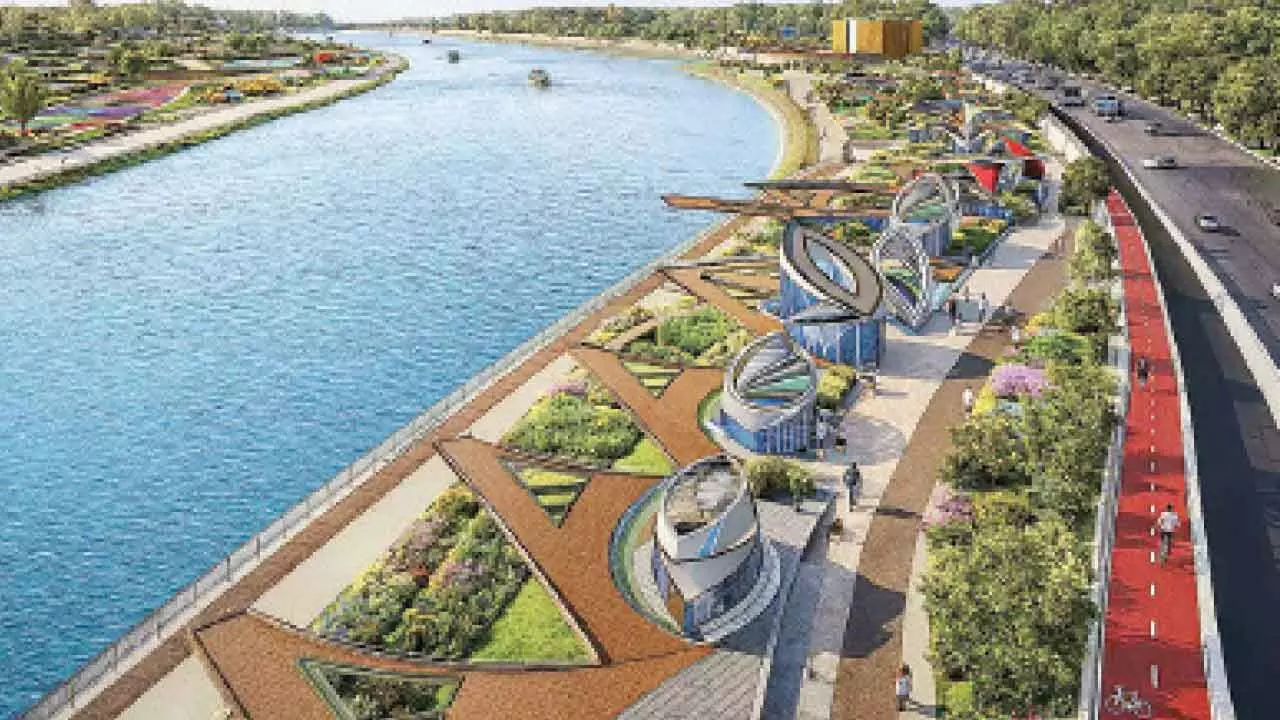
Hyderabad’s lifeline, the Musi River, has today become almost unrecognisable. Once a vital source of drinking water and irrigation, the river has, over time, deteriorated due to neglect, encroachments, and industrial pollution. As the city expanded rapidly, the significance of the Musi diminished. Illegal constructions in the name of urban development, diversion of sewage drains, and indiscriminate dumping of waste have reduced the river to little more than a polluted drain.
Once known for its medicinal-quality waters, the Musi has now become a symbol of environmental degradation posing a serious ecological and public health challenge to the city. However, the Telangana government’s renewed focus on restoring the Musi offers a promising turn for Hyderabad’s future.
Under the leadership of Chief Minister A Revanth Reddy, the state government has envisioned the Musi rejuvenation not merely as a beautification project, but as a comprehensive initiative encompassing environmental protection, urban development, and improvement in quality of life. As per the plans presented in the Telangana Assembly, the Musi Riverfront Development will span approximately 55 kilometers, backed by a clearly defined roadmap.
The first phase, covering a 21-kilometer stretch from Bapu Ghat to Gandhi Sarovar, is estimated to cost around ₹5,812 crore. Demonstrating its commitment, the government has allocated ₹1,500 crore in the 2025–26 budget. Significantly, financial support from the Asian Development Bank (ADB), to the tune of approximately ₹4,100 crore, adds international credibility and stability to the project’s funding model.
The Musi’s history is both rich and instructive. Originating in the Ananthagiri Hills of Vikarabad district, the river flows nearly 267 kilometers before merging with the Krishna River at Wadapally in Nalgonda district. Once, its basin supported thriving agriculture and rich biodiversity. Over the decades, however, this natural wealth has eroded under the pressures of urbanization. Today, pollution in the Musi is not just an environmental issue but a pressing public health concern.
The devastating floods of 1908 marked a turning point in the river’s history, claiming thousands of lives. In response, reservoirs such as Osman Sagar and Himayat Sagar were constructed, playing a crucial role in flood control and water supply. Yet, recurring floods in subsequent years have repeatedly underscored the importance of preserving the river’s ecosystem and floodplains.
While previous governments had proposed various plans for the Musi’s revival, most remained on paper due to financial constraints, administrative bottlenecks, and lack of execution clarity. In contrast, the current initiative stands out for its structured planning, financial backing, and defined objectives.
The government’s vision goes beyond cleaning the river. It aims to transform the Musi into a vibrant public space. Plans include developing Bapu Ghat into a cultural hub, constructing Gandhi Sarovar, and creating green parks, pedestrian pathways, cycling tracks, and recreational zones. Proposals for a Mahatma Gandhi statue, a museum, and multi-faith prayer spaces aim to position the riverfront as a symbol of cultural harmony.
A critical aspect of the project is ensuring a perennial water flow. The government is exploring the diversion of Godavari waters into the Musi, which could provide a long-term solution to both pollution and water scarcity. Simultaneously, strict measures are being taken to remove encroachments along the river, with a balanced approach that includes rehabilitation for the displaced.
Globally, several cities have successfully revitalized their rivers into engines of urban growth. The Thames in London and the Cheonggyecheon stream in Seoul stand as notable examples. Once polluted, these water bodies are now world-class urban landmarks and tourist attractions. Experts believe that a similar transformation is possible for the Musi.
If successfully implemented, the Musi rejuvenation project could become a defining chapter in Hyderabad’s urban development history. It holds the potential to integrate environmental sustainability, urban aesthetics, and improved living standards into a single model of holistic growth.
The leadership of Chief Minister Revanth Reddy, along with Deputy Chief Minister Mallu Bhatti Vikramarka and the state cabinet, has instilled renewed hope for the city’s future. However, the project’s success will ultimately depend on collective effort transcending political lines and involving all sections of society.
Reviving the Musi is not just about restoring a river; it is about securing the future of a city. It is about balancing urban needs, supporting farmers in the river basin, and safeguarding the environment for generations to come. If realized in its true spirit, the Musi rejuvenation will stand not merely as an infrastructure project, but as a historic commitment to sustainable development and ecological balance.


