
Right to life also includes right to die with dignity

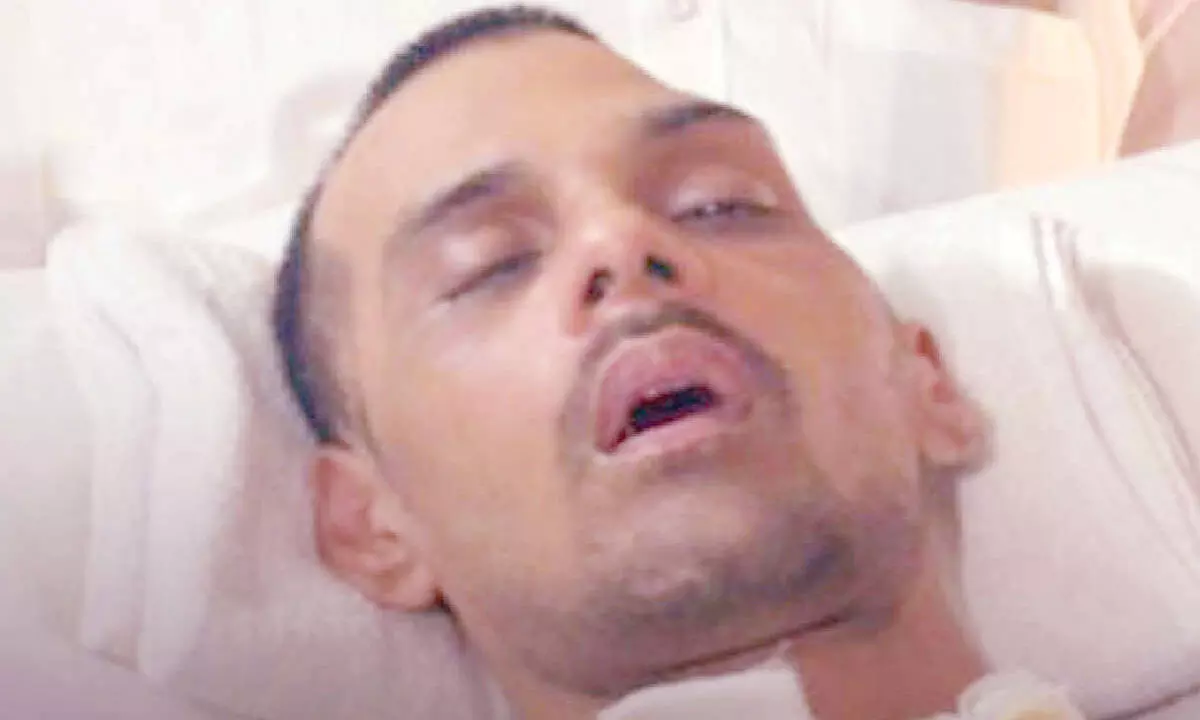
Weweigh a country’s development by its growth, GDP and the happiness of its people. One of the facets of happiness includes their rights.
Kick-starting the progress towards a liberal India comes in the form of the recent Supreme Court ruling that allows the right to euthanasia.
In its March 11 ruling, the apex court allowed passive euthanasia for a comatose patient for 13 years, making him the first Indian to receive such a dignity. Euthanasia is a sort of mercy killing of a patient whose recovery is impossible. In its literal meaning, it is the painless killing of a patient suffering from an incurable and painful disease or in an irreversible coma.
This landmark verdict comes nearly 16 years after a similar plea was rejected. Way back in 2011, in the Aruna Shanbaug case, the Supreme Court had rejected the plea for euthanasia. At the same time, it allowed passive euthanasia under strict conditions for irreversible patients.
Following this, Aruna was kept under care till she passed away naturally in 2015.
In countries where mercy killing is legal, there are two types of it — active and passive. In India, only passive euthanasia is legal, that too, in rare cases.
The 31-year-old former Punjab University engineering student Harish Rana passed away on March 24 after living for over a decade in a vegetative state. Rana’s case made history as it opened the door to die with dignity.
How legal is euthanasia in India?
Article 21 of the Indian Constitution confers on a person the right to live a dignified life, healthy life and not a forced living. Thus, crops up the question whether this fundamental right also confers a person the right to end his life? Then what is the fate of earlier provision in the repealed Indian Penal Code (1860) for punishing a person convicted of attempting to commit suicide?
The Supreme Court explains the concept of euthanasia and the right to life in Gian Kaur vs State of Punjab by distinguishing between euthanasia and an attempt to die by suicide.
The apex court held that death due to termination of natural life is certain and imminent and the process of natural death has commenced. Therefore, these are not cases of extinguishing life but only of accelerating the conclusion of the process of natural death that has already started.
The court further maintained that this might fall within the ambit of the right to live with human dignity up to the end of natural life. This may include the right of a dying man to also die with dignity when his life is ebbing out. However, this cannot be equated with the right to die an unnatural death curtailing the natural span of life.
It is also to be noted that there is only the provision of passive euthanasia in India. The passive euthanasia is without the usage of any drugs or injection which could further the suffering of the terminally ill person and could lead to severe his dignity and not subside it.
Given the fact that euthanasia is getting accepted world-wide, the Supreme Court’s decision can be assessed as the right one. However, the aftermath of such decisions will give us a true picture. The government should take necessary steps so that it is not misused and becomes a practice for commercial purposes.
As passive euthanasia allows for donating organs and body parts; the government should ensure that it is done with the prior consent of the patient or the family and not under pressure. In case of absence of a transparent and independent regulatory body, the passive euthanasia driven patients will be taken over by mafia gangs. Euthanasia will surely release the person from pain-staking life and give him his right to die.
Then, it also reduces the financial burden on the beleaguered family. To understand this, the Supreme Court made it clear that the right to life includes the right to die with dignity and not emphatically. This implies that suicide and abetment and homicide are not equivalent to death with dignity.
Allowing death by mercy killing calls into question its religious and moral standing. For this, the government can seek the views and opinions of representatives of all religions and formulate a universal law for India.
A team of expert doctors should be hired by the government to examine the patient, who would be needing mercy killing by passive means. Any negligence on the part of the doctor can be made a punishable offence.
The Harish Rana case has surely given birth to human dignity in India, but given the value of human life, euthanasia in all its forms must be the last resort. After all, one can expect miracles and medical advances in the future.


