
TG Speaker’s order on anti-defection petitions is a tricky constitutional test

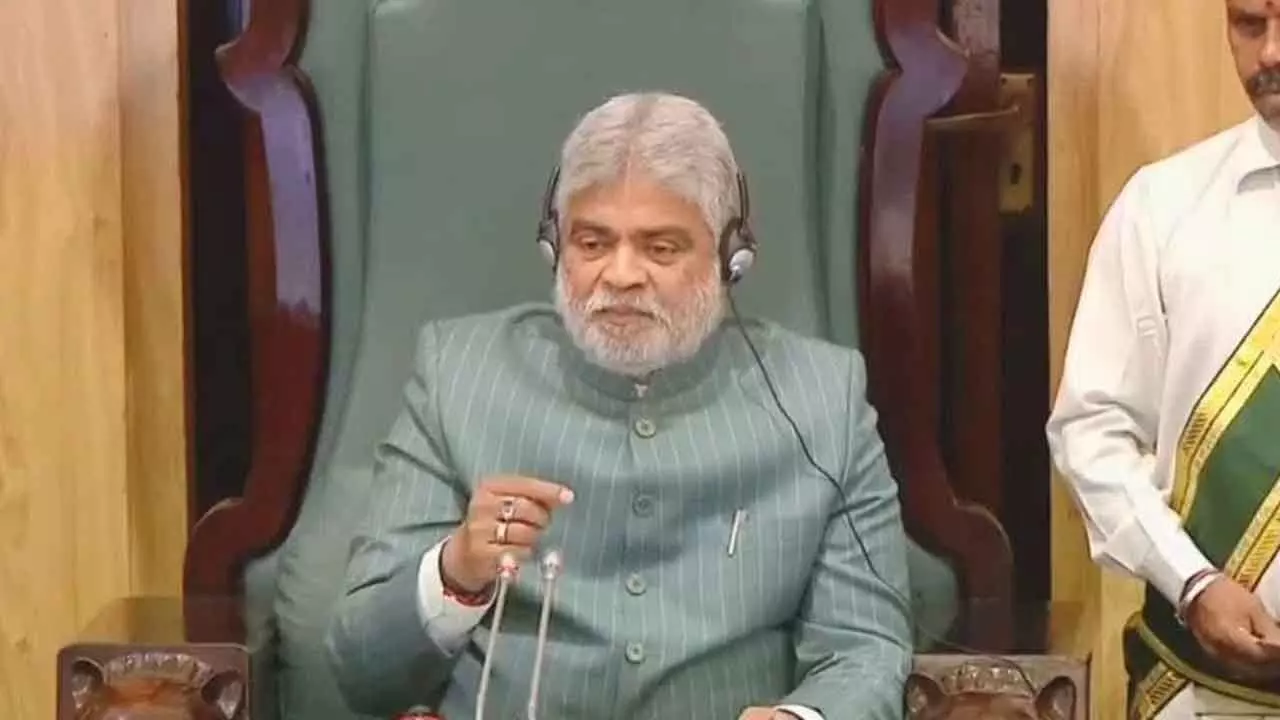
It seems like the Anti-Defection Law is a defective law or a totally defective conclusion on the judgment of the Speaker of Telangana, Gaddam Prasad Kumar, on March 11. This has intensified a debate on whether the Speaker’s decision was based on a strictly legal interpretation or influenced by political considerations.
The controversy surrounding the alleged defection of ten Members of the Legislative Assembly (MLAs) in Telangana has once again placed India’s anti-defection law, legislative ethics, and constitutional accountability under intense public scrutiny. What began as a political dispute has now evolved into a significant constitutional question involving the powers of the Speaker, the limits of judicial review, and the integrity of representative democracy.
The recent (March 13) directions of the Supreme Court of India in the matter have not decided the merits of the dispute but have highlighted a critical issue: transparency and procedural fairness in the Speaker’s adjudication of disqualification petitions. The matter was heard by a two-judge bench, comprising Justice Sanjay Karol and Justice Augustine George Masih.
During the proceedings, senior advocates appearing for the Speaker’s office and the State government submitted that the Speaker had already completed the inquiry and had passed the final orders in all the disqualification petitions.
The controversy arose after ten MLAs, who were elected to the Telangana Legislative Assembly on the Bharat Rashtra Samithi (BRS) ticket, were accused of joining the ruling Congress party. Alleging that these MLAs had voluntarily given up their party membership, BRS leaders, including its working president K T Rama Rao (KTR) and Padi Kaushik Reddy, along with BJP MLA Yeleti Maheshwar Reddy, approached the Supreme Court seeking directions regarding the disqualification petitions.
The petitions challenged the delay and the Speaker’s alleged inaction in deciding the disqualification complaints under the anti-defection law.
According to the Speaker’s decision, the 10 MLAs had not defected from the BRS, and hence the disqualification petitions were dismissed. However, the petitioners raised a serious objection before the Court: copies of the Speaker’s orders and records of the proceedings were not furnished to them.
SC’s directions:
Taking note of these concerns, the Supreme Court questioned why the Speaker’s office had not supplied the relevant documents to the petitioners, especially when they were parties to the proceedings. The court directed that certified copies of the Speaker’s orders must be provided within 24 hours, while the depositions, statements, and other documents recorded during the proceedings had to be furnished within four days.
At the same time, the court closed the present batch of petitions, observing that since the Speaker had already delivered his decisions, the appropriate remedy available to the petitioners would be to challenge those decisions through judicial review before the High Court. Thus, while the Supreme Court did not examine the correctness of the Speaker’s verdict, it ensured that the petitioners would have access to the necessary documents to pursue further legal remedies.
The controversial findings:
The Speaker’s ruling that the 10 MLAs had not defected triggered widespread criticism from political opponents and constitutional commentators. Several facts cited in the public domain have raised doubts about this conclusion. For instance, Khairatabad MLA Danam Nagender reportedly contested the Lok Sabha elections from Secunderabad as a Congress candidate. Meanwhile, records on the Election Commission’s website list him as a Congress nominee.
Similarly, Station Ghanpur MLA Kadiyam Srihari had been seen participating in Congress meetings and public programmes. His daughter contested the Warangal Lok Sabha seat as a Congress candidate and won. Given these developments, critics argue that it is difficult to reconcile the Speaker’s finding that these MLAs continue to remain members of the BRS.
Constitutional Framework
The issue of defections in India is governed by the Tenth Schedule of the Constitution, introduced by the 52nd Constitutional Amendment in 1985. Under the Tenth Schedule, a legislator may be disqualified if:
1. They voluntarily give up membership of the political party on whose ticket they were elected;
2. They vote or abstain from voting against the party whip without permission;
3. An independent member joins a political party after being elected;
4. The authority to decide disqualification petitions rests with the Speaker (or Chairman) of the legislature.
Judicial review of the decisions:
The question of whether the Speaker’s decisions can be reviewed by courts was settled in the landmark case of Kihoto Hollohan v. Zachillhu. In that judgment, the Supreme Court upheld the validity of the anti-defection law but ruled that the Speaker’s decisions are subject to judicial review. The court held that judicial intervention may be justified if the Speaker’s decision:
a. Violates constitutional provisions;
b. Breaches the principles of natural justice:
c. Is vitiated by mala fides or perversity.
Thus, the Speaker’s decision is not beyond scrutiny. This principle is likely to be central if the Telangana matter reaches the High Court. Another recurring problem in anti-defection cases is the delay in deciding disqualification petitions. In the Telangana case, critics argue that not only was there a delay in deciding the petitions, but there was also a reluctance to provide certified copies of the orders, which further obstructed judicial review.
Natural justice:
At the heart of the controversy lies the issue of natural justice. Two core principles govern fair adjudication: Audi alteram partem, both sides must be heard, and reasoned decisions, the parties must know the basis on which a decision has been made.
Democratic mandate:
Beyond legal technicalities, the issue of defections raises deeper questions about democratic morality. The Supreme Court’s latest order does not conclude the controversy. Instead, it marks the beginning of the next phase of legal scrutiny. Once the Speaker’s orders and related records are obtained, the petitioners are likely to approach the Telangana High Court seeking judicial review.
The High Court may examine several crucial questions:
1. Whether the MLAs had effectively given up their party membership;
2. Whether the Speaker’s inquiry was fair and impartial;
3. Whether the decision is consistent with the constitutional principles governing defections.
Depending on the outcome, the matter could eventually return to the Supreme Court.
The Telangana episode also revives a broader institutional debate: Should the power to decide defection cases remain with the Speaker?
Several constitutional scholars have suggested that this responsibility should instead be entrusted to an independent tribunal or the Election Commission of India to ensure impartiality. Until such reforms are undertaken, controversies like the present one are likely to recur.
(The writer is Advisor, School of Law, Mahindra University, Hyderabad)


