
Tracks of transformation: Railways, an inalienable lifeline now

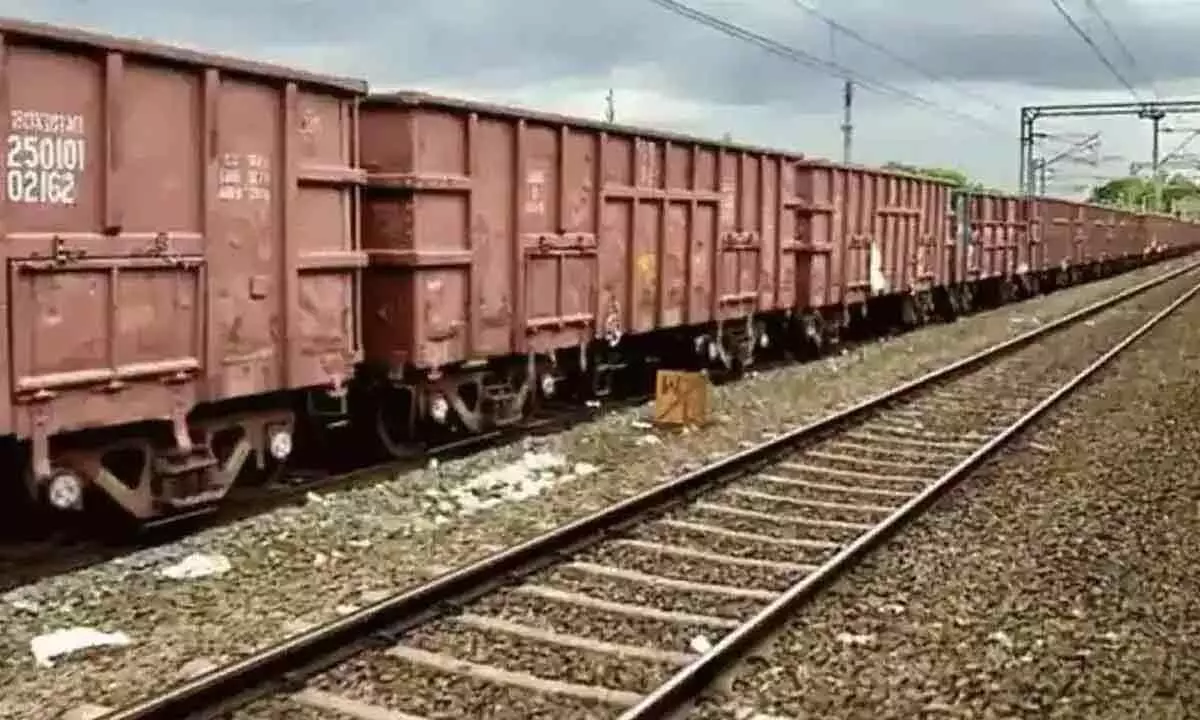
It has been 172 years since the first train ran from Bori Bunder to Thane on April 16, 1853. Over the time, Indian Railways evolved into an inalienable lifeline of the nation—integrating regions, powering commerce and offering cost-effective, environmentally sustainable mass mobility. Yet for decades, it was synonymous with congestion, incremental reform and fiscal constraint. That narrative has changed decisively over the past ten years. The transformation is measurable, not rhetorical
Network expansion and renewal
The fiscal spending on expanding the colonial era network for over six decades mostly remained incremental. During 2004-14, total railway capital expenditure stood at roughly ₹3.62 lakh Crore. However, during the last decade i.e. 2014–24, it crossed ₹17 lakh crore which is over four times higher in nominal terms.
This great Capex push had a significant impact on the scale and speed of network expansion and debottlenecking. The average annual commissioning of new lines, doubling and multi tracking has significantly risen from 1499 kms during 2004-14 to 3118 kms during 2014-24 with 4000 kms in peak years, while renewing more than 45000 kms of existing tracks during 2014-24. Over 96% of DFCs are complete, with 2,843 kms commissioned to boost logistics efficiency, including a fully operational Eastern DFC.
More than 45,000 route kms were electrified between 2014-25 at the rate of 4090 kms/year covering 99.2% across the BG network as against 21800 route kms achieved over the previous six decades. This has resulted in massive cost savings and financial efficiency. This reduced dependence on diesel resulted in savings of over ₹4,700 crore in FY2023-24 alone, thereby propelling Indian Railways towards reaching the goal of ‘Net Zero’ entity by 2030.
Augmentation of rolling stock
There has been a focused effort on augmenting the rolling stock - coaches, wagons and locomotives. Between 2014-2025, as many as 42600 LHB coaches have been produced and deployed to provide improved safety and comfort. A semi-high speed self-propelling train set called Vande Bharat Express was introduced in 2019 and since then, as many as 164 trains have been pressed into service as of December, 2025. In addition, a non-AC long distance push-pull Amrit Bharat Express and a short-distance Namo Bharat Rapid Rail have been pushed into service. These premium and semi-high-speed trains have redefined mobility standards.
A quantum jump was achieved in increasing the fleet size of wagons. Over 1 lakh wagons were produced in the last three years alone, with a record 41,929 wagons produced in FY 2024-25 itself. The focus has now transitioned towards higher-capacity (25 T axle load), specialized (automobile & container traffic) and more durable (from mild steel to stainless steel) wagon types.
A total of 9,168 locomotives were produced during 2014-24, raising the annual average to approx. 917, up from 470 annually during 2004–2014.
Improved safety
Safety enhancements including induction of LHB coaches on a massive scale, deploying Kavach (train collision avoidance system), commissioning Electronic Interlocking at large number of stations, constructing over 13,600 ROB/RUBs by eliminating the Level Crossing Gates, and accelerating track renewals with a three-fold increase in the safety budget have substantially improved safety of train operations in the last decade.
As a result, consequential train accidents declined by over 80%, from 1,711 in the 2004–2014 period (171 per annum) to around 678 in 2014–2025 (61 per annum) with only 31 in 2024-25. This has significantly improved the perception of Railways as a safe mode of transport and heightened the confidence of the travelling public.
Passenger experience redefined
For decades, Indian Railways was defined by scale and reach rather than comfort and experience, marked by legacy infrastructure, aging rolling stock and capacity pressures. There has been a paradigm shift in focus since 2014 which is not just symbolic but aspirational. Safety, security, comfort, speed, convenience, cleanliness, dignity and accessibility are the objects of focus.
Introduction of Vande Bharat trains, Amrit Bharat trains and induction of LHB coaches have not only brought in modern interiors, exceptional amenities and great ambience, but also enhanced safety, riding quality and speed.
Amrit Bharat Station Scheme reimagined the railway stations as integrated mobility hubs and modern city centres. Modern façades, improved waiting halls, better lighting, escalators, lifts and aesthetic signages have transformed passenger interfaces and improved passenger flow, accessibility and dignity.
Digital transformation reshaped the travel experience in the areas of ticketing, real time train tracking, coach-position, onboard infotainment, free Wi-Fi, e-catering etc.
The introduction of Railmadad has redefined the customer interface over Indian Railways. It unleashed new dimensions of real time feedback, transparency, accountability and brought the customer back into focus.
Traffic growth
A remarkable growth in terms of freight loading since 2014 was achieved by Indian Railways. Against 8,473 MT of freight loading in 2004-14, a total of 14,200 MT was achieved during 2014-25. An all-time high was recorded in 2024-25 with 1,617.38 MT. Similarly, the originating freight revenue also rose from ₹ 1 lakh Crore during 2013-14 to ₹ 2.1 lakh Crore in 2024-25.
Though there is a decline in overall passenger traffic driven by post-COVID shift in demand, the passenger revenue grew at a CAGR of 8.5% due to structural shift towards premium and reserved travel (AC classes) powered by rising middle-class income and introduction of faster trains like Vande Bharat. There has been a clear rising trend in passenger volumes since FY 2022-23 after COVID disruption.
Connecting the unconnected
Indian Railways is engaged in a massive, multi-phased expansion aimed at "connecting the unconnected"—specifically targeting border, mountainous, and rural areas that have historically lacked rail infrastructure. It is aimed at building strategic, all-weather connections to boost regional development, enhance logistics, and bolster national security.
With an aim to connect all the capitals of North Eastern States by 2030, many projects in Mizoram, Manipur, Sikkim, Nagaland and Arunachal Pradesh are progressing at a great pace. The recently completed 272-km Udhampur-Srinagar-Baramulla Rail Link (USBRL) is a National Project connecting the Kashmir Valley to the rest of India via the world's highest rail bridge (Chenab Bridge).
In the recent Budget, a major strategic project to construct a 40 km underground railway tunnel through the Siliguri Corridor, known as the "Chicken’s Neck” in West Bengal was announced. This 6-line project (4 surface, 2 underground) aims to secure vital, uninterrupted connectivity to Northeast India, strengthening defense logistics and infrastructure resilience.
Challenges ahead
With an overarching goal of bringing down the national logistics cost, IR set an ambitious target of 45% of modal share by 2030. However, this is very challenging considering the current share of around 27%. The efforts to diversify the cargo beyond traditional bulk, targeting FMCG, automobiles, and containers to counteract the growth of road transport are in the right direction.
The rapid expansion of network and rolling stock assets steeply increases lifecycle costs, requiring huge maintenance budgets, predictive maintenance systems and skilled manpower. Sustaining high levels of annual capital expenditure without proportionate growth in internal revenue may strain long-term fiscal stability.
Passenger demand continues to outpace available capacity on key intercity corridors. Congestion leads to timetable rigidity, reduced punctuality and operational complexity. Even with large capital investments, land acquisition delays, environmental clearances and project execution challenges slow the pace of capacity creation.
To sum up, the last decade marks the most decisive structural shift in Indian Railways since Independence. With the great Capex push, transformation is visible across all the metrics - network expansion, rolling stock modernisation, safety improvement, traffic growth and customer satisfaction. Yet the true test lies ahead. Increasing the modal share, meeting the maintenance burden, maintaining financial discipline and enhancing operational excellence will determine the long-term success.
(The writer is an IRTS officer working in South Central Railway)


