
Urgent need to rethink Telangana’s education roadmap

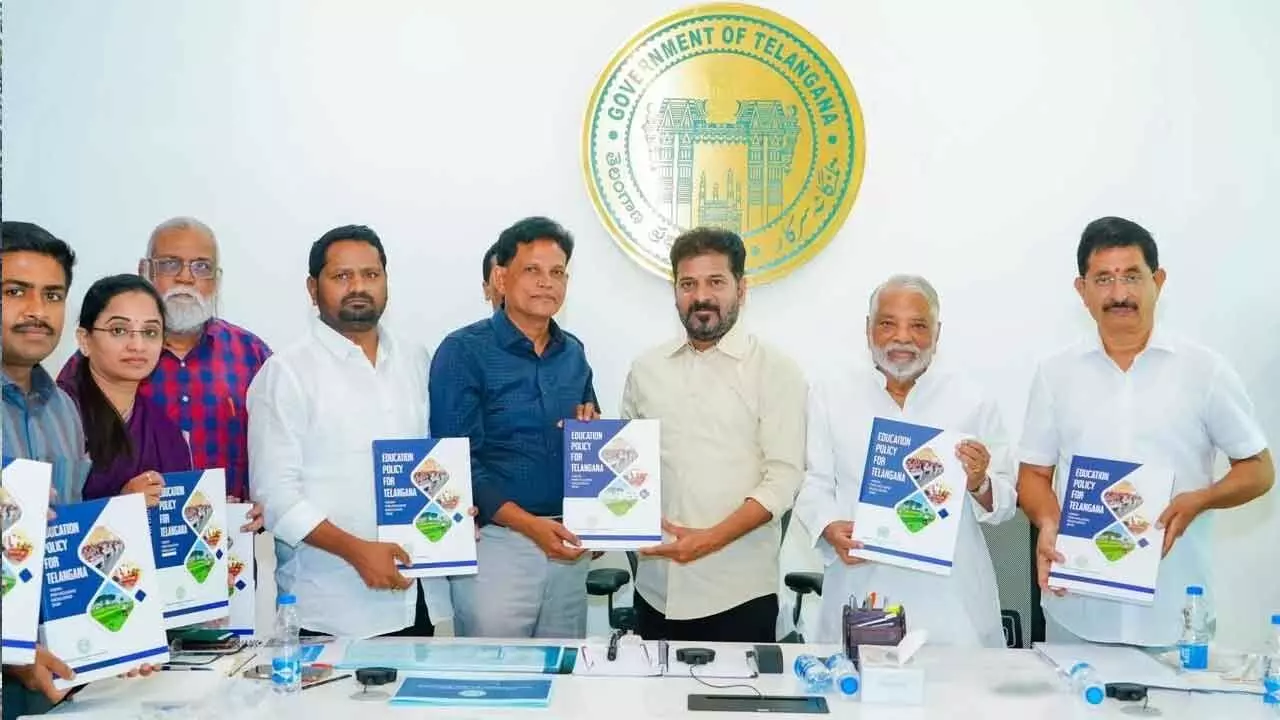
The Government of Telangana’s decision to constitute the Telangana Education Commission (TEC) in September 2024 is a bold initiative. With a mandate to prepare a comprehensive education policy covering pre primary to higher education, including technical streams, the Commission has attempted to chart a roadmap for reform. This effort deserves recognition.
Yet, while the vision is ambitious, several blind spots risk undermining its transformative potential.
In the 21st century, when education must respond to rapid technological change, global competitiveness, and the demand for inclusive growth, the relevance of such a Commission is undeniable. Its role is not only to set clear standards for quality and align reforms with national frameworks like NEP 2020, but also to ensure accountability across both government and private institutions. Without addressing the welfare of private school teachers—who form the majority of the teaching workforce—the promise of reform will remain incomplete.
A progressive step forward:
The TEC, chaired by Akunuri Murali has rightly acknowledged the challenges facing Telangana’s education system. Private school enrolment has surged past 60 per cent, while government schools have seen enrolment collapse to just 26 per cent in first grade by 2024–25. Budget allocations have fluctuated, falling to 5.9 per cent in 2021–22 before recovering modestly to 7.55 per cent in 2024–25. Learning outcomes remain poor, with only 31.5 per cent of Standard-V students able to read a Standard-II text. Against this backdrop, several recommendations stand out. The integration of pre-primary education into the school system is a laudable reform, ensuring continuity in early childhood learning.
Equally commendable is the merging of intermediate education with school education, which will reduce duplication and ease student transitions. This reform will also help optimise the use of human resources and existing infrastructure, including laboratories, while reducing the financial burden on the government. In addition, it will not only curb commercialisation of senior secondary education but also create a more conducive atmosphere for students to learn effectively.
Junior Lecturers (JL) who currently may lack a B.Ed. qualification should be given sufficient time to complete it, thereby aligning with the required standards for Post Graduate Teachers (PGTs). The emphasis on English-medium instruction across all levels reflects parental aspirations and global realities. The call to embed sports, arts, and socio-emotional learning as core components of schooling is another progressive step toward holistic education. As regards teachers, closing the D.El.Ed programme and restructuring B.Ed. stage-specific degrees is welcome. It acknowledges the systematic failure of teacher education, which has long undermined classroom quality. Similarly, re-emphasising polytechnic education to produce industry-ready diploma engineers is a pragmatic correction.
Blind spots and missteps:
Yet, the Commission’s vision is not without flaws. Most strikingly, it does not include experienced educators such as school teachers, principals, lecturers, and professors among its members. Policymaking without the voices of those who live the realities of classrooms risks being detached from ground-level challenges. The TEC also suggested that government teachers’ salaries are ‘relatively high.’ In reality, it is a wrong notion. Salaries are determined by state policy and are not excessive.
The move to open Telangana Public Schools with heavy investment is also a questionable proposal. Instead, the state should focus on strengthening existing government schools and improving enrolment.
Ambiguity on NEP 2020:
TEC’s stance on the National Education Policy (NEP 2020) is ambiguous. While it acknowledges certain proposals, such as strengthening pre-school education, it avoids clarity on whether NEP will be fully implemented. This lack of decisiveness can be problematic. NEP 2020 mandates mother tongue instruction at the elementary level, recognising that comprehension matters more than English skills in early grades.
The TEC’s blanket recommendation of English-medium instruction risks undermining this principle. Moreover, the Commission’s report is not available in Telugu, the state’s official language. This is a serious oversight. Policy documents must be accessible to all stakeholders, including teachers, parents, and local communities. Promoting Telugu as a mandatory subject in all schools is equally essential to preserve linguistic identity while balancing global aspirations.
At the higher education level, the TEC rightly calls for restoring the regulatory integrity of the aided sector. The fee reimbursement scheme should be limited to meritorious students across social categories seeking higher education in private institutions. The Commission also observed that nearly 70 per cent of teaching positions in government-run universities remain vacant, a situation that has had a negative impact on both teaching quality and research activities.
However, the Commission fails to address another pressing issue: the absence of reservation for local qualified youth in private higher education institutions including private universities. With unemployment rising since the state’s inception, ensuring opportunities for Telangana’s own graduates is critical.
Silence on private school regulation and teachers welfare:
The TEC’s call for decentralised governance, stronger school leadership, and implementation of Section 12(1)(c) of the RTE Act (mandating 25 per cent seats in private schools for marginalised children) reflects a commitment to equity. Yet, the Commission failed to address the underpaid salaries of private school teachers, who constitute 58 per cent of the state’s teaching workforce and remain the backbone of its education system.
Private schools in Telangana are regulated under the AP Education Act of 1982 and G.O. Ms. No. 1 of 1993, which mandated recognition, infrastructure standards, staff qualifications, fee regulation, and allocation of 65 per cent of income toward staff salaries and benefits. In practice, however, many institutions defy rules. With nearly two thirds of students enrolled in private schools, leaving them outside effective regulation undermines educational quality and erodes trust. A fair, transparent policy that enforces compliance and protects both teachers and families is essential to correct this prolonged neglect and restore credibility in the education sector.
The way forward:
The Telangana Education Commission has laid out a roadmap that is ambitious and forward-looking. But ambition alone will not suffice. For the policy to succeed, it must bring frontline educators into the policymaking process and correct misconceptions about government teacher salaries while simultaneously addressing wage disparities in private schools.
The state should prioritise strengthening existing government schools and introduce performance-based promotions while tackling the contract and part-time teaching systems that weaken classroom stability. Equally important is in filling supervisory positions.
At the higher education level, providing reservation for local youth in private institutions is essential to address rising unemployment.
Finally, reforms must align with NEP 2020’s emphasis on mother tongue instruction in early grades, recognising that comprehension in the formative years’ matters more than early English proficiency.
Telangana’s education reforms hold promise, but they cannot succeed if they overlook the realities of both government and private school teachers. With nearly two thirds of children studying in private schools, leaving their teachers underpaid and unprotected is an injustice that undermines reform. A “light but tight” framework, including disclosure of private school accounts as recommended by NEP 2020, is essential for transparency and fairness.
The TEC has opened the door to change; now the government must ensure reforms include private teachers, making education policy truly balanced.
(The writer is Assistant Professor, Department of Sociology, BHU Varanasi. Views expressed are his personal)


