
Will GHMC’s trifurcation mean revival of old MCH?

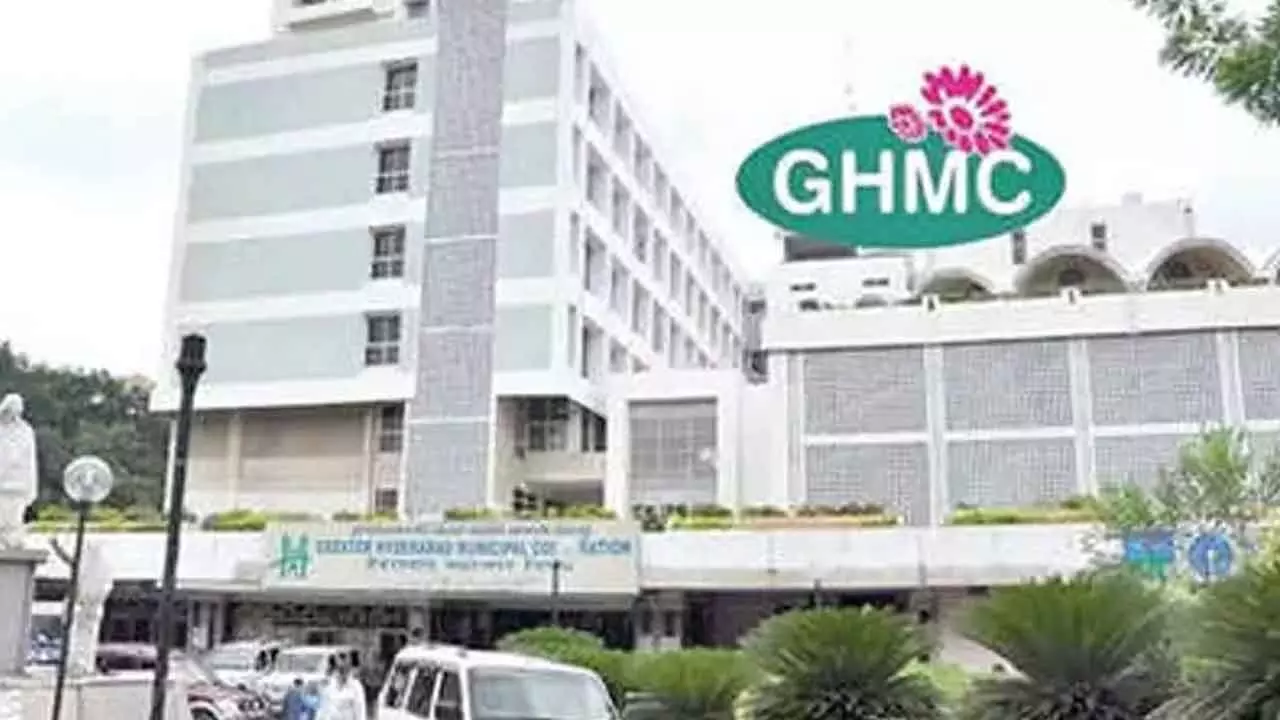
As a part of an apparent New Year resolution, the largest civic body of the country Greater Hyderabad Municipal Corporation (GHMC) is set to be trifurcated for better governance! Spread over 2,053 km up to the Outer Ring Road (ORR) boundaries, there is a proposal split it into three municipal corporations-Hyderabad, Serilingampally and Malkajgiri.
As a result, the erstwhile Municipal Corporation of Hyderabad (MCH) is poised for a revival. However, there is a twist. It will not be revival of the old MCH per se but formation of a new civic body that will include the erstwhile MCH area and a sprawling part of Rangareddy district.
It may be recalled that in December 2025, the GHMC was expanded with the merger of 27 surrounding urban local bodies, including 20 municipalities and seven municipal corporations.
The Telangana government, led by Chief Minister A Revanth Reddy, cited decision-making decentralisation as the main reason for the reorganization. Thereafter, as GHMC became the biggest municipal corporation in the whole country, it now stands to lose the tag with the proposed trifurcation. The whole exercise of merger and reorganisation raises doubts over the intended purpose behind the changes.
Subsequent to the division, Hyderabad will comprise 150 divisions, while Malkajgiri and Serilingampally will boast of 74 and 76 divisions, respectively.
A close look at the proposed Hyderabad municipal corporation reveals its similarity with the old MCH. It willcover the core cities of Hyderabad and Secunderabad in addition to certain areas in RR district.
It must be noted that till 2007, MCH covered only 172 square kilometres and operated with a minimal administrative structure suited for managing a much smaller urban area and population.
The first major restructuring occurred on April 16, 2007, when the undivided Andhra Pradesh government transformed MCH into the Greater Hyderabad Municipal Corporation (GHMC) by merging 12 municipalities and eight-gram panchayats from the surrounding Rangareddy and Medak districts. As a result, GHMC’s jurisdiction rose to 625 square kilometres and the division count went up from 100 to 150. New administrative zones and circles were added.
Whereas the latest GHMC expansion covers an urban sprawl of 2,053 square kilometres, making it the largest municipal corporation in India by area. It presently comprises an estimated population of over 1.34 crore. GHMC oversees a contiguous metropolitan region comparable in scale to global mega-cities. To manage the expanded jurisdiction, GHMC underwent a comprehensive internal restructuring.
After the expansion, the GHMC comprises 300 divisions, which double the 150 divisions that existed earlier; The number of circles and zones were also doubled to 60 and 12, respectively.
The new Hyderabad Municipal Corporation will include the old MCH area. Interestingly, the Telangana government is proposing the merger of Secunderabad Cantonment into MCH, which is likely to take shape after the split.
According to official sources, the plan is to carve three corporations from GHMC. The new MCH will comprise six zones and 30 circles. Malkajgiri municipal corporation will have three zones and 14 circles, while Serilingampally municipal corporation will have three zones and 16 circles.
As per the plan, the Hyderabad civic body is likely to have 27 divisions spread over six circles—Adibatla, Badangpet, Jalpally, Shamshabad, Rajendranagar and Attapur under Rajendranangarand Shamshabad zones—from the neighbouring Rangareddy district. Its 150 divisions include Secunderabad (28), Khairatabad (25), Charminar (25), Golconda (26), Rajendranagar (29) and Shamshabad seven.
The expansion of GHMC and the trifurcation move have raised a political storm with BRS, BJP and AIMIM accusing the Congress of playing opportunistic and partisan politics. They are apprehensive that the move may help their opponents and the Congress party.
The BJP alleges that trifurcation will benefit AIMIM more, as its Old City bastion is in the proposed Hyderabad municipal corporation. However, unlike in the old MCH, on the face of it, divisions in the new Hyderabad Municipal Corporation seem to be unevenly distributed whereas the old MCH had a 50-50 share of the two communities. If the government goes with the current plan, it will have more divisions dominated by majority community but the BJP fears that the majority community votes will be divided among Congress, BRS and BJP. Each of these parties will fail to get a majority on their own while the AIMIM will emerge as the single largest party when the elections are held.
The trifurcation will decentralize administration and ensure efficient planning and smooth service delivery, but it has its own challenges. When the two moves are weighed for governance, the trifurcation (of GHMC) will be more beneficial compared to expansion. The rationale of having a local self-government at the third tier after central and state governments is to make the administration reach the grass roots. If the government’s purpose is to bring decentralization and administrative effectiveness, then it should strive to implement it efficiently. This will in turn improve the civic infrastructure and governance.
The government needs to respond to the ongoing protests for the merger of Secunderabad cantonment with GHMC so that the area is developed on par with other wards and the residents get due representation. In the long run, trifurcation can create transparency as it becomes easy to verify the beneficiaries in compact areas. Instead of one mayor and a municipal commissioner, there will be three mayors and an equal number of municipal commissioners.
However, the government should not take a hasty decision like it did as regards GHMC expansion. The trifurcation must be done based on area and population criteria to ensure overall development and good governance.
Meanwhile, the move may prove beneficial to BCs, SCs and STs as they may find opportunities for representation in the elected councils based on quota.


