
A Complete Guide to Masonic Suits: History, Styles, and Modern Trends

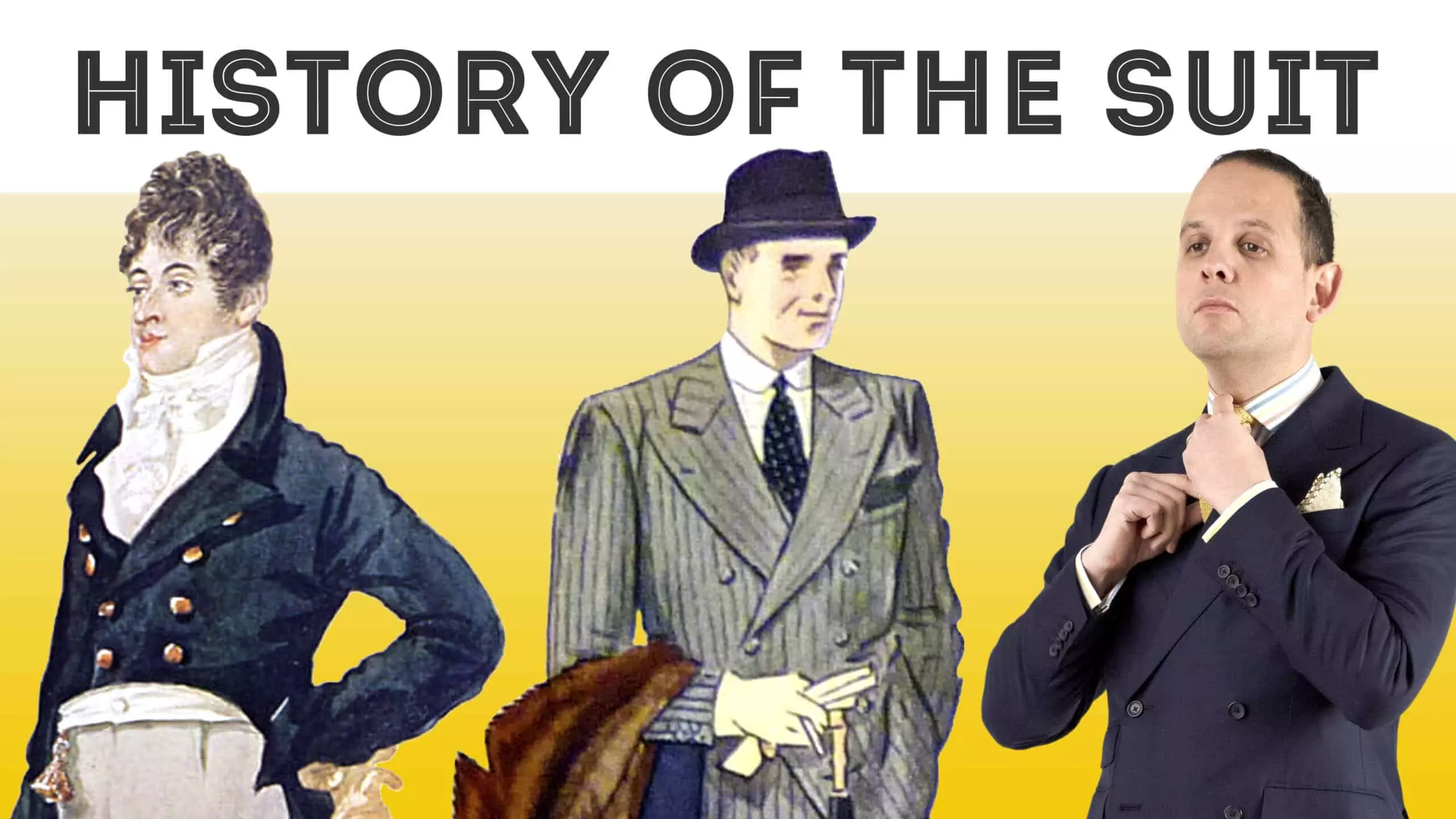
Explore the complete guide to Masonic suits, covering their rich history, traditional styles, symbolic significance, and modern fashion trends in Freemasonry attire.
Introduction
When we picture a Masonic gathering, what comes to mind? For many, it's the image of men in dark suits, white shirts, and conservative ties, adorned with aprons and regalia that speak to centuries of tradition. But the story of Masonic attire is far richer and more complex than this simple snapshot suggests. From its origins in medieval guilds to modern interpretations on fashion runways, the clothing of Freemasonry has evolved while maintaining a powerful symbolic connection to the fraternity's core values.
This guide explores the complete history of Masonic suits and regalia, examining how what Masons wear reflects who they are and what they believe.
The Historical Foundations of Masonic Clothing
From Guild Livery to Masonic "Clothing"
The origins of Masonic attire lie not in speculative philosophy but in practical reality. The fraternity's roots stretch back to the medieval stonemasons' guilds, where distinctive dress served a clear purpose: identification. As noted in an 1876 edition of The Masonic Magazine, a statute passed in 1403 during the reign of Henry IV expressly permitted fraternities to adopt distinctive dress . The Saddlers' and Spurriers' Guild declared that members "shall have a livery of suit to know the brethren and sisters and for no other cause" .
This concept of "livery" or uniform clothing directly influenced early Masonic practice. The Masonic Magazine explains: "A black suit with white stockings and gloves and an apron is called the 'clothing' of a Mason and the Regulations of 1721 required that 'every new brother at his making is decently to clothe the lodge,' that is, all the brethren" . This requirement established the principle that Masonic dress was not merely individual preference but a collective responsibility.
The Evolution of Regalia
The question of how ancient Masonic regalia truly is has intrigued scholars for generations. An 1894 article in The Freemason's Chronicle posed this very question, noting that "no archaeologist has, however, so far as we are aware, ever discussed at any length... the antiquity of Masonic clothing" . The author describes the elaborate nature of Victorian-era Masonic gatherings: "the eye is dazzled with the brilliant sheen of jewels, embroidery, silks, golden fringes, and lace" .
Yet this opulence was a relatively recent development. The same article references an engraving of Robert Burns attending Kilwinning Lodge in the late 1700s, noting that "one very noteworthy feature of it is the extreme simplicity of the regalia. The Brethren wear lambskin aprons without adornment of any kind; the Master and Wardens are alone distinguished by plain collars" . This evolution from simplicity to elaboration mirrors broader trends in men's fashion and reflects the changing social position of Freemasonry itself.
The author possessed an early 19th-century apron "consisting of the plain lambskin square with a flap, and three blue rosettes—one on each lower corner and one on the flap," suggesting this was likely "the original Master Mason's apron" before "fringe and silk decorations were the additions of a subsequent age" .
The Influence of Secular Fashion
Beau Brummell and the Birth of Modern Men's Wear
The development of Masonic formal dress cannot be separated from the broader history of men's fashion. M.W. Bro. Raymond S.J. Daniels, Past Grand Master of the Grand Lodge of Canada in Ontario, explains that "historians of costume agree that George Bryan (Beau) Brummell, 1778-1840, set the standard convention for men's clothing fashion which, with minor modifications and simplifications, still pertains to this day – long trousers and tailed coat, replacing knee breeches and hose, dark colours for coat and vest" .
Paintings of Masonic meetings from this period, such as those depicting Mozart's Viennese Lodge or the inauguration of Robert Burns, show members "in the formal dress of the day" . From the beginning of speculative Freemasonry, formality of dress has been observed.
Military and Gentleman's Club Influences
Canadian Freemasonry, like many branches of the craft, inherited traditions from England, including military influences. M.W. Bro. Daniels notes that "military lodges were a major formative influence in the early days. In matters of dress, the standards observed in the gentleman's club and the officer's mess have had significant influence" . This heritage explains the continued emphasis on polish, order, and uniformity in Masonic attire.
The military connection appears not only in the formality but in specific regalia items. The Scottish Rite Masonic Museum & Library holds a Masonic York Rite Royal Arch Guard tunic from circa 1916, a striking blue wool garment with rust-colored silk panels, metal thread trim, and silver discs . Such elaborate uniforms for Masonic "guards" or ceremonial officers directly parallel military dress uniforms.
Fashion as Inspiration for Regalia
The relationship between fashion and Masonic regalia has been bidirectional. A 2011 exhibition at the National Heritage Museum, "Inspired by Fashion: American Masonic Regalia," traced how "regalia manufacturers often took their cues from contemporary fashion houses" . The exhibition explored four design sources: contemporary fashion, the military, Orientalism, and theater.
Scottish Rite Freemasons became known for elaborate theatrical degree ceremonies in the early 1900s, inspired partially by the historical pageantry craze of the era. A painting titled "Degree Night at the Robing Room" by Frank A. Stockwell captures this backstage atmosphere, showing the preparation and costume changes that accompanied these productions .
The Masonic Suit: Form and Function
What Constitutes a Masonic Suit?
Unlike the elaborate regalia of specific degrees and offices, the Masonic suit itself is relatively straightforward. In most Ontario lodges, "a dark business suit, a white dress shirt, and a conservative tie is normally worn by members" . This standard varies by jurisdiction and occasion, ranging from "white tie and tails, tuxedo, business suit, even highland dress in some with Scottish roots" .
Some lodges maintain particularly strict standards. M.W. Bro. Daniels notes having "attended lodges where even the Candidate on the night of his Initiation is instructed to wear a tuxedo because that is the standard dress for all members of the lodge" .
The Purpose of Formality
The emphasis on formal dress serves multiple purposes within Freemasonry. First, it creates separation from everyday life. "Just as the lodge is tyled from the outside world, the 'working clothes' of a Freemason set us apart as different," Daniels explains . This distinction elevates the occasion and reminds participants of the significance of their work.
Second, uniformity in dress symbolizes unity of purpose. "In sports, the military, the police, and the performing arts (orchestras and choirs), the individual wears a uniform to signify that he is part of a larger unit with a common purpose" . The Masonic suit functions similarly, subsuming individual identity into collective endeavor.
Third, formal dress demonstrates respect. Daniels argues that "dressing up gives a sense of occasion. It is an outward gesture of the respect we hold for the Craft in general and more especially for our fellows in the lodge" . This respect extends to the institution, its traditions, and its members.
Regional and Jurisdictional Variations
Masonic dress has never been entirely uniform across all jurisdictions. The 1894 Freemason's Chronicle article notes that "in Scotland there is no such uniformity, and every Lodge selects its own colours; besides which the apron varies slightly in shape. So also with the Grand Lodge clothing; that of the Grand Lodge of Scotland differs materially from that of Grand Lodge of England in pattern and design, and the jewels are dissimilar in many respects" .
This regional variation continues today, with different Grand Lodges maintaining distinct traditions while sharing core principles of formality and respect.
Beyond the Suit: Masonic Regalia and Symbolism
The Apron: The First and Most Important Garment
The Masonic apron deserves special attention as the most ancient and symbolically rich element of Masonic attire. Derived from the working aprons of operative stonemasons, it represents labor and service. The ritual surrounding the apron's presentation to new members emphasizes its significance as "more ancient than the Golden Fleece or Roman Eagle" and "the badge of a Mason."
The evolution of the apron reflects changing aesthetic sensibilities. From plain lambskin, aprons developed rosettes, then fringe, then elaborate embroidery and metallic thread. Yet the fundamental symbolism remains unchanged.
Other Regalia Elements
Beyond the apron, Masonic regalia includes collars worn by officers, jewels suspended from these collars or worn on the apron, gauntlets or gloves, and for some bodies, distinctive hats or headcoverings. The Royal Arch degree includes a sash, and Knights Templar wear elaborate uniforms inspired by medieval crusaders.
The National Heritage Museum's collection includes fascinating examples of degree-specific regalia, including a remarkable red knitted "devil costume" used by Scottish Rite Masons in Rochester, New York, for the 19th Degree exploring the conflict between good and evil . Such specialized garments highlight the theatrical elements of Masonic ritual.
Masonic Symbols in Everyday Dress
Masons have long found ways to express their affiliation beyond lodge meetings. The National Heritage Museum holds a 20th-century bathrobe whose fabric is decorated with the square and compasses, demonstrating how Masonic symbols have appeared on casual and personal items . This impulse to carry Masonic identity into daily life continues today in various forms.
Modern Trends in Masonic Attire
The Suit's Revival
Recent years have seen interesting developments in men's formal wear generally and Masonic attire specifically. Despite predictions during the pandemic that formal suits might disappear, the opposite has occurred. Fashion forecaster Edwin van den Hoek notes that "the younger generation has actually caused a revival. It is no longer the heavily structured suit, but lighter and more flowing" .
This trend toward softer, more comfortable formal wear may influence Masonic dress codes, potentially making formal attire more accessible while maintaining dignity.
The Freemason Hoodie Phenomenon
Perhaps the most striking modern development is the emergence of "Freemason hoodies" – casual garments featuring Masonic symbols. Available in pullover, zip-up, fitted, oversized, and lightweight versions, these hoodies represent a new way of expressing Masonic identity outside the lodge room .
These garments feature symbolic designs (square and compasses, All-Seeing Eye, pillars), textual designs with Masonic mottos, vintage or distressed styles evoking history, minimalist approaches with small, discreet symbols, and hybrid combinations of multiple elements .
It's important to note, as Alibaba's product guide emphasizes, that "while Freemason hoodies are a popular way to celebrate Masonic culture, it's important to distinguish between symbolic apparel and official regalia. These garments are not substitutes for formal lodge attire and should be worn with respect for the fraternity's traditions and privacy" .
Fashion's Fascination with Masonic Aesthetics
The fashion world has periodically drawn inspiration from Masonic imagery and aesthetics. In 2016, the New York Fashion Week show for Creatures of the Wind was held at the Masonic Hall in New York City, with the collection clearly inspired by fraternal themes . Models wore "triangular knee-scraping dress out of suit-like fabric, layered over a collared white dress shirt with long slitted sleeves: a picture of softened masculinity" .
The collection featured silver triangle pendants "inspired perhaps by the Freemason symbol" and a color palette of black, grey, red, royal blue, and mustard yellow that echoed Masonic regalia colors . This runway interpretation demonstrates how Masonic aesthetics continue to resonate beyond the fraternity itself.
Balancing Tradition and Change
Freemasonry faces the ongoing challenge of maintaining meaningful traditions while remaining relevant to new generations. The question of dress codes illustrates this tension. M.W. Bro. Daniels addresses this directly: "Will a relaxation in formal dress attract new members to our lodges, or encourage present members to attend more regularly? I doubt it very much. The lowering of standards in Freemasonry, whether moral or social, will ultimately destroy us by eliminating the reason for our existence" .
This perspective emphasizes that formal dress is not arbitrary but connected to deeper values. "No, dressing formally does not make us, like the Pharisee of old, better than other men, but it is an indication that we press toward the mark of our high calling" .
Choosing Appropriate Masonic Attire
For Lodge Meetings
For those attending lodge meetings, the first rule is to follow local custom. As M.W. Bro. Daniels advises, the standard in most Canadian lodges remains "a dark business suit, a white dress shirt, and a conservative tie" . When in doubt, err on the side of formality – it's easier to remove a jacket than to conjure one from thin air.
Quality matters. Well-maintained clothing shows respect for the occasion. Shoes should be polished, shirts pressed, and regalia properly cared for.
For Masonic Events and Social Functions
Different Masonic events may call for different attire. Festive boards, public ceremonies, and social gatherings each have their own conventions. Installation of officers often requires more formal dress than stated meetings. When invited to such events, inquire about expected attire.
For Casual Expression
For those who wish to express Masonic identity in everyday life, the growing range of Masonic-themed casual wear offers options. When selecting such items, consider tastefulness and dignity. The Alibaba guide suggests: "For a balanced look, pair your Freemason hoodie with neutral-colored jeans or chinos. If wearing a zip-up, consider leaving the zipper slightly open to showcase a Masonic t-shirt or pendant underneath—adding depth to your symbolic expression" .
For New Members
New Masons should not feel overwhelmed by dress requirements. Basic needs are simple: a dark suit or conservative business attire, white shirt, conservative tie, and dark shoes. The lodge will provide initial regalia, often as part of the initiation fee. Observe what longer-term members wear and ask questions when uncertain.
The Deeper Meaning of Masonic Dress
More Than Clothing
Ultimately, Masonic attire points beyond itself. The Final Charge delivered to the Fellow Craft makes this clear: "The internal and not external qualifications of a man are what Masonry regards" . Clothes do not make the Mason – character does.
Yet the external supports the internal. Formal dress creates space for serious reflection. Uniformity reminds us of our common purpose. The apron, plain or ornate, connects us to generations of Masons who wore the same badge of service.
A Tradition Worth Preserving
The traditions of Masonic dress deserve preservation not as empty formalism but as meaningful practice. When we dress for lodge, we prepare ourselves mentally and spiritually for the work ahead. We show respect to our brethren and to the institution. We connect with history and tradition.
As M.W. Bro. Daniels eloquently states, "a meeting of the lodge opened in the Name of the Great Architect is not merely an unbuttoned get-together" . The formality of dress reflects the solemnity of purpose.
Conclusion
The story of Masonic suits and regalia is a story of continuity and change, of practical origins and symbolic meanings, of individual expression and collective identity. From the black suits and white stockings required by the 1721 Regulations to the Freemason hoodies of the 21st century, Masonic attire has evolved while maintaining connection to core values.
Understanding this history enriches our appreciation of what Masons wear and why. The dark suit, white shirt, and conservative tie are not arbitrary fashion choices but links to a tradition stretching back centuries. The apron, in its simplicity or elaboration, remains the badge of a Mason. Even new forms of expression, like the Masonic hoodie, carry forward the impulse to identify with the craft and its values.
For the individual Mason, the question of dress ultimately comes down to respect – respect for the institution, for its traditions, for fellow members, and for oneself. When we dress for lodge, we signal that the work we undertake matters. We set apart the time as special. We honor those who came before and those who will follow.
In a world that grows increasingly casual, Freemasonry's commitment to formal dress may seem anachronistic to some. But for those who understand its meaning, it remains a powerful expression of what the craft represents: the effort to polish the rough ashlar, to make good men better, to build something lasting and true.
The suit, in the end, is not the point. But what it represents – dignity, respect, tradition, and the serious work of self-improvement – is very much the point indeed. And that is a tradition worth maintaining, whether in white tie and tails or in a dark business suit with a white shirt and conservative tie.


