






Pray, Meditate, Play: Six Ways to Spend a Day at the Dharampur Ashram
In Short
Discover six meaningful ways to spend a day at Dharampur Ashram, from prayer and meditation to play, reflection, nature, and peaceful moments of spiritual connection.

Share :

Pray, Meditate, Play: Six Ways to Spend a Day at the Dharampur Ashram

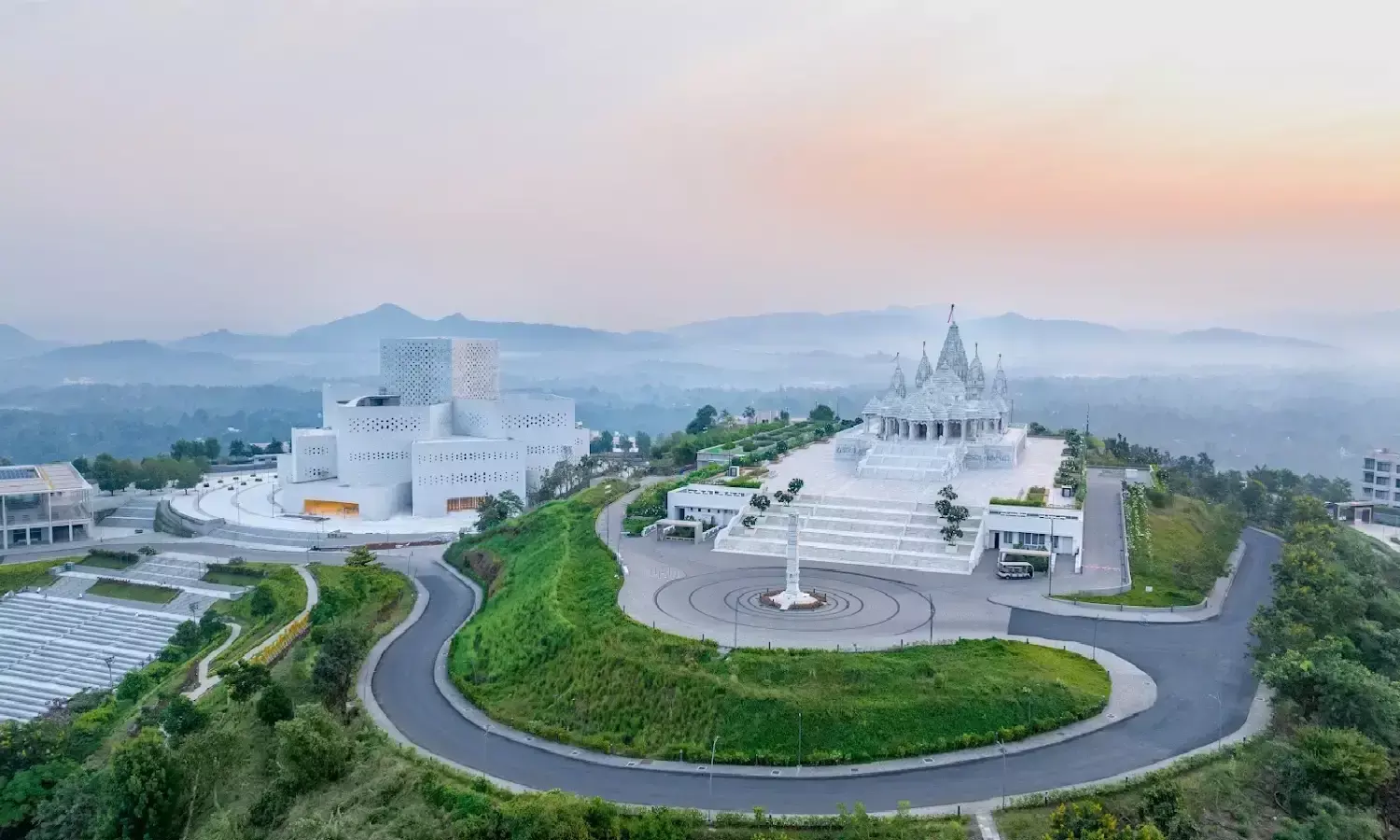
You don't have to be a devotee to visit Shrimad Rajchandra Ashram in South Gujarat. Between its prayer halls, rescued animal shelters, handicraft stores and football fields, there is something for everyone who walks in
The very mention of ashram usually conjures up certain images - silence, orange robes, and a lot of sitting quietly. At the Shrimad Rajchandra Ashram in Dharampur, you can find all of these elements in abundance. But there are also families posing for selfies with their newly adopted camels, teens playing football and guests leaving with a bag full of homemade candles and snacks.
Situated in the picturesque landscape of the Valsad district of Gujarat near the borders of Maharashtra, this ashram sprawls over 355 acres of land. This ashram acts as the International Headquarters of Shrimad Rajchandra Mission Dharampur (SRMD), the spiritual and humanitarian organization which was founded by Pujya Gurudevshri Rakeshji and is visited by thousands of people everyday.
These people may visit for a few days, for a week or just for the day. According to the Mission, this path of spirituality which it has created is open to everybody and has no limitations of religion and geography. And this is reflected from the kind of people who frequent the place.
If you are planning a visit, here are six ways to spend your day.
1. Worship: begin where it all began
The day at Ashram begins with prayers, and it is the best way to get an idea of what the Ashram means. The spiritual soul of the Ashram is Shrimad Rajchandraji, a philosopher who lived in the nineteenth century and who is said to be the spiritual guru of Mahatma Gandhi. Gurudevshri has made it his lifelong mission to study and preach the teachings of Shrimadji.
The selection of Dharampur has not happened by chance. It was more than a hundred years back when Shrimadji himself used to meditate at Dharampur, and there is a memorial of him at the outskirts of Dharampur. Participating in any of the morning prayers or attending any of the satsangs preached by Gurudevshri provides one with a feel of what has been a guiding force for generations. Satsangs do not include only hardcore religious philosophies that are preached using practical language and topics that motivate an individual to introspect. It is enough to spend some two hours in these wisdom sessions to change one's life around.
2. Meditate: give your mind a day off
For many tourists in the city, the real luxury lies in silence. Once away from traffic sounds and notifications, it suddenly becomes very easy to be seated with closed eyes and just breathe. Whether in the various gardens inside the Ashram or in a big meditation room. As Gurudevshri always tells his audience, the modern-day mind is like a phone with too many apps working on it at one time. Visiting the ashram for a few hours is the best way to begin switching off some of them.
For those who wish to explore further, there will soon be more choices. The Mission is planning Ekant Kutirs, or groves of solitude, hidden amidst the trees in the ashram for silent retreats ranging between three, seven, or thirty days. There will also be a new Shrimad Rajchandra Wellness Center offering Ayurveda, naturopathy, meditation, yoga, breathwork, and detox programs.
3. Play: yes, really
This is the experience that surprises most first-timers. Sport is built into the Mission's approach to young people, as one of the five pillars of its youth programme alongside satsang, sadhana, seva and culture.
The Sports Complex at the Ashram houses three massive turfs with artificial grass with facilities for basketball and football among others. Football in particular has a special place. A Football association, named after Gurudevshri, has teams in India, the United States, Canada, England, the UAE and Singapore, and it holds tournaments in Dharampur. For visiting families, the open grounds make it easy for children to run around while the adults catch their breath.
The idea behind it is simple: a spiritual life has to be a joyful one.
4. Visit the animals: meet the residents
A short trip from the ashram brings you to Shrimad Rajchandra Jivamaitridham, an animal care campus. Its name means an abode of friendship with all living beings, and it is easily the favourite stop for children. Visitors get an opportunity of being up, close and personal with the cows at the shelter with an opportunity to feed them as well.
Later this year, this space is going to get transformed into a 44 acre campus, with a capacity of catering to more than 5,000 animals at a time. Apart from facilities to treat and shelter all types of animals, there would be several immersive experiences that inspire empathy for every living being.
5. Shop: take home something made with love
Before you leave, keep an hour to visit the shop. Here, you can get a glimpse into Gurudevshr’s teachings through books authored by Him; buy items for gifting that have a purpose attached to them.
What’s more; their shelves are stocked by Raj Uphaar, a brand run by rural and tribal women trained and employed at the Mission's Sarvamangal Centre of Excellence for Women nearby. The range runs to more than 200 products. There are snacks and savouries under Raj Amrut, fragrances under Raj Saurabh, and handicrafts and garments under Raj Kruti. Many are made with local materials, and Raj Uphaar products have now reached 26 countries. Every purchase supports a woman's livelihood in the villages around Dharampur, which makes the shopping feel good in more than one way.
6. Seva: the part you will remember
If there is one experience that sums up the ashram, it is seva, or selfless service. Visitors are often invited to lend a hand, whether in the kitchens, on the grounds or alongside the volunteers who run the Mission's service work.
Much of the ashram's day-to-day running is handled by Atmarpits, men and women who have taken a lifelong vow of celibacy, spiritual practice and service. There are now 131 of them, many of whom left professional careers as architects, doctors and consultants. Watching them at work, you begin to understand the Mission's guiding line: realise one's true self and serve others selflessly.
Gurudevshri sums up the balance in one of his talks: "Sadhana generates the energy and seva distributes it." A day at the ashram gives visitors a small taste of both.
More than a day out
Behind the peaceful setting sits a remarkable story. Pujya Gurudevshri Rakeshji, a philosophy scholar from Mumbai with a doctorate on Shrimadji's Shri Atmasiddhi Shastra, founded the Mission in 1994 and established the ashram here in 2001. Around it have grown a 250-bed charitable hospital, schools for tribal children, a science college and an upcoming university. Today the Mission works through 142 centres across six continents.
You may come for the quiet, or for seva. Most visitors, it seems, leave with something they didn't expect to find: a sense of calm that lasts a little longer than the drive home.


