






US Defence Chief Signals Return to 'Gunboat Diplomacy' as Air Strikes Hit Iran For Second Night

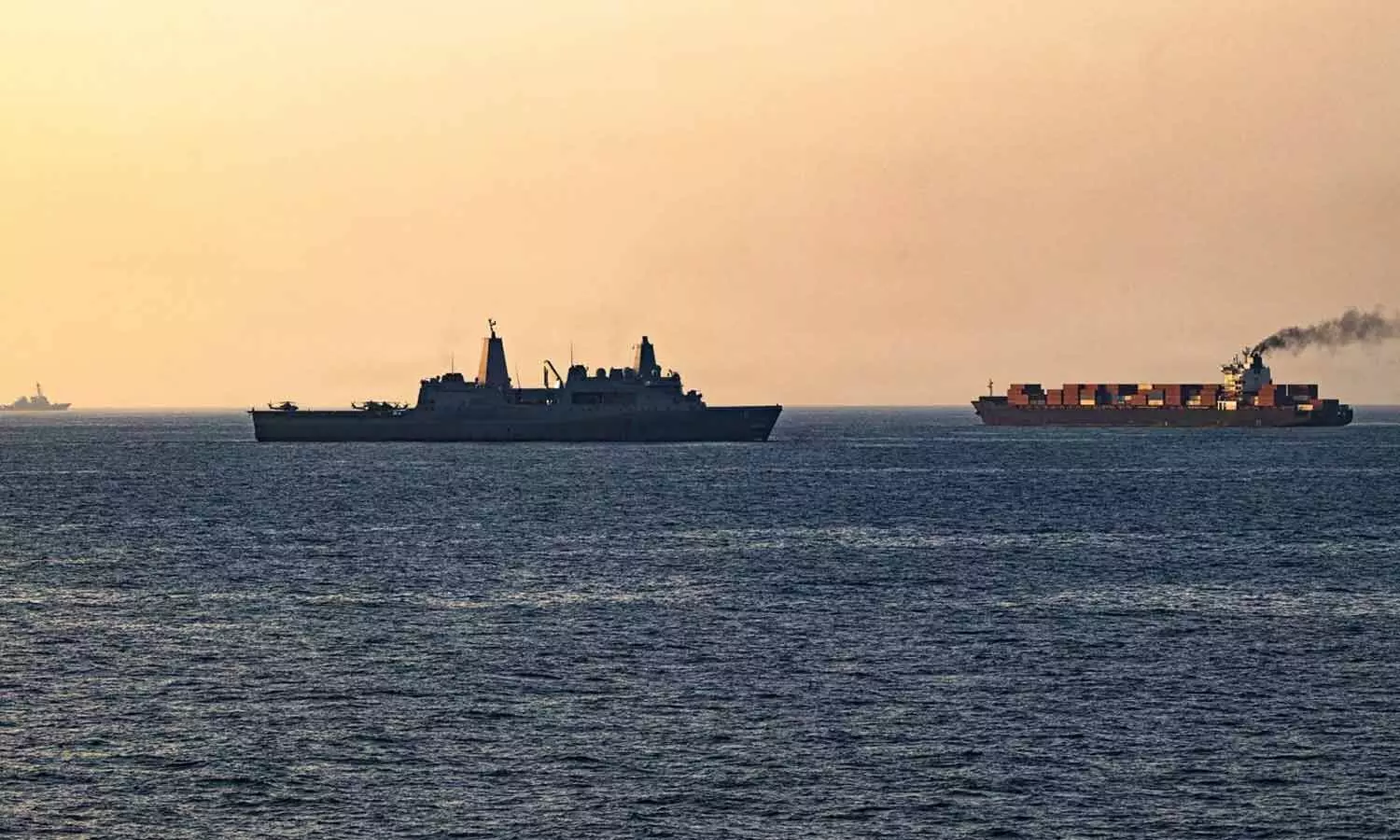
US Defence Secretary Pete Hegseth has come out swinging at the idea of a second day of heavy military strikes on Iran, saying that the US will be "negotiating with bombs" in stalled permanent ceasefire negotiations.
The Defence officials mentioned that the U.S. military is striking Iran's second night in a row at critical infrastructure as a more aggressive approach to pressure Tehran into ending stalled ceasefire talks. Defence Secretary Pete Hegseth, speaking outside the headquarters of U.S. Central Command (CENTCOM) in Tampa, Florida, confirmed the operations, repeating the U.S. President, Donald Trump's warnings that Iran would "pay the price" for dragging out diplomatic efforts. Hegseth said it was clear the Iranian government was not making a permanent agreement, and the high-intensity aerial bombardment will continue if it is unable to reach an accord, he added, “If we need to negotiate with bombs, we'll negotiate with bombs.”
CENTCOM declared the new spate of strikes as "additional self-defensive strikes" that came in response to ongoing Iranian aggression. Iranian state news agencies immediately reported a number of explosions in several important cities after the announcement, including Bandar Abbas, Gorgan, Qeshm, and Hengam, as well as the activation of air defence systems in Fars province. The renewed violence effectively breaks the weak, short-lived truce established on April 8. The larger war started on Feb. 28, when the Trump administration cooperated with Israel in an initial attack targeting Tehran's nuclear ambitions, a rationale that has been constantly rehashed by administration officials in the past few months.
This week's military escalation was triggered by the shooting down of an American AH-64 Apache helicopter in the vicinity of the crucial Strait of Hormuz. While no American service members were injured in the incident, President Trump blamed Tehran and deemed a military response absolutely necessary. Hegseth declined to call the current barrage a renewal of total war but said it was a realistic approach for the "War Department" to "set the conditions" and "set the terms" on which it would agree to ease some international sanctions on Iran, such as dismantling its nuclear program and allowing the nation to receive oil shipments.
The administration's aggressive rhetoric has been met with harsh criticism from the international community and human rights organisations, after Trump's earlier threats to attack Iranian bridges and energy systems, to the extent of destroying an entire civilisation. Upon a direct question from journalists whether the attacks on civilian infrastructure were a war crime, Hegseth brushed aside the questions, calling them disingenuous attacks on the military's integrity and even refused to exclude the possibility of civilian targets.
In response to the first American shots, Iran has said it won't 'bow down' and has already sent rockets at US bases in Kuwait, Jordan and Bahrain to begin retaliating against the Americans. Analysts note that the administration seems to be trying to strike a balance: it's not declaring the April ceasefire a failure, but is also employing significant military pressure to make a diplomatic move of its own.
India's bowling combination, not batting, the real concern heading into Women's T20 WC, says Nasser Hussain
Omar meets PM Modi in Delhi, presses for early restoration of J&K statehood
Air India denies putting pressure on families of AI-171 Boeing crash victims
India Finland Relations, S Jaishankar, Digitalisation, Sustainability, Strategic Partnership
DK Shivakumar meets PM Modi in Delhi, seeks support for Karnataka's development priorities
Siddaramaiah accuses Zameer Khan of betrayal in Davanagere bypolls


