






Ancient Mystery, Modern DNA: Shroud of Turin Study Reveals Startling "Indian Connection"

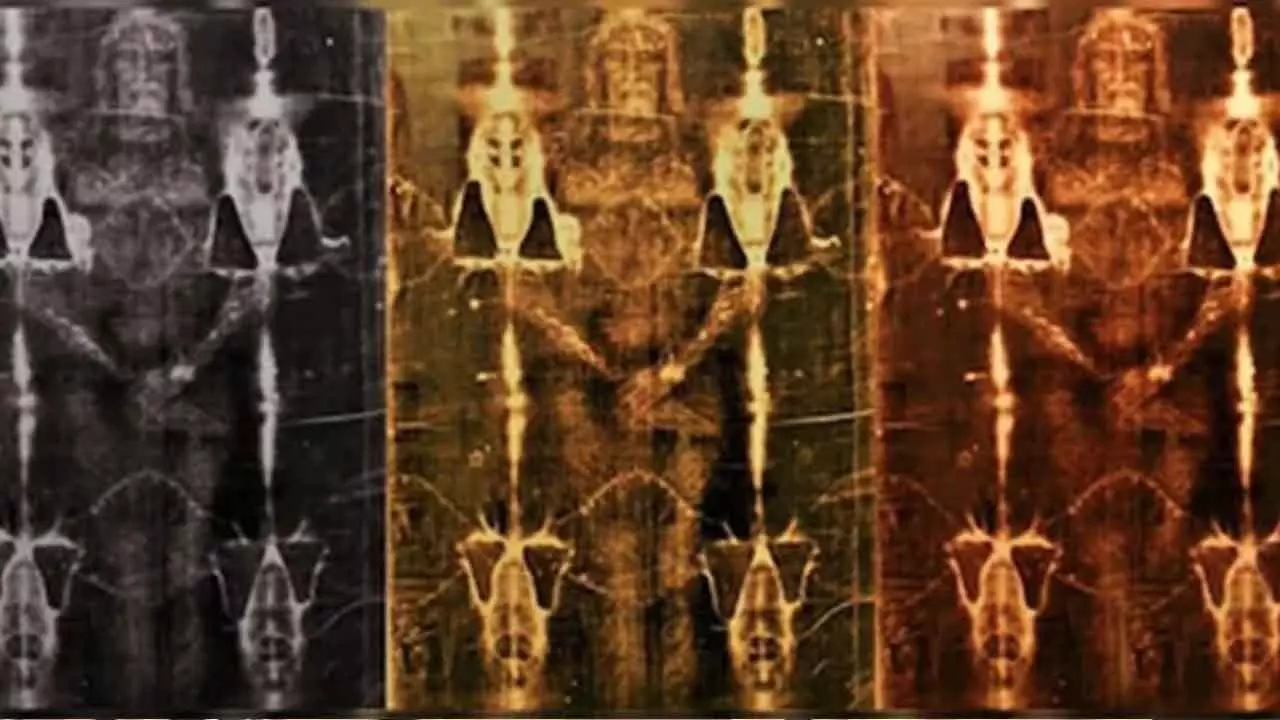
A groundbreaking genomic study has added a provocative new chapter to the centuries-old mystery of the Shroud of Turin. Long-venerated by millions as the burial cloth of Jesus Christ, the artifact is now at the center of a scientific debate after researchers discovered significant traces of DNA linked to the Indian subcontinent.
The study, led by renowned Italian geneticist Gianni Barcaccia of the University of Padua, utilized Next Generation Sequencing (NGS) to analyze dust and biological particles vacuumed from the shroud’s fibers. The findings suggest the cloth’s journey may have been far more global—and much older—than previously confirmed.
The "Indian Trace" Breakdown
The genomic analysis revealed that the human DNA on the shroud is a "cornucopia" of global lineages. Most surprising was the high concentration of DNA from the Indian subcontinent.
The genomic distribution found on the shroud reveals a complex, migratory history that challenges simple explanations. The largest share of the human DNA, accounting for 55.6%, is linked to Near Eastern lineages, a finding that aligns with the traditional belief that the cloth originated in the Levant, near modern-day Israel and Palestine. Surprisingly, the second-largest genetic signature comes from the Indian subcontinent, which makes up 38.7% of the traces; researchers suggest this "Indian trace" may be evidence of the ancient textile trade or the cloth’s manufacture in the Indus Valley. In contrast, Western European origins account for less than 5.5% of the DNA, a relatively small amount that likely stems from environmental contamination during the centuries the shroud was displayed and handled in France and Italy.
Was the Shroud "Made in India"?
Researchers propose two primary theories for the 38.7% Indian genetic signal:
1. Manufacturing Origins: The linen yarn may have been produced in India. Ancient Roman texts refer to high-quality fabrics from the Indus Valley as "Sindon" (a word linguistically linked to "Sindh," a region in modern-day Pakistan/India).
2. Trade Contamination: The cloth may have been handled extensively by merchants or workers along the Silk Road or via maritime trade routes before reaching the Mediterranean.
The study also identified plant DNA from species native to India, such as the Vigna unguiculata (cowpea), further supporting the theory that the physical material of the shroud—if not the man wrapped within it—has South Asian roots.
The Search for "Jesus’ DNA"
Despite the advanced sequencing, the study delivers a sobering reality for those seeking physical proof of the Resurrection. Because the shroud has been touched by thousands of hands over nearly 2,000 years, the "original" DNA of the man depicted on the cloth remains obscured.
"The Shroud came into contact with multiple individuals, thereby challenging the possibility of identifying the original DNA," the study notes.
The researchers found DNA from at least 14 different individuals, as well as traces from horses, cows, and even New World plants like maize (suggesting later contact after the 15th century).
A Timeline of Controversy
The Shroud of Turin has a long history of conflicting evidence:
* 1354: First recorded appearance in France.
* 1988: Carbon dating suggests a medieval origin (1260–1390 AD), though these results remain contested by some scientists citing "bio-plastic" contamination.
* 2015/2026: Dr. Barcaccia’s genomic studies reveal the Near Eastern and Indian genetic layers, suggesting the cloth is older and traveled further than the 1988 study implied.
What This Means for History
While the study does not—and likely cannot—prove the shroud wrapped Jesus of Nazareth, it effectively dismantles the idea that the cloth is a simple European medieval forgery. The presence of Near Eastern and Indian markers suggests a complex, transcontinental history that aligns more closely with the "Sindon" textiles of antiquity than with 14th-century French linen.
As science continues to peel back the layers of this "silent witness," the Shroud of Turin remains what it has always been: a bridge between faith, history, and the unsolvable.
NEET Paper Leak Fallout: Dharmendra Pradhan Steps Down as Education Minister, Says ‘I Never Shied Away From Responsibility’
AI Appreciation Day 2026: Trust and infrastructure emerge as the next frontier for AI, say experts
Few Takers for HILT Policy in Hyderabad Amid Low Response
Cockroach Janta Party Protest LIVE Updates: Demonstrators Assemble at Jantar Mantar
Fire breaks out at a building in Ameerpet of Hyderabad, fire brigade arrives
ED’s Vedanta raids raise questions about proportionality, perception


