
Faith vs. The Constitution: The Evolution of the Sabarimala Debate

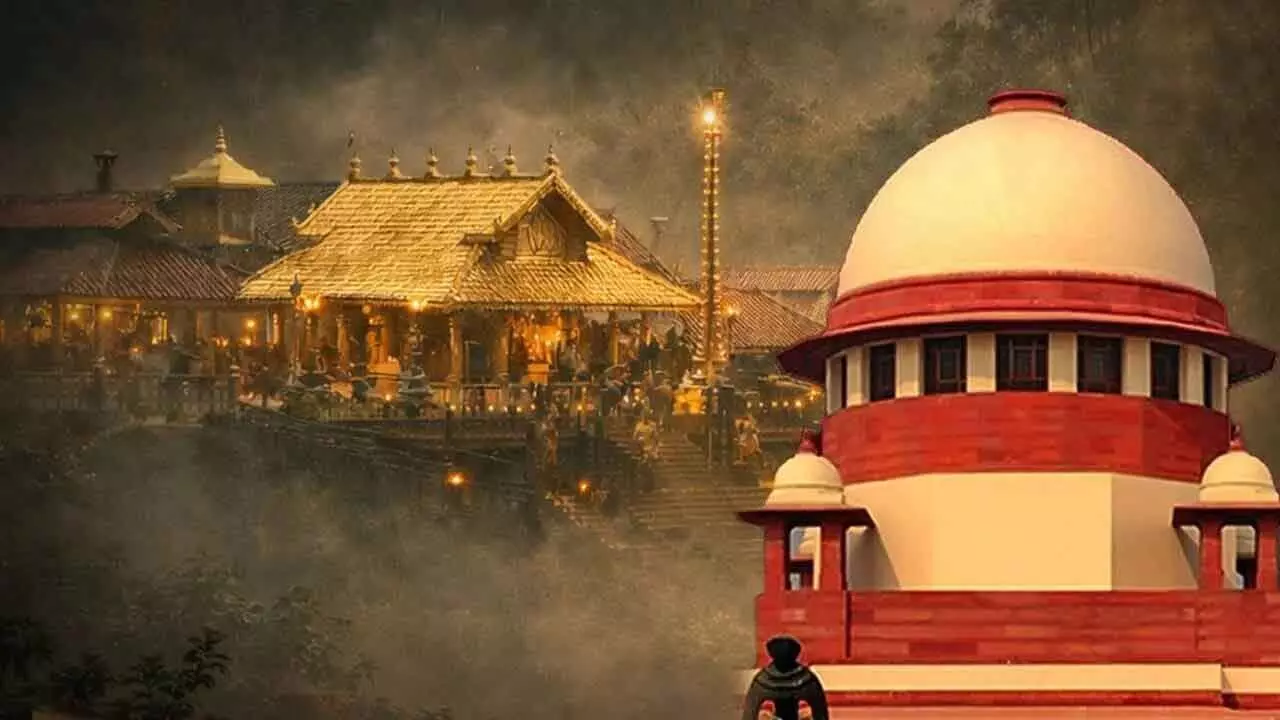
The Sabarimala case is one of the most significant legal battles in modern Indian history, sitting at the intersection of ancient religious traditions and contemporary constitutional values. It essentially asks: Who has the final say on faith—the temple or the Constitution?
Here is a comprehensive breakdown of the case, its history, and the current legal arguments being debated in 2026.
1. The Core Issue: Traditions vs. Equality
The Sabarimala Sree Dharma Sastha Temple in Kerala is dedicated to Lord Ayyappa, who is worshipped here in the form of a Naishthika Brahmachari (eternal celibate).
For decades, the temple prohibited the entry of women of "menstruating age" (10 to 50 years). The temple board argued this was necessary to preserve the deity’s celibate nature. However, activists argued this was a form of gender discrimination that violated the fundamental right to equality.
2. The 2018 Landmark Judgement
In a historic 4:1 majority ruling on September 28, 2018, the Supreme Court of India struck down the ban.
* The Ruling: The Court declared the restriction unconstitutional, stating that "patriarchy cannot override religion."
* Article 25: The Court held that every individual has the right to practice religion, and biological factors (like menstruation) cannot be used to deny that right.
* The Dissent: Justice Indu Malhotra, the only female judge on the bench, famously dissented. She argued that in a secular country, courts should not interfere in "deeply held religious beliefs" unless they are harmful (like Sati).
3. The 2019-2026 Turning Point
Following the 2018 verdict, Kerala saw massive protests. Over 50 review petitions were filed, leading to a shift in the legal process.
* 2019 Reference: Instead of just reviewing Sabarimala, a 5-judge bench decided the case raised broader questions about other religions (e.g., Muslim women in mosques, Parsi women’s rights). They referred the matter to a larger 9-judge bench.
* Current Status (April 2026): As of this week, the 9-judge bench has officially begun hearing arguments. The Union Government has urged the Court to move away from the "Essential Religious Practices" test.
4. Key Legal Concepts in the Debate
To understand the current arguments, you need to know three major legal doctrines:
A. Essential Religious Practices (ERP)
Currently, Indian courts use the ERP test to decide if a practice is "core" to a religion. If it’s essential, it gets constitutional protection; if it’s "superstitious" or "secular," the state can regulate it.
The Debate: The Centre now argues that secular judges are not theologians and shouldn't be deciding what is "essential" for a faith.
Constitutional Morality vs. Social Morality
* Constitutional Morality: The idea that the Constitution's values (Equality, Liberty, Dignity) must prevail over everything else.
* Social Morality: The traditions and values held by a specific community.
* The Conflict: The 2018 judgement used "Constitutional Morality" to override temple tradition. Critics argue this is a "vague" tool that allows judges to impose abstract ideas over ancient practices.
C. Article 25 vs. Article 26
* Article 25: Guarantees individual freedom of religion.
* Article 26: Guarantees the right of religious denominations to manage their own affairs.
* The Clash: Does an individual woman's right to worship (Art. 25) override the temple community's right to manage its tradition (Art. 26)?
5. The "Sincerity Test" Proposal
a new alternative is being proposed in 2026: the "Global Sincerity Test." Instead of judges deciding if a practice is "correct" or "essential," they would only verify if the community sincerely believes in the practice. If the belief is sincere and not harmful to public order or health, the court would step back and let the community manage itself.
The legal battle over Sabarimala represents a profound clash between modern constitutional mandates and centuries-old religious traditions. While the 2018 majority verdict prioritized the individual’s right to equality under Article 14, viewing the exclusion of women as a form of "patriarchal untouchability" that violated the dignity of female worshippers, the current 2026 review shifted the focus toward the collective rights of religious denominations. Pro-tradition advocates argue that under Article 26, the temple possesses the autonomy to preserve the unique nature of its deity, Lord Ayyappa, whose status as a Naishthika Brahmachari forms the core of the pilgrimage’s spiritual logic. This debate essentially pits "Constitutional Morality"—the idea that modern secular values must reform religion—against "Civilisational Morality," which suggests that the law should respect the internal logic and sincerity of a community's faith as long as it does not cause physical harm.
This case is now widely regarded as the "Grand Reference" because it will finally determine if India follows a "Reformist" model (where the State fixes religion) or a "Pluralist" model (where the State protects diverse, even non-conforming, religious identities).


