
Raghav Chadha: The Rise, The Voice, and the Political Storm

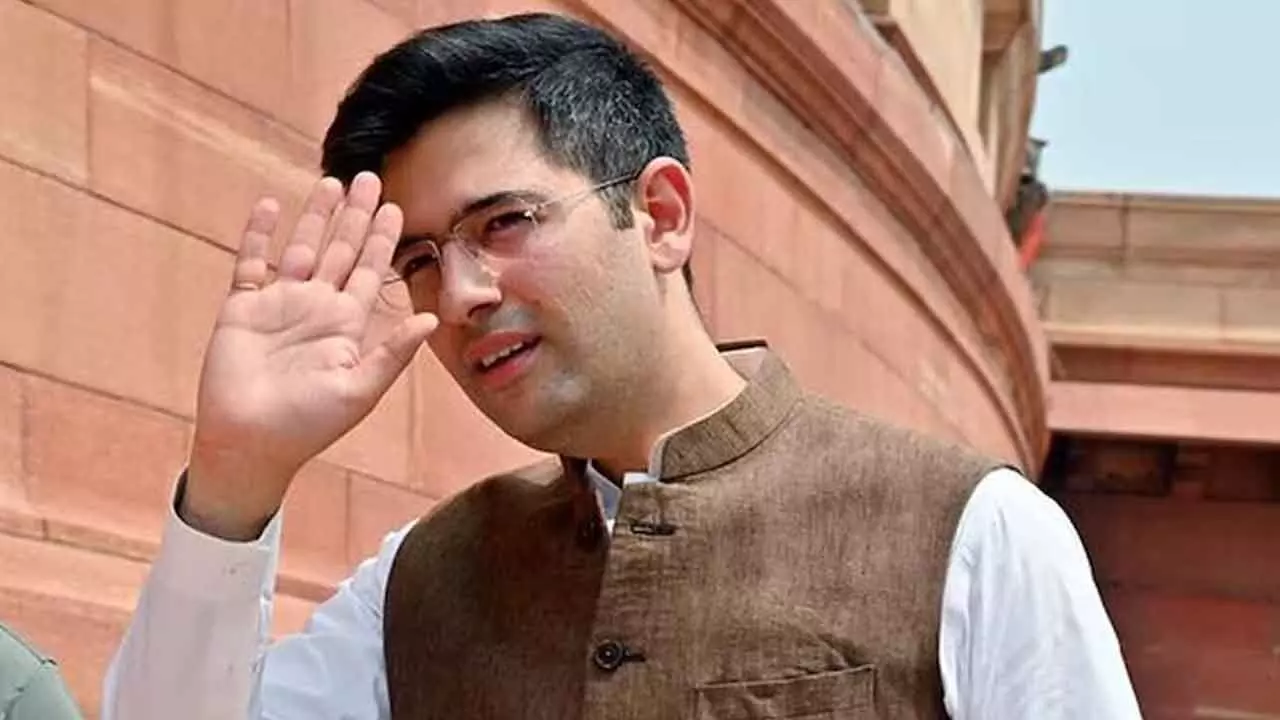
Raghav Chadha has emerged as one of the most recognizable faces of India’s "new-age" politics. A Chartered Accountant by profession and a politician by choice, his journey from the streets of the India Against Corruption movement to the hallowed halls of the Rajya Sabha has been marked by rapid ascent, eloquent oratory, and significant controversy.
1. The Suspension: Why was he sidelined?
Raghav Chadha’s suspension from the Rajya Sabha on August 11, 2023, became a national flashpoint.
* The Allegation: He was accused of "gross violation of rules" after five Members of Parliament (including those from the BJP and AIADMK) claimed their names were added to a proposed Select Committee for the Delhi Services Bill without their consent.
* The Defense: Chadha and the Aam Aadmi Party (AAP) termed it a "political witch-hunt." He argued that the rules allow a member to propose names for a committee and that no signatures are required at that stage, dismissing the "forgery" claims as baseless.
* The Outcome: He remained suspended for months until the Supreme Court intervened, eventually leading to his reinstatement after he tendered an unconditional apology to the House Chairperson to maintain the dignity of the institution.
In a more recent development (April 2026), AAP has replaced him as their Deputy Leader in the Rajya Sabha, citing a routine process to give other members like Ashok Mittal a chance to lead, though political circles speculate on internal party shifts.
2. A Meteoric Political Career
Chadha’s "race in politics" has been faster than most veteran leaders:
* Early Days: He joined AAP at its inception in 2012, quickly becoming the party’s youngest national spokesperson and treasurer.
* Delhi Governance: He served as the Vice Chairman of the Delhi Jal Board, where he worked on the implementation of 24x7 water supply schemes and cleaning the Yamuna.
* Legislative Roles: In 2020, he won the Rajinder Nagar assembly seat in Delhi. In 2022, following AAP’s landslide victory in Punjab, he was sent to the Rajya Sabha, becoming the youngest MP in the House at age 33.
* The Punjab Architect: He is widely credited as one of the key strategists behind AAP's historic win in the 2022 Punjab Assembly elections.
3. The Voice of the Youth: Speeches and Impact
What sets Raghav Chadha apart is his ability to blend technical data (from his CA background) with sharp political rhetoric. He has become a "Youth Icon" by addressing issues that traditional politicians often overlook:
Key Speeches & Interventions:
* Right to Recall: He has been a vocal proponent of the "Right to Recall," arguing that voters should have the power to remove non-performing lawmakers mid-term.
* Economic Reform: He famously demanded the scrapping of Long-Term Capital Gains (LTCG) tax on equities and advocated for crypto-legalization and blockchain-based land records.
* Social Taboos: He recently sparked a major debate by raising the issue of menstrual hygiene in Parliament, calling the lack of access to sanitary pads a "collective failure" of society rather than a personal problem.
* Youth Representation: He consistently pushes for lowering the age to contest elections from 25 to 21, famously stating, "If India is a young country, the leaders must be young too."
4. Implementations and Schemes
While in the Delhi Jal Board and as an advisor in Punjab, Chadha focused on:
* Digitization: Modernizing water billing systems to reduce corruption.
* Employment: Advocating for the dignity of gig workers (delivery partners, drivers) and pushing for their inclusion in social security nets.
* Middle-Class Advocacy: His speeches often center on the "squeeze" felt by the middle class due to high inflation and taxation, making him a popular figure among urban professionals.
Raghav Chadha has carved out a unique space in Indian politics by focusing on granular, everyday issues that resonate with the middle class and the Gen-Z workforce. His speeches often bypass high-level political posturing in favor of "kitchen table" economics and digital rights.
Here is an in-depth look at his key parliamentary interventions and policy advocacy.
1. The Telecom Crisis: "12 Months, 13 Recharges"
One of Chadha's most viral interventions in the Rajya Sabha (March 2026) concerned the predatory pricing and service models of Indian telecom giants.
* The "13th Month" Scam: He pointed out that by setting recharge validity to 28 days instead of a full month, telecom companies force consumers to do 13 recharges in a 12-month year. He termed this a "hidden tax" on the poor and middle class.
* Incoming Call Rights: He argued fiercely against the practice of blocking incoming calls immediately after a pack expires. Chadha proposed that incoming services should remain active for at least one year without a recharge, stating that "communication is a basic right" and blocking incoming calls disconnects the most vulnerable citizens from their families and emergency services.
2. Gig Workers: "Humans, Not Data Points"
In early 2026, Chadha spent a night with delivery riders from platforms like Zomato, Swiggy, and Blinkit to understand their "ground reality." This led to a powerful advocacy campaign:
* The 10-Minute Trap: He was a leading voice against the 10-minute delivery model, arguing it incentivizes overspeeding and puts riders' lives at risk for "the sake of a hot samosa."
* Algorithmic Accountability: He famously stated that these billion-dollar companies were built on "human sweat, not just algorithms." He demanded that delivery partners be recognized as employees with benefits like PF (Provident Fund), ESI (Medical Insurance), and guaranteed minimum earnings for logged-in hours.
* Social Security: He proposed a specialized Social Security Board for gig workers to ensure they aren't treated as "disposable labor" in the digital economy.
3. Taxation: "From Birth to Death"
Chadha’s background as a Chartered Accountant (CA) makes him a formidable critic of India's tax structure. He frequently uses a "cradle-to-grave" analogy to describe the tax burden:
* Multi-layered Taxes: He argued that an Indian citizen is taxed at every stage: GST on hospital bills at birth, GST on education/uniforms, Income Tax while working, and even taxes on the "final rites."
* The "I Propose" Reform: In a notable 2026 speech, he shifted from opposition to proposition, suggesting three major reforms:
1. Joint Filing for Couples: Allowing married couples to file optional joint tax returns to lower the overall family tax burden.
2. Soldier Pensions: Reinstating full tax exemptions on disability pensions for all wounded soldiers.
3. Minimum Balance Penalties: Scrapping the fines banks charge for not maintaining a minimum balance, which he called "taxing the poor for being poor."
4. Fuel & LPG: The 400 vs. 1200 Debate
Chadha has been relentless in tracking the price of petroleum and LPG, often using physical props or charts in his social media videos to explain the math:
* LPG Inflation: He highlighted that a cylinder which cost ₹400 in 2014 had soared to nearly ₹1200 by 2026. He dismissed small subsidies as "pre-election optics" that don't solve the long-term inflation problem.
* GST on Fuel: He has consistently advocated for bringing petrol and diesel under the GST regime. He argues that the current "Tax on Tax" (VAT + Central Excise) keeps prices artificially high, and a uniform GST would significantly bring down transportation costs and overall inflation.
Why He Resonates with Youngsters
Raghav Chadha's fame among the youth isn't just about his age; it's about his medium and message:
* The "Explainer" Style: Instead of shouting, he uses a "news presenter" or "teacher" style, breaking down complex budgets into 60-second reels.
* Aspirational Image: He represents a shift from the "kurta-pajama" politician to a "suit-and-tie" professional, signaling to young people that politics can be a serious career for educated professionals.
* Tech-Savvy Advocacy: By taking up issues like gaming taxes, crypto-regulations, and telecom recharges, he speaks the language of the digital-native generation.
"Politics was once a bad word for the youth; my goal is to make it a structured public service where merit, not lineage, matters." — Raghav Chadha


