
South Odisha’s railway dreams demand attention

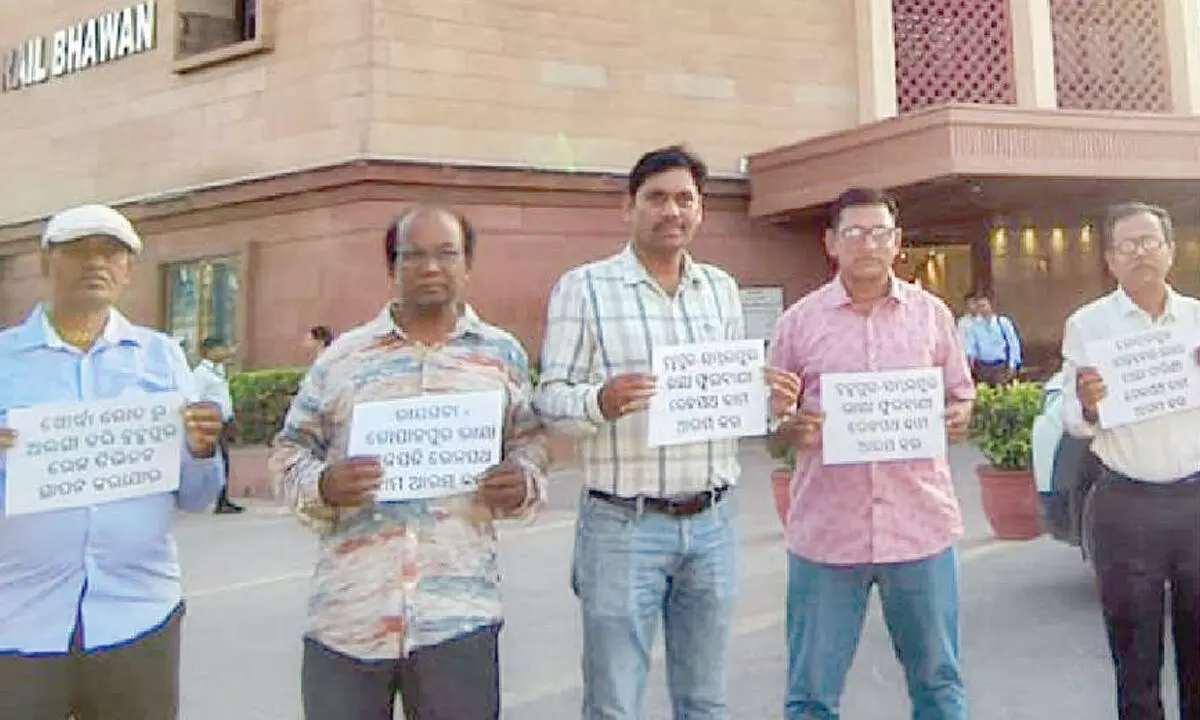
Berhampur: Ina significant demonstration of unity, people of South Odisha gathered at Rail Bhawan and Jantar Mantar in New Delhi to voice long-standing grievances and demand development. Under the banner of South Odisha Railway Development Joint Action Committee, this united front of people’s organisations staged an agitation against what they termed as the “century-long apathy” of the Railway department towards Berhampur and the greater South Odisha region.
Despite over a hundred years of persistent demands and repeated surveys, not a single inch of railway track has materialised across the proposed routes. The protesters voiced deep anguish over what they perceive as deliberate neglect, particularly affecting districts like Ganjam.
The long-pending and ignored railway projects include: Gopalpur (Berhampur)–Rairakhol (Sambalpur), Gopalpur–Singapur Road (Rayagada), Gopalpur–Talcher via the sacred Tara Tarini Temple. These crucial links, envisioned as lifelines connecting South and Western Odisha, remain trapped in files and surveys, stalling regional progress and economic integration. Equally concerning is the sluggish pace of ongoing projects including Gunupur–Therubali, Jeypore–Malkangiri and Jeypore–Nabarangpur.
Meanwhile, the Junagarh–Gopalpur line via Kandhamal languishes in survey stages. Protesters demanded urgent inclusion of these projects under the ambitious Gati Shakti Scheme to fast-track their execution. The historic Berhampur railway station, over 130 years old and a designated Amrit Bharat Station, stands as a paradox of prominence and neglect.
Handling over 7.2 million passengers annually and generating revenues exceeding Rs 100 crore, the station has been allotted a mere Rs 93.19 crore for development. In stark contrast, Bhubaneswar railway station is allotted Rs 400 crore, Puri railway station (Rs 300 crore), Cuttack railway station (Rs 350+ crore), Sambalpur railway station (Rs 300+ crore).
This glaring disparity has sparked questions of equity and intent, with demands for a grand, world-class transformation of Berhampur station, one that balances modernity with its cherished heritage façade. The agitation also highlighted pressing operational demands that include immediate sanction of a coaching depot at Golanthara, introduction of more train stoppages at Berhampur, AC Chair Car services linking Berhampur with Puri, Bhubaneswar, and Visakhapatnam; and extension of major trains including Sampark Kranti, Jan Shatabdi, and others up to Berhampur. A pressing question echoed: Why do trains halt at Palasa but bypass Berhampur?
The protesters also demanded that long-distance trains be named after regional icons and deities such as: Maa Tara Tarini, Upendra Bhanja and Laxman Nayak. Led by convener and senior advocate Saroj Ranjan Patnaik, the protest ended with the submission of a memorandum to the Chairman of the Railway Board at Rail Bhavan.
This historic demonstration, the first of its kind in New Delhi, stands as a clarion call from South Odisha, demanding justice, connectivity, and rightful recognition. As slogans faded into the evening sky of New Delhi, one sentiment lingered unmistakably—South Odisha will no longer remain silent. Its people have spoken, not in whispers, but in a chorus that now echoes through the corridors of power. Will the wheels of change finally begin to turn? Only time—and action—will tell.


