






Modi shapes youth as nation’s powerhouse
In Short
To convert India’s youth into a demographic advantage, the Modi government focuses on transforming job seekers into job creators through the philosophy of “Sabka Saath, Sabka Vikas, Sabka Prayas”.

Share :
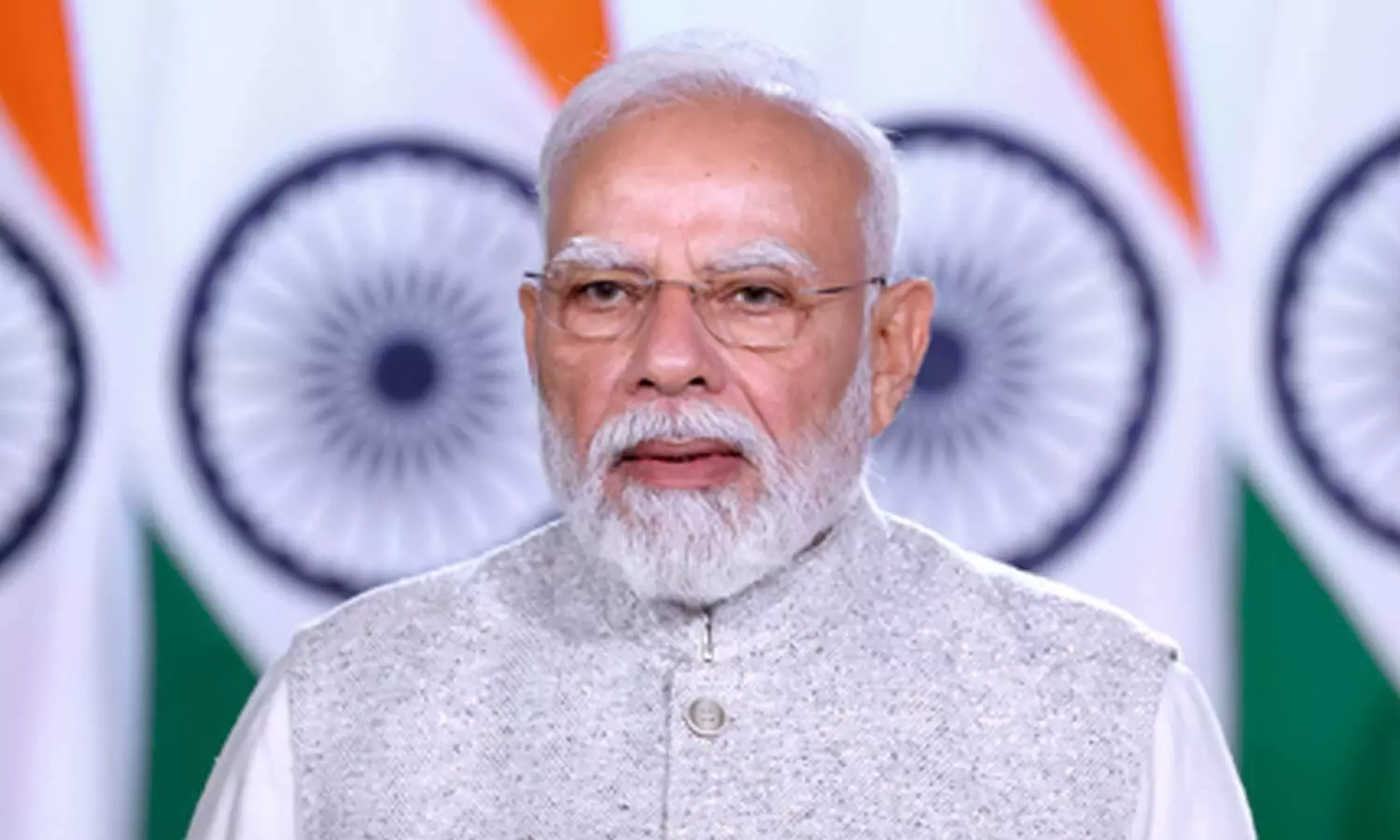
Prime Minister Narendra Modi
PrimeMinister Narendra Modi views India’s young population not just as a statistic, but as a transformative force for the nation’s destiny. Over the last decade, his vision has centered the youth in India’s development. By focusing on education, skills, entrepreneurship, technology, sports, and innovation, his administration aims to channel their energy into productive national power.
To convert India’s youth into a demographic advantage, the Modi government focuses on transforming job seekers into job creators through the philosophy of “Sabka Saath, Sabka Vikas, Sabka Prayas”. This shifts the mindset from passive government dependence to active entrepreneurial participation in national development.
The Skill India mission bridges the gap between academic education and modern economy by equipping youth with industry-relevant skills. Through vocational training, apprenticeships, and specialised programmes, the initiative focuses on building a workforce capable of driving manufacturing, services, infrastructure, and digital technology rather than just providing certificates.
Skilled youth and a thriving startup ecosystem are driving India’s rapid economic transformation. Supported by initiatives like Startup India, a confident generation of young entrepreneurs is moving beyond conventional employment to build innovative, technology-driven businesses. Their solutions span critical sectors—including fintech, health-tech, AI, space technology, and renewable energy—positioning India as a major global startup hub.
Driven by the Digital India revolution, expanding connectivity, and a thriving tech ecosystem, young Indians are shifting from job seekers to global job creators who can learn, work, and do business anywhere.
India’s successful digital public infrastructure, like UPI, has democratised economic opportunities for everyone from small town students to urban tech professionals. This growing digital confidence has accelerated Atmanirbhar Bharat, fostering a self-reliant nation capable of building its own indigenous technologies and enterprises.
The “New India” vision prioritises student innovation by encouraging young minds to solve local problems. Expanding sectors like space technology, AI, semiconductors, drones, biotech, and green energy are unlocking massive opportunities for youth. Notably, the success of India’s space programme has inspired young scientists and engineers to pursue active entrepreneurship in what was once a government-dominated field.
The National Education Policy 2020 aims to transform Indian education by prioritising multidisciplinary learning, critical thinking, vocational skills, technology, and local languages. Its ultimate goal is to shift the focus from exams and degrees to holistic development, fostering knowledge, creativity, and character for the 21st century.
An educated, skilled youth population is the foundation of a developed India. Through initiatives like Mera Yuva Bharat (MY Bharat), Prime Minister Modi has urged young people to become partners in nation-building by engaging in civic participation, volunteering, and leadership. Beyond economic growth, youth involvement spans social responsibility, environmental protection, national integration, and public service. Ultimately, the younger generation must blend individual ambition with national progress.
Initiatives like Khelo India are transforming India’s sporting culture by engaging youth and fostering elite, world-class talent. Beyond producing international champions, sports instill essential values like discipline, resilience, and leadership, which are crucial for building a strong nation. Empowering young women is critical for India’s complete development. Providing them with education, digital skills, financial inclusion, and entrepreneurial opportunities unlocks full economic and social participation. Ultimately, their active involvement strengthens both individual families and the national economy.
The vision of Viksit Bharat @2047 aims to transform India into a developed nation by its independence centenary. Today’s youth will not merely benefit from this progress; as the future workforce, leaders, and innovators, they are its principal architects.


