






How I Started Creating Better Original Characters With AI Anime Tools

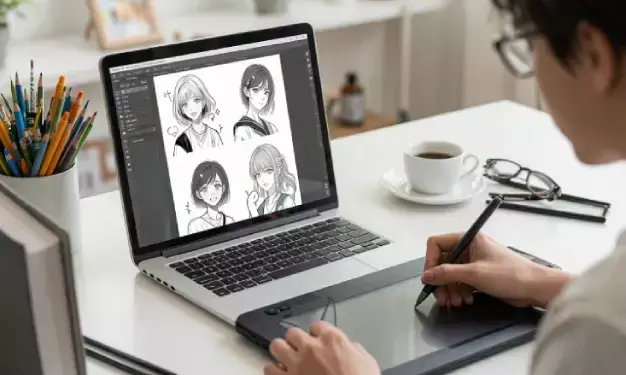
Learn how I started creating better original characters using AI anime tools, with tips on design, prompts, and workflows to bring unique characters to life quickly and creatively.
I used to think making a memorable original character required either strong drawing skills or a lot of expensive commissions. That assumption lasted until I began testing AI-assisted character design tools for my own creative work. What surprised me was not just the speed, but the amount of control I could keep when I approached the process carefully.
The biggest shift came when I stopped treating these tools like novelty generators and started using them as creative partners. Instead of asking for “an anime girl” or “a cool fantasy boy,” I began building characters with intent: silhouette, mood, color logic, visual motifs, and personality cues. That change alone improved my results more than any fancy prompt trick. For people who want a simpler starting point, an OC maker can make that first step much less intimidating.
Why character creation feels easier now
What makes AI-assisted character design so appealing is that it lowers the barrier without removing imagination. I still make the choices. I still decide whether a character should feel sharp, soft, chaotic, elegant, lonely, playful, or dangerous. The tool simply helps me visualize those decisions faster.
That matters more than many people realize. When an idea exists only in your head, it is easy to keep changing it. Once you can see it, even in a rough form, you start making stronger creative decisions. I have found this especially helpful when developing characters for short stories, game concepts, personal worldbuilding, and social content.
There is also a practical side. Many creators are not looking for museum-grade illustration on day one. They want a draft, a direction, a face, a costume language, a vibe they can refine. AI tools are especially useful in that early stage.
What I changed to get better results
My early attempts were messy. Characters looked generic, costumes were inconsistent, and expressions felt pasted on. After a lot of trial and error, I noticed that better outputs usually came from better thinking, not just longer prompts.
Here is the small framework I now rely on:
Element | What I decide first | Why it helps |
Role | Hero, rival, wanderer, student, guardian | Gives the design a purpose |
Mood | Warm, cold, mysterious, chaotic, hopeful | Shapes color and expression |
Signature detail | Hair streak, scar, glasses, charm, weapon | Makes the character memorable |
Outfit logic | Schoolwear, streetwear, fantasy armor, casual layers | Prevents random styling |
World context | Futuristic city, shrine town, ruined kingdom, seaside village | Keeps the visual tone consistent |
Once I define these, the character becomes much easier to generate and refine. The image starts to feel designed rather than randomly assembled.
My process for making an original character that feels personal
I usually begin with a short written profile, almost like a casting note. I write a few lines about the character’s age range, energy, habits, social role, and visual contradictions. A cheerful face with tired eyes. A disciplined posture with handmade accessories. A formal coat over worn boots. Those little tensions often make a design more human.
After that, I move into visual testing. I do not chase perfection immediately. I look for a strong base: face shape, hairstyle, posture, clothing direction. Once I get that, I iterate with smaller adjustments instead of rewriting everything.
A few habits have helped me consistently:
I focus on one change at a time
If I change the hair, outfit, pose, lighting, and background all at once, I cannot tell what actually improved the image. Slower iteration gives cleaner results.
I keep a character sheet mindset
Even if I am not making a formal reference sheet, I still ask the same questions: What colors repeat? What shape language stands out? What accessory would still identify this character in silhouette?
I save near-misses
Some of my best character ideas came from “almost right” outputs. A strange collar, an unexpected expression, a better side profile — those accidents are often more useful than perfect-looking but forgettable images.
Where an AI anime workflow becomes genuinely useful
This is the point where many people either stay casual or get serious. If all you want is a fun avatar, most tools will do the job. If you want recurring characters, stronger style control, or concept art you can build on, the workflow matters much more.
That is where an AI anime art generator becomes more than a toy. Used well, it can help with style exploration, pose variation, costume ideation, and visual consistency. I see the biggest value in using it for exploration first and selection second. In other words, I do not ask it to “finish the job” for me. I ask it to show me possibilities I might not have considered.
That approach has made my characters feel less generic and more intentional.
Common mistakes I see beginners make
The most common mistake is asking for too much at once. A character cannot be “cute, dark, royal, cyberpunk, soft, tragic, elegant, battle-ready, school-style, hyper-detailed, and minimalist” all in one clean image. Contradictions can work, but they need hierarchy.
Another issue is overvaluing polish. A shiny image is not always a strong design. I would rather have a rough character with a clear identity than a technically pretty one with no personality.
I also think many people skip the narrative layer. If you do not know what your character wants, fears, hides, or protects, the image often feels hollow. Visual design becomes much sharper when it grows out of story logic.
What I think AI can and cannot replace
AI has made character ideation faster for me, but it has not replaced taste. It has not replaced judgment. It has not replaced the need to notice when a design is too crowded, too derivative, or emotionally flat.
That is actually the reassuring part. The tool can generate options, but the point of view still has to come from the person using it. I have learned that the strongest results appear when I bring clear intent, patience, and enough restraint to stop editing once the character finally feels alive.
Final thoughts
My honest takeaway is simple: AI did not make me more creative on its own, but it made it easier for me to develop ideas before they disappeared. That alone changed how I approach original character design. I now sketch less with panic and more with curiosity. I test more variations. I commit to ideas faster. Most importantly, I end up with characters that feel closer to what I imagined in the first place.
For anyone sitting on story ideas, game concepts, or character notes they have never visualized, this is a good time to start. You do not need to be perfect. You just need a process that helps your ideas take shape.
NEET Paper Leak Fallout: Dharmendra Pradhan Steps Down as Education Minister, Says ‘I Never Shied Away From Responsibility’
AI Appreciation Day 2026: Trust and infrastructure emerge as the next frontier for AI, say experts
Few Takers for HILT Policy in Hyderabad Amid Low Response
Cockroach Janta Party Protest LIVE Updates: Demonstrators Assemble at Jantar Mantar
Fire breaks out at a building in Ameerpet of Hyderabad, fire brigade arrives
ED’s Vedanta raids raise questions about proportionality, perception


