
India’s Semiconductor Momentum and the Rise of New Innovation Hubs

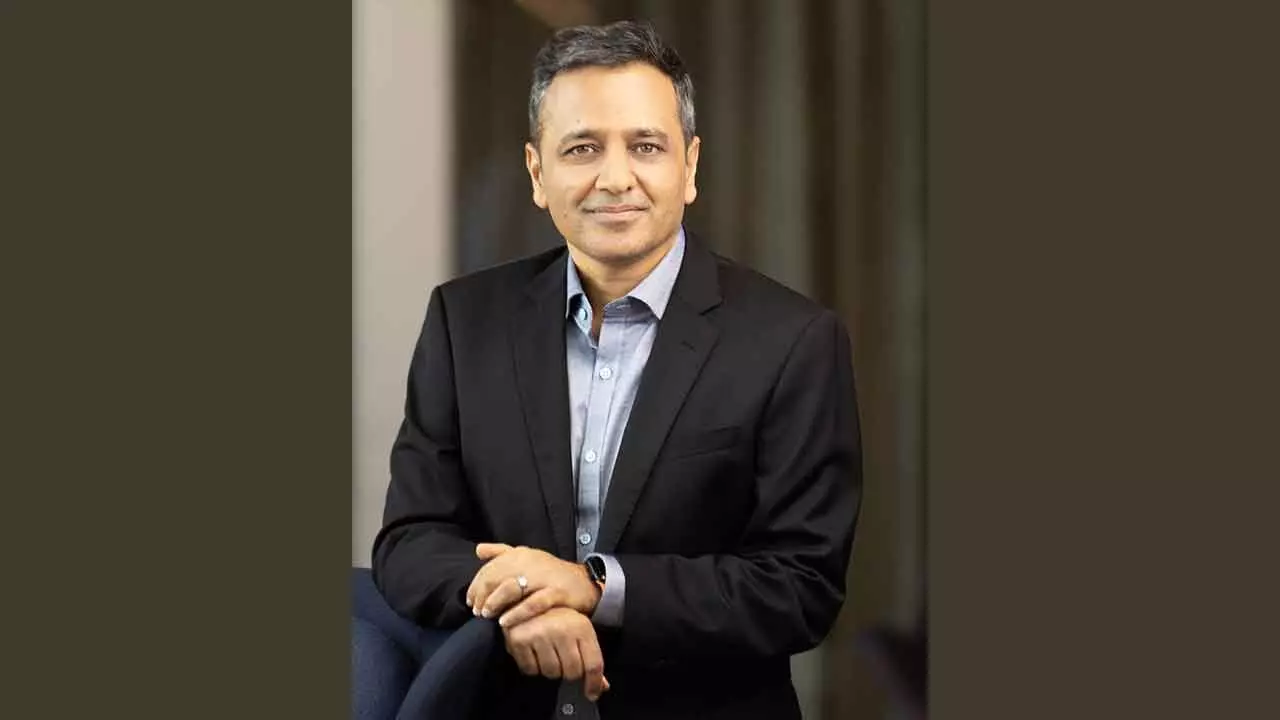
Manish Kothari shares how India’s engineering talent, semiconductor momentum, and growing innovation ecosystem are shaping the future of global connectivity.
Manish Kothari, Senior Vice President at Silicon Labs, spoke to The Hans India about India’s expanding role in the global semiconductor and connectivity ecosystem. He discusses the company’s growing presence in Hyderabad, the strength of India’s engineering talent, and the opportunities emerging across smart energy, industrial automation, and connected technologies as industries increasingly adopt IoT solutions.
India has been strengthening its position in the global semiconductor and electronics value chain, supported by government initiatives and a growing innovation ecosystem. From Silicon Labs’ perspective, how do you see India’s role evolving within the global technology and connectivity landscape?
India’s technology ecosystem is steadily shifting toward innovation ownership, with growing momentum in product development, chip design, and system-level advancement. Initiatives such as the ₹40,000 crore India Semiconductor Mission 2.0 reinforce this focus on strengthening domestic semiconductor capabilities.
Industries are adopting smarter, more connected systems across sectors such as energy infrastructure and industrial automation. As this shift accelerates, India’s engineering capabilities and expanding semiconductor ecosystem will play a vital role in designing and deploying next-generation connectivity solutions globally. For Silicon Labs, this evolution directly aligns with our focus on connected technologies. The convergence of IoT with AI and automation is making connected devices smarter and more adaptive in real-world applications.
Silicon Labs has been expanding its presence in India in recent years, particularly in Hyderabad. What factors have driven this growth, and how is the India team contributing to the company’s global innovation and product development efforts?
We expanded in India to leverage its strong engineering ecosystem and build capabilities that drive our global product development. Over the past few years, our team in India has grown by roughly 25% as we continue to invest in talent and expand our presence in Hyderabad.
This growth extends well beyond core engineering roles. We have expanded our teams in sales, mass market engagement, technical marketing, and IT operations—even shifting certain global IT functions to India. As a result, our local teams now drive impact across multiple facets of our global business.
Today, India serves as an important centre within Silicon Labs’ global operations. Teams here collaborate closely with colleagues across regions on wireless connectivity technologies, hardware platforms, and software solutions that support a wide range of IoT devices. Furthermore, our Hyderabad facility operates as a Global Capability Centre, where local experts actively shape the company's global technology roadmap through core engineering, product development, and platform innovation.
India is widely recognised for its deep engineering talent, and global technology companies are increasingly building diverse capabilities here beyond traditional development roles. How is Silicon Labs leveraging India’s talent ecosystem to strengthen its engineering, product development, and business operations?
India’s engineering ecosystem offers a strong combination of technical depth, scale, and adaptability, making it an important part of Silicon Labs’ global innovation strategy. In Hyderabad, we have built multidisciplinary teams working across hardware, software, and applications engineering to support the development of wireless connectivity technologies that power modern IoT devices.
The ability to collaborate across disciplines and work closely with global teams enables our engineers to contribute not only to product development but also to developer tools, platforms, and solutions that help customers build and scale connected products more efficiently. Our teams also work with technologies that support major IoT standards such as Bluetooth, Zigbee, Thread, Wi-SUN, and Matter, which are increasingly used across smart homes, industrial systems, and energy infrastructure.
Hyderabad has emerged as one of India’s most prominent technology and semiconductor hubs. How does Silicon Labs view the strategic importance of its Hyderabad centre, and what role does it play in advancing the company’s research and innovation efforts globally?
Hyderabad has developed into one of India’s most dynamic technology hubs, supported by strong academic institutions, engineering talent, and a growing semiconductor ecosystem.
For Silicon Labs, the city represents an important part of our global innovation footprint. Our Hyderabad centre serves as a key research and development hub, where multidisciplinary groups work across hardware, software, and applications engineering to advance wireless connectivity technologies.
Teams here collaborate closely with colleagues across global locations on core technology platforms that power a wide range of IoT devices. The facility also features advanced laboratories for wireless design, validation, and system integration, enabling teams to work across the full development cycle for next-generation connectivity technologies. As a Global Capability Centre, the Hyderabad team also drives progress across emerging areas such as intelligent connected devices and AI-enabled IoT applications.
As connected technologies continue to gain traction across sectors such as smart infrastructure, industrial automation, and energy management, where do you see the most significant opportunities for Silicon Labs in the Indian market?
Smart energy is one area with significant potential. As utilities modernise infrastructure through smart metering and grid management technologies, reliable wireless connectivity will play an important role in enabling scalable deployments. Technologies such as RF mesh networking are already supporting large-scale smart metering deployments, helping utilities monitor and manage energy infrastructure more effectively.
We also see growing opportunities in smart home ecosystems and industrial IoT solutions, where connected devices can improve efficiency, enable automation, and support real-time decision-making. These trends align closely with Silicon Labs’ focus on secure, low-power wireless connectivity technologies. With India’s semiconductor market projected to reach approximately $100–110 billion by 2030, the broader ecosystem is also creating new opportunities for innovation across connected technologies and intelligent devices.
Looking ahead, what are Silicon Labs’ key priorities for its India operations over the next few years — whether in terms of talent development, technology innovation, or expanding partnerships within the broader ecosystem?
Our priorities in India focus on strengthening engineering capabilities and expanding the role our teams play in global product development. India already contributes significantly to our work in hardware development and wireless connectivity technologies.
We will continue investing in talent and building multidisciplinary teams that can work across hardware, embedded systems, and software. As IoT solutions become more integrated and complex, this kind of collaboration will be increasingly important in enabling innovation across connected systems. Initiatives like the India Semiconductor Mission 2.0 continue to drive the policy momentum needed to build a robust ecosystem for long-term semiconductor innovation.


