
HC takes suo motu cognisance of Gulzar House Fire; PIL adjourned

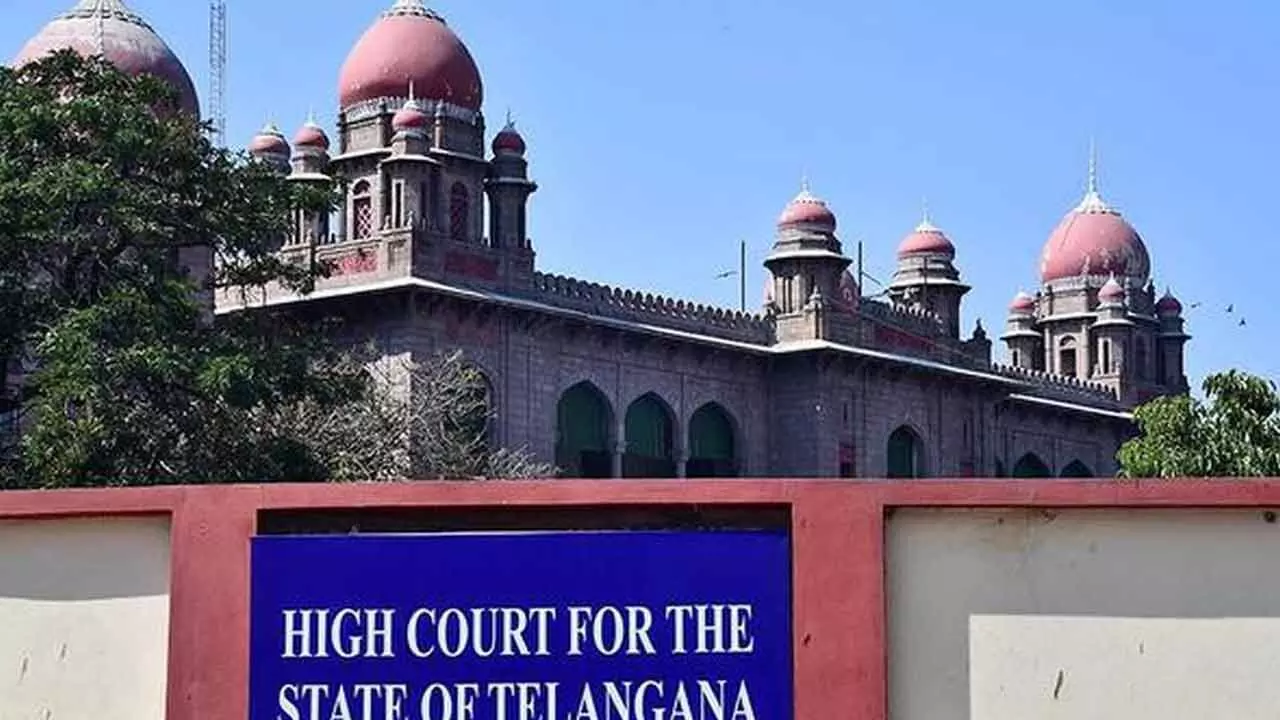
Hyderabad: The High Court of Telangana, on Thursday, converted a letter addressed to the Chief Justice into a suo motu Public Interest Litigation arising out of the deadly fire accident at Gulzar House, Hyderabad, which claimed seventeen lives on 18 May 2025.
The Division Bench, comprising Chief Justice Aparesh Kumar Singh and Justice Ghouse Meera Mohiuddin, took up the matter on the basis of a letter dated 26 May 2025 submitted by one Mr. Santosh Gupta, a resident of Hyderabad. The matter was thereafter adjourned by four weeks to enable the State Government to obtain and file instructions.
The letter turned PIL was precipitated by the petitioner’s personal tragedy. Mr. Santosh Gupta lost his daughter and sixteen other family members in the fire that engulfed Gulzar House.
In his communication to the Chief Justice, the petitioner has alleged gross incompetency, negligence, and a critical absence of requisite tools and equipment in the fire engines and ambulances that responded to the emergency.
According to the petitioner, he and his sister placed emergency calls to the Fire Service helpline (101), the Police helpline (100), and the Ambulance helpline (108) between 6.12 a.m. and 6.16 a.m. on the date of the incident. A single fire engine and one ambulance arrived at the scene only at 6.45 a.m.
The petitioner contends that the fire engine was entirely ill equipped carrying no water and no oxygen masks and that fire department personnel were unwilling to enter the burning premises. The fire engine was also alleged to be in an un-serviceable condition. It is further contended that it was the intervention of civilians, rather than the fire department, that made possible the rescue of persons trapped in the blaze.
The petitioner has additionally alleged that the ambulance that responded to the emergency carried no oxygen cylinders, and that the medical staff on board failed to administer even the most basic life saving measures, including cardiopulmonary resuscitation, to the victims. Of the eight survivors who were eventually rescued through the collective efforts of civilians and fire department officials and subsequently shifted to Yashoda Hospital, Malakpet, all eight succumbed to their injuries.
The petitioner attributes these deaths directly to the delay and negligence of the fire department and medical personnel.
The contentions of the petitioner are, however, disputed by the Director General of Fire Services, Mr. Nagi Reddy, IPS, who has asserted that the fire engines deployed to the scene were fully equipped at the time of their dispatch.
Through this PIL, the petitioner seeks a court-directed judicial inquiry into the Gulzar House fire accident, to be conducted by a sitting or retired Judge of a competent court.
The respondents to the PIL are the Principal Secretary to the Government, Home Department; the Director General, Telangana State Disaster Response and Fire Services; the Director, Medical and Health Department; and the Commissioner of Police, Hyderabad.
The matter will be taken up for further hearing after four weeks.
HC takes cognisance of stipend non-payment to medical interns
The High Court of Telangana, acting on a series of e-mails addressed to the Chief Justice, has converted the correspondence into a Public Interest Litigation and taken up the matter suo motu.
The Division Bench, comprising Chief Justice Aparesh Kumar Singh and Justice Ghouse Meera Mohiuddin, initiated proceedings on Thursday after e-mails sent between June 10 and June 25, 2025, by one Ms. Pravitha Reddy brought to light the alleged exploitation of medical interns across both private and government medical colleges in the State of Telangana.
The petitioner, through her communications, drew the Court’s attention to the precarious conditions faced by medical interns engaged at various medical institutions across Telangana, attributing their hardship primarily to the non-payment and unlawful deduction of stipends.
It was contended that both government and private medical colleges have blatantly disregarded the directions and guidelines issued by the National Medical Commission, which explicitly mandates the payment of stipends to medical interns.
Beyond the issue of non payment, the petitioner raised grave concerns regarding the systematic exploitation of interns.
It was alleged that upon joining their respective courses, interns are compelled to open bank accounts in specific designated branches and are made to execute blank cheques, enabling the colleges concerned to siphon the stipend amounts due to them.
The petitioner further submitted that the interns, already burdened with demanding clinical duties, are subjected to significant mental trauma as a consequence of this financial exploitation and institutional misconduct.
The Standing Counsel appearing on behalf of the National Medical Commission informed the Bench that there are 22 private medical colleges operating within the State and urged the Court to implead all such institutions as parties to the proceedings.
The Division Bench declined this prayer, directing instead that the State Government respond to the matter in the first instance.
The Standing Counsel additionally apprised the Court that serious allegations pertaining to this issue have been levelled specifically against three institutions, namely Bhaskara Medical College, Malla Reddy Medical College, and Patnam Narender Reddy Medical College.
Brahma Kumaris’ wing hosts lecture on value-based Justice
The Jurists Wing of the Brahma Kumaris, Hyderabad, convened a lecture on the theme “Value Based Justice: The Soul of Law” at the High Court Bar Association Hall on Thursday afternoon. The keynote address was delivered by Justice Bhagwan Das Rathi, former Judge of the High Court of Madhya Pradesh.
Justice Rathi opened his address by tracing the origins of the Brahma Kumaris institution to its establishment in 1937 in Hyderabad, Sindh, now part of Pakistan. He made reference to a nationwide campaign launched in October in New Delhi under the banner “Justice, The Soul of Law,” which was attended by Judges of the Supreme Court and the Delhi High Court and drew participation from over 1,950 members of the legal community. True justice, he observed, is achieved only when all parties, including those who do not succeed, accept the outcome without reservation.
Justice Rathi further extended the notion of justice beyond the courtroom to the conduct of daily life, arguing that decisions bearing upon personal and social matters may themselves embody or violate principles of fairness.
He attributed the erosion of justice in contemporary society to the absence of foundational values such as compassion, honesty, kindness, and mutual respect, noting that this deficit manifests in institutional delays, traffic violations, rising rates of suicide and divorce, corruption, and political instability.
Rathi observed that even those entrusted with making, enforcing, and interpreting the law are not immune to such failings.
Justice Rathi classified laws into two broad categories, namely constitutional and governmental law on one hand, and what he termed divine or natural law on the other, wherein consequences follow inevitably from actions. He argued that the practice of justice is elevated when informed by spiritual values, and recommended meditation as a means of cultivating the concentration, intuition, and positive thought necessary for principled conduct. He drew particular attention to the susceptibility of legal professionals to stress, likening the unregulated human mind to a pressure cooker lacking a safety valve, and noted that meditation serves to channel the preponderance of thought energy constructively rather than destructively.
Justice Rathi also invoked the legacy of several legal luminaries who played a central role in India’s independence movement, among them Dr. B.R. Ambedkar, Bal Gangadhar Tilak, Jawaharlal Nehru, Motilal Nehru, Mahatma Gandhi, and Sardar Vallabhbhai Patel, citing their example as an inspiration for members of the legal profession to assume a constructive role in the life of the nation.
A brief guided meditation session was conducted by Brahma Kumari Dr. Umarani, who directed participants to focus their attention inward and cultivate an awareness of inner peace, clarity, and purposeful thought.
The event was attended by several Senior Advocates of the High Court, including Gangula Ashok Kumar Reddy, Mummineni Srinivas Rao, Israel, Polasa Shankar, Ramachandruni Satyanarayana Murthy, Barla Mallesh Yadav, J. Vishnuvardhan, and Brahma Kumaris Vidya, Rajani among others. Votes of thanks were extended to Justice Rathi by members of the Bar Association in recognition of his address.


