
SCR rolls out Kavach 4.0 for enhanced train safety

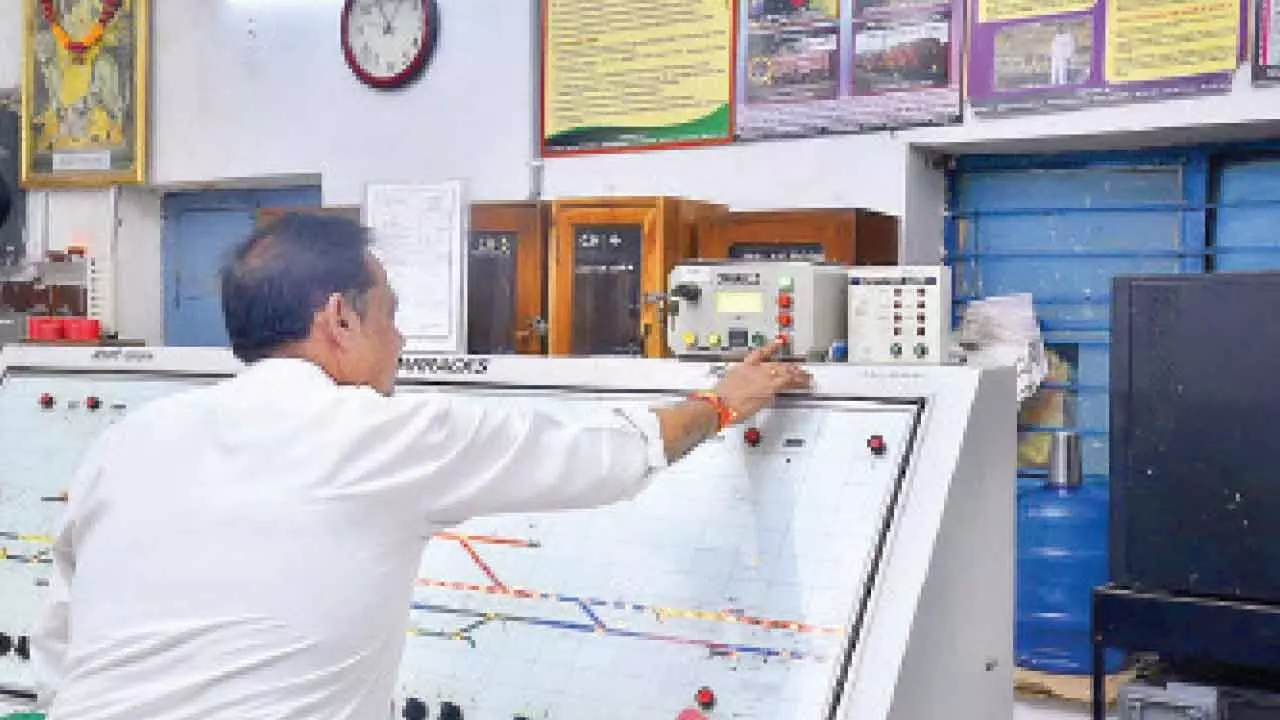
Hyderabad: South Central Railway is set to upgrade its indigenous automatic train protection system to the advanced Kavach 4.0 version in a move to redefine passenger safety. Originally launched as a pilot project in 2015 over a 250 kilometre stretch, the system has evolved from version 3.2 to the newly approved 4.0, which offers enhanced reliability and broader data integration.
SCR officials confirmed that this upgraded version will eventually span 4,600 kilometres across the zone, replacing the older 1,465 kilometres of version 3.2 infrastructure.
The initiative aims to eliminate human error by providing a digital shield that monitors train movements every two milliseconds. Kavach 4.0 functions as a network of Radio Frequency Identification tags, telecommunication towers, and on-board computer systems. RFID tags are installed every kilometre along the tracks and beneath the locomotive to pinpoint exact locations.
If two trains are detected on the same line or if a locomotive exceeds speed limits for bridges, the system automatically applies brakes without driver intervention. Sridhar, CPRO of South Central Railway, stated that Kavach 4.0 is an advanced version with higher reliability and more safety features. It facilitates seamless station-to-station communication, allowing signal and track interlocking data to be relayed instantly between station masters and loco pilots.
In Telangana, implementation is robust across the Vikarabad to Sanath Nagar and Secunderabad to Gollaguda sections. The expansion now targets critical trunk routes, including Kazipet to Secunderabad and the high-traffic corridors towards Duvvada. Local MMTS and DEMU services in the Hyderabad region are also being integrated.
Information from the relay room is transmitted via OFC cables to radio towers, which emit signals to train antennas, providing real-time displays of track conditions. With this 4,600 kilometre rollout, SCR is working towards a fail-safe environment to prevent collisions. This technological leap represents a significant commitment to modernising rail infrastructure and ensuring the highest standards of safety for millions of passengers.


