






Aqua sector reels under severe crisis

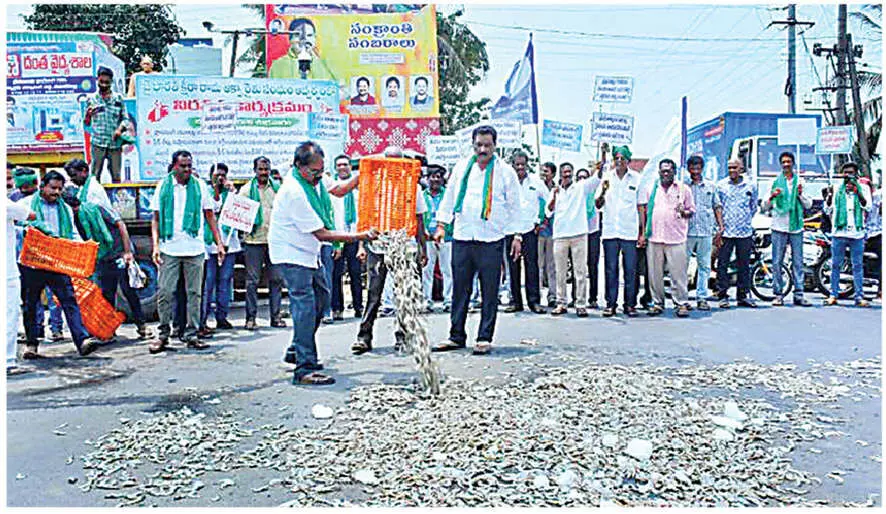
(File photo) Aqua farmers staging a protest by dumping shrimp on the road at Poolapalli Y-junction in West Godavari
Farmers decry grip of syndicate amid heat-induced losses
Bhimavaram: The aquaculture sector in coastal Andhra Pradesh is in deep crisis as soaring summer temperatures, falling shrimp prices, rising feed prices, and operational challenges push farmers into distress.
The protest recently staged by aqua farmers at the Poolapalli Y-Junction on the Bhimavaram–Palakollu road highlighted the growing distress in the aquaculture sector. Farmers from Achanta, Palakollu, and Narasapuram constituencies gathered braving the scorching sun and formed a human chain to draw attention to the severe crisis facing shrimp cultivation. In a symbolic act of protest, farmers brought baskets of shrimp and dumped them on the road.
Alleging that a “syndicate” was dominating the aquaculture sector, the farmers said they were being pushed into heavy losses despite investing enormous effort and money into shrimp farming.
They claimed that while feed prices were increasing continuously, shrimp prices had fallen by nearly Rs. 50 per kilogram, leaving farmers financially shattered.
Some protesters tied nooses around their necks and warned that suicides would become inevitable if the government failed to intervene and take action against those who have allegedly formed the syndicate.
Palakollu Jai Bharat Ksheerarama Aqua Association chairman Gottumukkala Gandhi Bhagavan Raju alleged that feed companies, seed suppliers, processing units, and buyers were functioning as a cartel, causing severe financial losses to farmers.
“When the market price is around Rs. 270 per kilogram, buyers are purchasing shrimp at only Rs. 220,” he alleged. He further accused feed companies of frequently increasing prices. “Whenever aqua associations launch protests, feed prices are reduced temporarily and increased again within a week,” he said. The recent increase of nearly Rs. 8,000 per tonne in feed prices has become an unbearable burden on farmers, he added.
Aqua farmers Bonam Chinababu and Gunturi Chantiraju warned that if the present situation continues, aquaculture farming could gradually disappear in the future.
With temperatures ranging between 40 degrees Celsius and 46 degrees Celsius over the past several days, shrimp farmers say the extreme heat has severely affected aquaculture ponds. In many places, shrimps are reportedly dying in large numbers due to oxygen depletion caused by rising temperatures. Farmers explained that dead shrimps sink to the bottom of ponds, making it difficult to immediately identify losses. Though continuous operation of aerators can help maintain oxygen levels, frequent power interruptions are hampering efforts to protect the crop. “Even when aerators run continuously, the present heat conditions are too severe. Power supply disruptions are making the situation worse,” farmers said.
The crisis has intensified with a sharp fall in shrimp prices during the harvesting season. Farmers said the cost of feed, medicines and pond maintenance has already increased significantly in recent months. Added to this are unpredictable weather conditions, sudden winds, and high temperatures, all of which are affecting productivity.
Aquaculture farmer N. Ganeshwara Rao from Bhimavaram said shrimp farming has become “a gamble involving lakhs of rupees.” He said farmers spend heavily to maintain ponds and protect the crop round the clock, but profits depend entirely on market prices at the time of harvest.
“Earlier, 100-count Vannamei shrimp fetched Rs. 260 to Rs. 270 per kilogram. Though profits were moderate, farmers could manage. Now traders are offering only Rs. 220 to Rs. 230, resulting in a loss of nearly Rs. 30,000 to Rs. 40,000 per ton,” he said.
Farmers say they are unable to delay harvesting due to fear of further mortality caused by heat stress. Several ponds are reportedly witnessing “running mortality syndrome,” with shrimps floating dead in the water.
At the same time, traders are reportedly refusing to replenish stocks, citing lack of orders from major seafood processing companies. According to traders, several export-oriented companies have reduced purchases due to labour shortages at processing units, power supply issues, shortage of ice, and operational difficulties during peak summer.
“Companies are saying there are no orders. Without purchases from them, traders cannot buy from farmers,” a trader explained.
Aquaculture farmers have urged the government to intervene immediately and support the sector, which contributes thousands of crores in foreign exchange earnings annually. They demanded the establishment of cold storage and cooling facilities in every district headquarters so that farmers can store produce and sell it when market prices improve.
Farmers warned that without immediate support measures, the ongoing crisis could lead to severe financial losses across the aquaculture belt.
Sunetra Pawar warns leaders against ‘unnecessary interference’, hints at tough decisions
NCW summons comedians More, Jangra over Rs 370 biryani row
CM Fadnavis outlines ‘Viksit Maharashtra 2047', sets target for $5 trillion economy
Pakistan trying to reshape authority through 28th Constitutional Amendment: Report
Mir, Shah knocks help Afghanistan A get four-run win over India A via DLS method
Pro-Khalistan groups continue to provoke youth, advance own political agendas: Report


