






From Automotive to Aerospace: How Environmental Chambers Improve Product Reliability

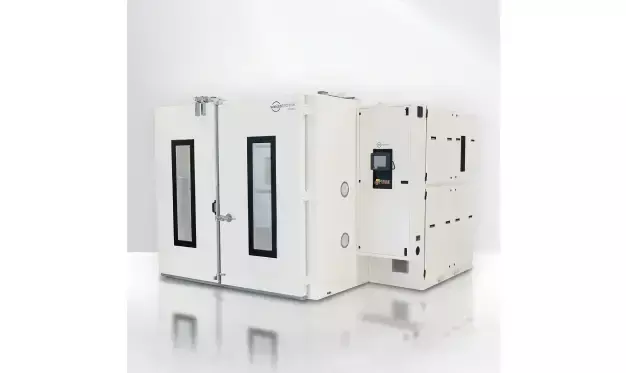
Discover how environmental chambers enhance product reliability across automotive, aerospace, and industrial sectors by simulating extreme temperatures, humidity, vibration, and real-world environmental conditions for accurate testing and quality assurance.
There is a moment in every product's life that most people never hear about. It happens long before the product reaches a shelf, a showroom, or a defence procurement order. It happens in a test lab, inside a chamber that most people outside manufacturing have never seen, where engineers deliberately try to break things.
Not out of carelessness. On purpose.
The idea is simple enough. If you can make something fail in a controlled environment, you learn exactly where it gives up. Fix that, and what you ship is something that has already survived the worst. That logic sits at the centre of environmental testing, and it runs across four industries that could not be more different from each other: automotive, aerospace, defence, and electronics.
Each of them has their own version of "worst." And each of them has learned, sometimes the hard way, that skipping this step costs far more than doing it.
What a Test Chamber Is and Why It Exists
Walk into a manufacturing facility that takes product quality seriously and somewhere near the R&D section, you will find at least one. An environmental test chamber is essentially a sealed enclosure that can reproduce conditions the product will face in the real world: extreme heat, deep cold, high humidity, salt-laden air, dust, rain, altitude pressure drops, and combinations of all of the above.
The reason these chambers exist is that waiting for nature to test your product is not a strategy. A car component that will eventually face Ladakh winters and Rajasthan summers cannot sit outside for five years to prove it works. A circuit board that needs to function in a humid coastal factory cannot be shipped and monitored for corrosion over a decade. The chamber compresses that time. Days of accelerated testing stand in for years of real-world exposure.
What engineers are looking for is where the product cracks, literally or otherwise. A connector that leaks at a certain humidity threshold. A solder joint that fractures under repeated thermal cycling. A seal that fails when pressure drops sharply. Better to find these things in a lab at Peenya Industrial Estate than on a highway in Himachal Pradesh, or worse, in an aircraft at 35,000 feet.
Companies like Envisys Technologies, based in Bengaluru, have been building these chambers for industries across India and beyond. The range of what these chambers simulate has grown considerably as the industries they serve have grown more demanding.
How the Auto Sector Made Environmental Testing Standard Practice
Cars were among the first mass-produced consumer products complex enough to actually need this kind of testing at scale. And the Indian automotive sector, which has grown into one of the largest in the world, has brought that testing culture into its domestic supply chains.
Think about what a vehicle component goes through. An ECU sitting under the bonnet of a car in Chennai sees humidity levels that would make lab engineers nervous. That same car might spend a winter in Uttarakhand where temperatures drop well below zero. The battery pack in an electric vehicle faces charge-discharge cycles across a temperature range that stresses the chemistry inside in ways that only show up clearly under controlled testing conditions.
Thermal shock chambers are a staple in automotive testing for this reason. They cycle components rapidly between hot and cold zones, replicating years of seasonal change in hours. Temperature and humidity chambers that operate between -70°C and +180°C have become standard in R&D labs supplying the major automotive clusters in Pune, Chennai, Gurugram, and Bengaluru.
The EV transition has added new pressure to all of this. Battery testing is no longer a niche activity. It is central to every EV manufacturer's development cycle, and the test protocols are getting stricter, not looser, as battery capacities increase and range expectations grow. A battery that behaves unexpectedly under temperature stress is not just a warranty problem. It is a safety problem.
Testing at the Edge: What Aerospace Demands
Aerospace is a different world. The margins for error are smaller, the certification requirements are stricter, and the operating environments are more extreme than anything the automotive sector deals with on a routine basis.
An avionics component going into a commercial aircraft will face temperatures that swing from -55°C on the ground in a northern winter to well above 70°C inside a fuselage parked in the Middle East sun, then drop rapidly again at cruising altitude. Pressure at 35,000 feet is roughly a quarter of what it is at sea level. Combined altitude, temperature, and humidity testing is not unusual for aerospace-grade components. Neither is sustained vibration testing, because structural components in aircraft face vibration loads during takeoff, flight, and landing that are mechanically demanding in ways ground transport simply does not replicate.
India's aerospace sector has been expanding. ISRO's programme, the growing private space industry, and HAL's manufacturing operations all feed into supply chains that require component-level environmental validation. A supplier that cannot demonstrate its parts have been tested to relevant standards does not get the contract. That is not a soft preference. It is written into procurement.
Defence: Where Failure Is Not an Option
If aerospace testing is demanding, defence is the sector that makes engineers genuinely lose sleep over reliability.
A radar system deployed in Siachen cannot shut down because temperatures dropped overnight. A communication unit in a forward operating post near the coast cannot corrode and lose signal because salt air worked its way into a connector. A guidance component in any piece of ordinance needs to function exactly as designed, regardless of whether it has been stored in a humid armoury for eighteen months or deployed to a desert in peak summer.
The range of conditions defence equipment faces is arguably wider than any other sector. Desert heat, arctic cold, coastal humidity, high altitude, vibration from vehicle transport, shock from deployment. And the testing protocols that certify defence equipment reflect that range. It is not uncommon for a single component to be validated across multiple combined conditions before anyone signs off on it.
What has changed in India recently is the scale of domestic defence manufacturing. Aatmanirbhar Bharat and the defence corridor initiatives in Uttar Pradesh and Tamil Nadu have pushed Indian manufacturers into producing equipment that previously came almost entirely from imports. With that shift comes a direct requirement for testing infrastructure. DRDO facilities and private defence suppliers both need in-house or readily accessible environmental testing capability. Outsourcing every test was manageable when volumes were smaller. As programmes scale, it stops being practical.
Electronics: The Broadest Application of All
Step back from aerospace and defence and look at the sheer volume of electronics manufactured in India today. Consumer devices, industrial automation equipment, medical instruments, power electronics, telecom infrastructure. The categories are vast and the environments these products end up in are equally varied.
An industrial controller installed in a factory near Visakhapatnam faces humidity levels that would not be out of place in a monsoon. A telecom cabinet on a rooftop in Jaipur bakes in summer. Medical equipment in a rural clinic might see dust ingress that a hospital-grade lab never would. For all of these, environmental testing determines whether the product actually survives contact with its intended environment.
Dust testing is particularly relevant in the Indian context. IP rating validation for dust and water ingress is not optional for most electronics categories, and the testing required to earn those ratings involves chambers that can simulate fine-particle dust environments accurately enough to satisfy international standards. Salt spray testing matters for anything going near a coast or into an industrial environment where corrosive elements are present. Corrosion can start in ways that are invisible until a product has already failed in the field.
The volume of electronics testing required across Indian manufacturing alone has grown enough to support a standalone testing services industry. Many manufacturers who cannot justify owning their own chambers use third-party lab services, but the more serious players, particularly those exporting to regulated markets in Europe, the US, or Japan, tend to bring testing capability in-house.
When One Chamber Is Not Enough
Here is something that comes up often when you talk to engineers working on complex products. Testing a component in heat, then testing it separately in vibration, does not tell you what happens when it faces both at once. And in the real world, conditions do not arrive one at a time.
An aerospace component does not experience temperature extremes and vibration in separate, polite sequences. A defence vehicle component is not subjected to shock and humidity on different days. Combined environmental testing, where chambers replicate simultaneous conditions, gives a much more accurate picture of real-world behaviour than sequential single-condition tests.
This is where the shift toward more sophisticated chamber configurations has been visible. Environmental walk-in chambers have become essential where the product being tested is too large for a standard benchtop or floor-standing unit. Full automotive assemblies, large defence equipment, industrial machinery, these cannot be broken down to component level for every test. Walk-in configurations allow the complete assembly to be tested in the environment it will actually face. Some facilities even use drive-in chamber formats where full vehicles or heavy equipment can be rolled directly into the test space.
Custom-built chambers have also become more common as standard catalogue products do not always fit the test protocol. Solar panel testing requires specific radiation simulation. Battery pack testing for EVs involves safety-grade enclosures to manage the risk from cells under stress. Insulator testing in the power sector involves mechanical and thermal loads applied simultaneously. The manufacturers that can engineer a chamber to a specific test brief, rather than asking the customer to fit their test to a standard product, end up building longer relationships with the industries that have the most demanding requirements.
Why Indian Manufacturers Cannot Afford to Treat This as Optional
There is a version of this conversation that focuses on certification and compliance. Yes, testing is required for certain regulatory approvals. Yes, exporting to European or American markets often means meeting specific environmental test standards. That is all true.
But the more compelling argument, and the one that tends to resonate with engineers more than procurement managers, is financial. A product recall is expensive. A warranty replacement programme is expensive. A failed component in a defence system or an aircraft is catastrophically expensive in ways that go beyond money. The cost of running a product through proper environmental testing before it ships is a fraction of any of those outcomes.
India's manufacturing ambitions, and they are real, whether you look at the PLI scheme uptake, the defence corridor investments, or the semiconductor push, depend on producing things that work reliably. Not just reliably enough to pass a spot check. Reliably enough to compete with German, Japanese, and American manufacturers in markets that have been buying from those countries for decades. That is a quality bar that does not get cleared by skipping validation steps.
For manufacturers like Envisys Technologies, which has been building and supplying environmental test equipment from Bengaluru to automotive, electronics, defence, and aerospace customers across India and in international markets, the work is not glamorous. It is the kind of thing that does not make headlines. But it sits directly behind every product that makes it into service without failing, and that is a fairly large number of products.
Getting It Wrong Shows Up Eventually
The industries that have been doing this long enough have all learned their lessons. Automotive manufacturers who skipped rigorous corrosion testing on early export models found out in Gulf markets that salt spray does not care about your timeline. Electronics companies that did not validate for Indian humidity and dust conditions discovered that their international product designs needed re-engineering for the domestic market. And defence procurement agencies have become increasingly specific about what test documentation they require before approving any supplier.
The lesson is consistent across all four sectors. Environmental testing is not a final formality before shipping. It is the part of the development process where you find out whether the design decisions made in air-conditioned offices hold up against the conditions that actually exist outside of them. The ones that do that work seriously, and consistently, tend to be the ones still in business after a decade of competing in demanding markets.
That is as close to a universal truth as engineering manufacturing gets.
Omar meets PM Modi in Delhi, presses for early restoration of J&K statehood
Air India denies putting pressure on families of AI-171 Boeing crash victims
India Finland Relations, S Jaishankar, Digitalisation, Sustainability, Strategic Partnership
DK Shivakumar meets PM Modi in Delhi, seeks support for Karnataka's development priorities
Siddaramaiah accuses Zameer Khan of betrayal in Davanagere bypolls
Bengal: CID takes over probe against Abhishek Banerjee in poll violence case


