






India has erred by denying clearance to Starlink

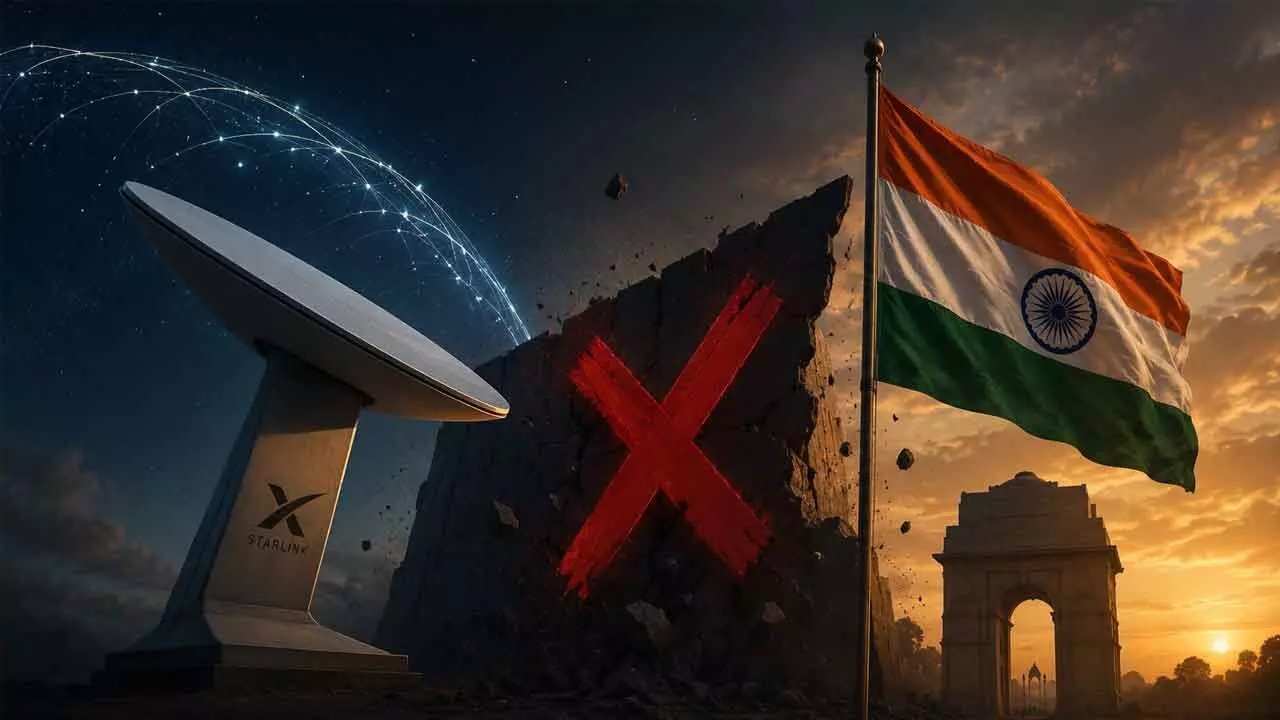
India's refusal to grant final clearances to Starlink has sparked debate over telecom policy, foreign investment, and India-US relations. Explore how satellite broadband, digital inclusion, and regulatory decisions could impact India's connectivity goals and global technology partnerships.
India’s refusal to grant final clearances to Tech billionaire Elon Musk’s Starlink is quite unfortunate. Worse, the refusal has nothing to do with our national defence or internal security; it is because of Starlink’s reported use of its service during the Iran war. The United States reportedly used Starlink’s satellite terminals in Iran despite the service not being licensed in the country. New Delhi has clearly erred on three counts. First, we are not a party to the war, so we should not let the Iran war-related matters impact policy making.
Second, while we are not among the belligerents, we should know which side is in the right, and that is the US-Israel alliance. Quite apart from the fact that Tehran is wrongfully building a nuclear arsenal, it is also illegally choking the Strait of Hormuz. This has had an adverse effect on our economy—indeed on the entire world because its unlawful shut has strained global supply chains. And finally, Starlink was just being patriotic in supporting Washington’s war efforts. What would we expect from Airtel, Jio, or Tata to do if and when India is at war?
Before the reports about the denial of Starlink’s security clearances, the company’s India rollout didn’t seem far away. Last December, Musk had posted on X, “Looking forward to serving India with @Starlink,” as Communications Minister Jyotiraditya Scindia and Starlink vice-president (business operations) Lauren Dreyer publicly discussed about expanding satellite connectivity in rural and remote areas.
All this created the impression that India was on the verge of embracing a technology that could significantly enhance digital inclusion, improve connectivity in underserved areas, and strengthen the country’s communications infrastructure. Against that backdrop, the government’s decision to not give security clearances is unreasonable; it surely doesn’t augur well for both our economy and Indo-US ties. At a time when India strives to position itself as a leading destination for global investment and advanced technology, decision making at the top levels should be guided by clear national interests, not the geopolitical considerations that do not directly concern India.
Starlink’s entry into the Indian market can enhance competition in the telecom sector, promote innovation, and potentially speed the delivery of broadband services to remote regions that cannot be accessed with conventional terrestrial networks. Such benefits would accrue not merely to consumers but also to businesses, educational institutions, healthcare providers, and government agencies operating in remote locations.
The implications extend beyond economics. India and the United States have spent the better part of two decades building a robust strategic partnership founded on converging interests in technology, trade, defence, and regional security. While no bilateral relationship should be dictated by the fortunes of a single company, decisions affecting high-profile American investments inevitably influence perceptions of India’s regulatory environment. If New Delhi appears willing to alter commercial outcomes on the basis of events unrelated to Indian law or security concerns, international investors may question the predictability and consistency of the country’s policy-making process.
Moreover, denying Starlink access despite apparent progress toward approval sends an unfortunate signal to innovators and entrepreneurs worldwide. Today, India enjoys the reputation of a nation that is open to new technologies and ambitious investment. The government ought to preserve that reputation with transparent and stable decision-making. The government should reconsider its position.
Bihar: EOU raids Hajipur Municipal Council Accountant’s premises, Rs 2 crore cash recovered
PM Modi delivering corruption-free governance: K’taka BJP
Delhi L-G orders repair of rainwater harvesting systems ahead of monsoon
World Bank lifts India growth outlook despite Gulf war
WHO releases updated heat-health action plans guidance
SC to hear Meenakshi Natarajan's plea against Rajya Sabha nomination rejection tomorrow


