






- 'Is democracy in India being undermined like China, Russia and North Korea': Gehlot on FIR against Rahul, Priyanka Gandhi
- Delhi Seemapuri Building Collapse: Several Feared Trapped As Rescue Operation Underway
- Claude Users Can Work Across Google Docs, Sheets and Slides In-App
- Rapido Ride Turns Into Nightmare After Captain Flees With Injured Passenger
- 7 Must-Watch OTT Releases For Your Dussehra Holidays
- ‘His Lips Turned Blue’: Dentist Recalls 45-Minute Effort To Save Flydubai Pilot Smit Machchhar
- Airtel Postpaid Plans Bring Free International Roaming From Rs 499
- 'Politics means nation building to him': Rajnath Singh on PM Modi's 25 years in public service
A trinity called peace
In Short
The Upanishads invite us to look beyond words and discover the deeper connection between knowledge, inner peace and the Divine. Through surrender and spiritual contemplation, we can move beyond fear and anxiety towards freedom, clarity and lasting peace
Share :
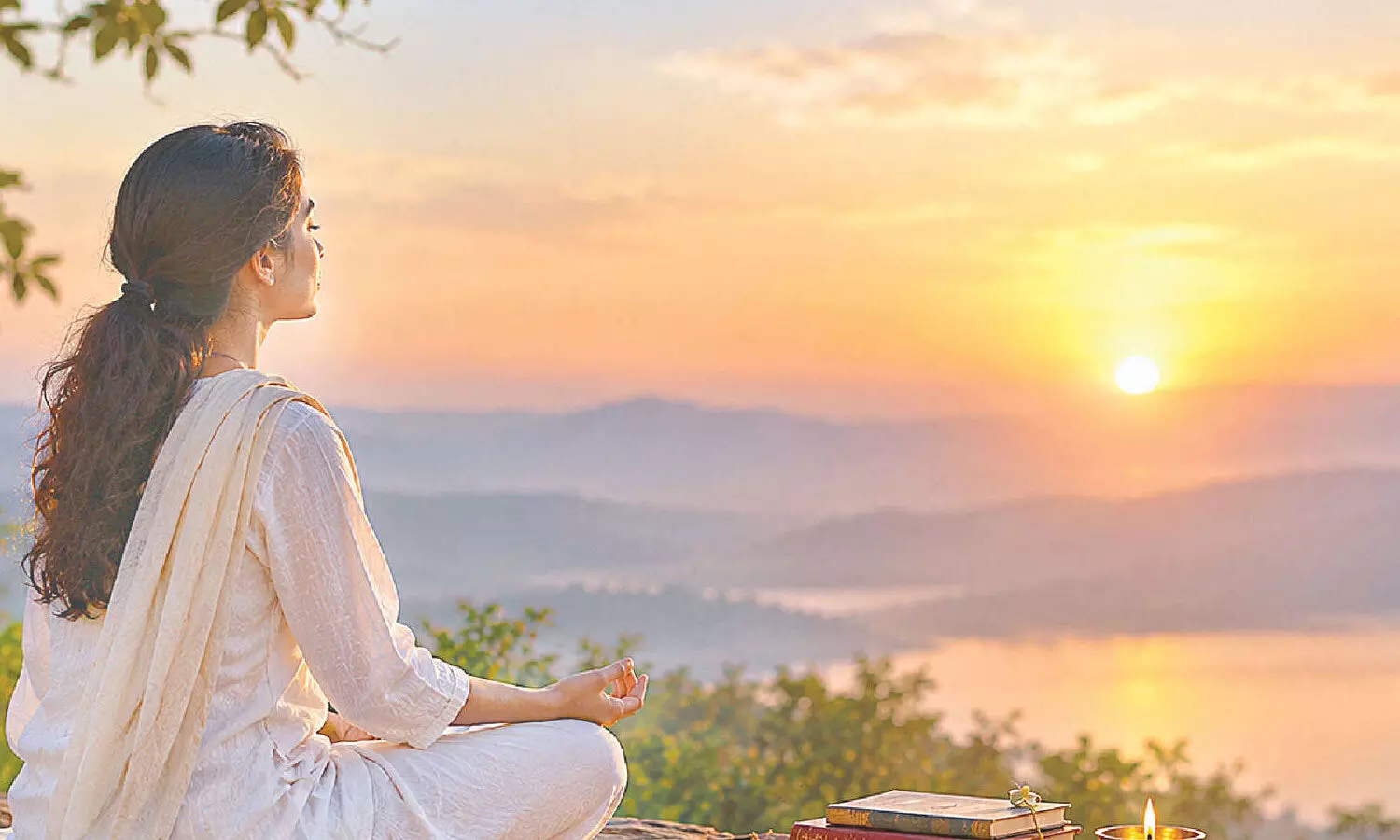
The word Upanishad means sitting close to the Master. Not just physically but mentally as well. Sitting mentally close indicates understanding the words of the Master and the spirit behind such words. Many things cannot be expressed fully through words. The deeper the subject, the less it can be expressed through words. You can experience any emotion, including pain or love, but it is impossible for you to describe or express it completely. If you can describe something entirely in words, it means that the subject is not subtle but gross. By studying and contemplating the Upanishad, you can grasp so many indescribable things, where words are simply vehicles through which a current of energy, grace, and joy flows, which can transform your life.
The Yogasara Upanishad, for instance, begins with a prayer to unite with God. Yoga means union or uniting. In this entire creation, there is such a tendency to unite and become one because the two is painful. Everything wants to merge into something. This urge is called love, and such love for God is called Yoga.
For this, peace is the first and foremost requirement because only then can you gain any knowledge. There are three kinds of peace - peace in the environment, peace in mind, and peace in soul. Unless you have some degree of these three kinds of peace, you may not be able to understand the words. You need a peaceful atmosphere around yourself, and your mind ought to be calm and under your command. If the mind is unstable and wandering towards your business, home, or car, you shall not be able to listen or absorb it totally. Then sitting close to the Master would not help you gain knowledge. There should also be peace in your soul. If a soul is totally restless, it cannot even come near knowledge.
The Upanishad says that one can attain these three types of peace by adoring and worshipping the Divine - who has no beginning and no end and from which all knowledge springs forth. All science, technology, arts, poetry, and music come from such consciousness. That consciousness, that infinity, that divinity - that is called Brahman, who is responsible for the creation, maintenance, and transformation of the universe. The first sentence of the Upanishad introduces God as a Luminary. He illuminates like the Sun, and as the Sun is the driving force behind all life upon this Earth, so is God at the centre of all energy and creativity. He is self-illuminating, and He illuminates others. With a torch, you not only see everything in the darkness, but you also see the torch itself because the torch is the source of light.
In the same way, you too are self-effulgent. When you are here, you do not need any other proof of your existence. Your very presence is good enough. If you try to prove yourself by some other means, such means would be false. So do not look around for false means of proof in your search for God. The Divine is beyond such proof. If you are carrying a load on your head, there cannot be liberation or freedom. If you think, “I am great”, but the thought of death scares you, then how can you feel free? You will really vanish if you do not unite with God. Only thus can you save yourself. All that you will lose is your fear, anxiety, tension, worry, and short vision, which keep your mind burdened and stop it from experiencing its infinite potential. The moment there is surrender, you will have peace and the feeling of freedom.
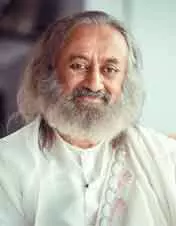
(The author is a global humanitarian leader and spiritual master who founded The Art of Living in1981. As Gurudev turns 70 and The Art of Living steps into the 45th year of making life a celebration on this planet, month long celebrations are underway at The Art of Living International centre with eminent personalities from the sphere of politics, entertainment, arts, academia and faith arriving at the centre for thoughtful conversations, cultural showcases and launch of several service initiatives.)
India condemns attacks on commercial vessels in Black Sea, reiterates call for dialogue and diplomacy
'Is democracy in India being undermined like China, Russia and North Korea': Gehlot on FIR against Rahul, Priyanka Gandhi
SSB pays tribute to bravehearts killed in Maoist attack 15 years ago
SSB pays tribute to bravehearts killed in Maoist attack 15 years ago
Pixel Moments to Politics For Cong As BJP Celebrates Modi@25
Dramatic face-off near Jantar Mantar. Rahul and Priyanka sit on the road
MPs vs Police. Chaos and High Drama Unfold on Delhi Roads
Henri Kagan, Kenso Soai Win 2026 Nobel Chemistry Prize for Autocatalysis
AP cabinet approves 12 agenda items
High Courts should not suggest custodial interrogation of accused, says Supreme Court


