





- Claude Users Can Work Across Google Docs, Sheets and Slides In-App
- Rapido Ride Turns Into Nightmare After Captain Flees With Injured Passenger
- 7 Must-Watch OTT Releases For Your Dussehra Holidays
- ‘His Lips Turned Blue’: Dentist Recalls 45-Minute Effort To Save Flydubai Pilot Smit Machchhar
- Airtel Postpaid Plans Bring Free International Roaming From Rs 499
- 'Politics means nation building to him': Rajnath Singh on PM Modi's 25 years in public service
- 'Rising Together': India sets out vision for 2036 Olympic and Paralympic Games ambition
- Teja Sajja’s The Traitors Telugu: Check Out The Complete List Of Contestants
Henri Kagan, Kenso Soai Win 2026 Nobel Chemistry Prize for Autocatalysis
In Short
French chemist Henri B. Kagan and Japanese chemist Kenso Soai have been awarded the 2026 Nobel Prize in Chemistry for pioneering discoveries in asymmetric organic synthesis, non-linear effects, and autocatalysis that advanced understanding of molecular chirality.

Share :
Henri Kagan, Kenso Soai Win 2026 Nobel Chemistry Prize for Autocatalysis
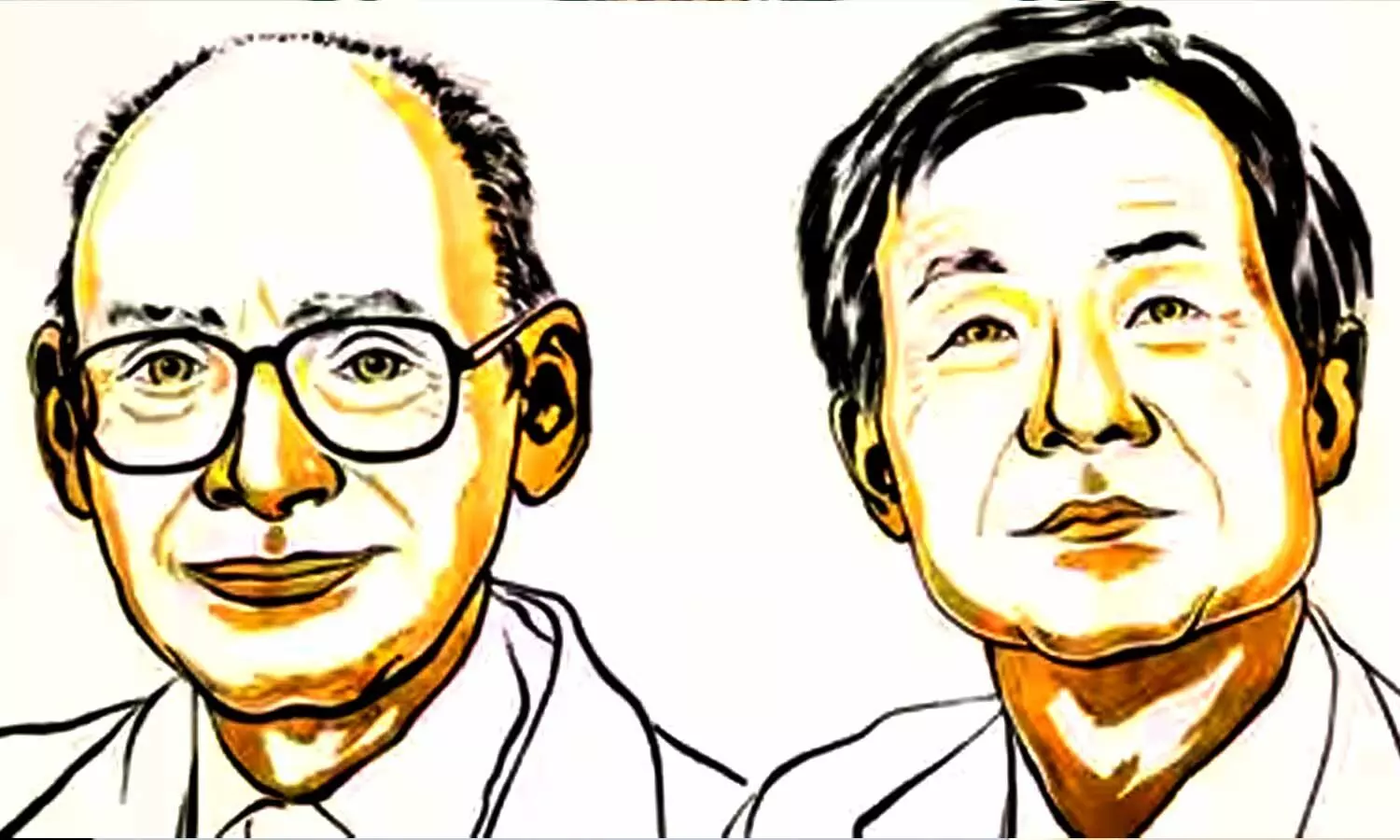
Henri B. Kagan, a French chemist and Kenso Soai, a Japanese chemist, are the two who are to receive the 2026 Nobel Prize in Chemistry for their groundbreaking work with non-linear effects and autocatalysis in asymmetric organic synthesis.
The award announced in Stockholm in a press release on Wednesday, was for work that helped answer a scientific question that has confounded chemists for over a century: why molecules vital to life typically occur in only one of two possible "mirror-image" forms.
In much the same way that there are two "hands" of a person, there are two mirror-image versions of many molecules. Such forms are called 'enantiomers', and are often found in biological systems to have very different properties. This difference is significant in pharmaceuticals, as one molecular form may be able to have the desired therapeutic effect while the other form may have unwanted or harmful effects.
Kagan's research helped establish methods for controlling chemical reactions so that they favour one molecular form over another. His work on asymmetric catalysis, including the development of DIOP ligands, became influential in stereoselective chemical synthesis.
Soai later made a landmark contribution by discovering an unusual autocatalytic reaction in which a product can help accelerate its own formation. His work demonstrated how molecular chirality could be amplified, offering important clues to the phenomenon known as homochirality.
Together, the scientists' discoveries have transformed understanding of how molecular handedness can emerge, be amplified and be controlled during chemical reactions. Their research has also influenced modern approaches to chemical synthesis and pharmaceutical development.
Kagan, 95, is affiliated with Université Paris-Sud in Orsay, France, while Soai is affiliated with the Tokyo University of Science in Japan. Soai said he was shopping near his home when the Nobel committee contacted him with the news.
The laureates will share the 2026 Nobel Prize amount of 12 million Swedish kronor, roughly $1.2 million. The Nobel medals will be presented in Stockholm on December 10, the anniversary of Alfred Nobel's death.
MPs vs Police. Chaos and High Drama Unfold on Delhi Roads
Henri Kagan, Kenso Soai Win 2026 Nobel Chemistry Prize for Autocatalysis
AP cabinet approves 12 agenda items
High Courts should not suggest custodial interrogation of accused, says Supreme Court
Telangana govt issues orders on DA hike
“We Will Do It”: I Live for a Mission, Not Personal Gains — PM Modi


