






- PM Modi calls for rules-based maritime order
- 'Is democracy in India being undermined like China, Russia and North Korea': Gehlot on FIR against Rahul, Priyanka Gandhi
- Delhi Seemapuri Building Collapse: Several Feared Trapped As Rescue Operation Underway
- Claude Users Can Work Across Google Docs, Sheets and Slides In-App
- Rapido Ride Turns Into Nightmare After Captain Flees With Injured Passenger
- 7 Must-Watch OTT Releases For Your Dussehra Holidays
- ‘His Lips Turned Blue’: Dentist Recalls 45-Minute Effort To Save Flydubai Pilot Smit Machchhar
- Airtel Postpaid Plans Bring Free International Roaming From Rs 499
Kallol Choudhury: Bridging India through literature
In Short
Among the many works that define Choudhury’s literary personality, Buddha on Planchette occupies a distinctive position

Share :
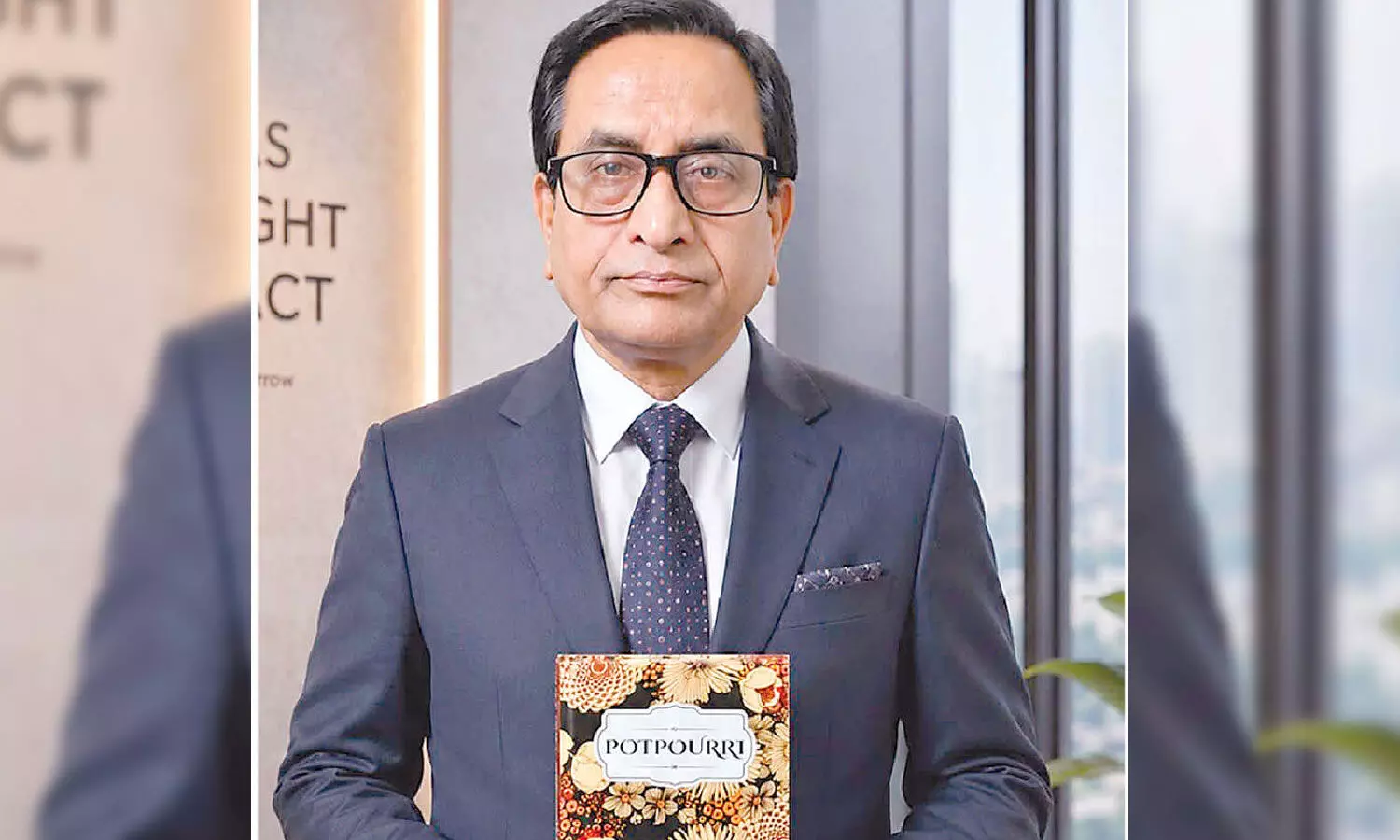
Kallol Choudhury: Bridging India through literature
For more than three decades, Kallol Choudhury has shaped a distinctive literary journey through poetry, fiction, translation and research. A writer deeply connected with Bengali, English and Assamese literature, he has devoted much of his creative life to bringing voices, histories and experiences from Eastern and Northeastern India to wider readerships. His literary journey began with Two Footprints in the Train of Time, published in 1989 and launched in Silchar at the Nikhil Bharat Banga Sahitya Sammelan. He has translated eminent Bengali poets such as Jay Goswami and Nirendranath Chakravarti, while bringing Assamese poets including Samir Tanti, Anupama Basumatary and Nilim Kumar to English readers. His translations have appeared in Indian Literature, The Little Magazine and Chandrabhaga. In 2006, Sahitya Akademi published his Bengali translation of Jayanta Mahapatra’s award-winning Relationship, while his own Bengali collection Tumi Jao MeghederKachhe reflected his parallel journey as a poet.
Among the many works that define Choudhury’s literary personality, Buddha on Planchette occupies a distinctive position. The book brings together philosophical inquiry, introspection and literary experimentation. Its evocative title creates a meeting point between the timeless wisdom associated with Buddha and the mysterious symbolism of a planchette. Through this unusual conceptual framework, Choudhury explores questions of existence, spirituality, inner dialogue, silence and the relationship between the visible and invisible worlds. Buddha on Planchette reflects a writer unwilling to remain confined within conventional literary boundaries and willing to explore philosophical territory through imaginative expression. The work’s unusual premise and contemplative character invite readers to look inward and engage with questions that transcend the ordinary experiences of life. It adds a striking philosophical and experimental dimension to Choudhury’s literary oeuvre.
Choudhury’s literary concerns extend beyond philosophy into history, memory, geography and cultural identity. His writings on Netaji Subhas Chandra Bose and the Azad Hind Fauj carry a personal resonance rooted in family history, while his research on Sonbeel reflects his engagement with heritage and the environment. His book SONBEEL: A Saga of Asia’s Second Largest Beel of Assam combines research with literary sensitivity. His 2010 collection Bengali Short Stories of Assam: Glimpses brought regional voices to a broader readership, while his short story Haflong Hills appeared in The Oxford Anthology of Writings from Northeast India and Penguin’s LAPBAH: Stories from the North-East. His collections Mehagani Andhakar, Alpath Dhare and Shanbiler Chele, the latter first published in Dhaka and later in India, further demonstrate the breadth of his creative engagement. His recently published Itihaser Aloke Mahendra Chandra De Choudhury O Tatkalin Cachar-Srihatta, a social history of notable personalities of the erstwhile Surma Valley, has drawn scholarly attention in India and abroad.
Kallol Choudhury’s literary contribution is ultimately about building bridges. He connects languages without diluting their individuality, regions without losing their histories, and contemporary readers with cultural memories that deserve preservation. His journey demonstrates the enduring power of literature to create conversations across linguistic and geographical boundaries. Buddha on Planchette stands out as an especially intriguing expression of his intellectual and creative temperament, revealing his willingness to move beyond familiar literary territory and explore deeper dimensions of existence and consciousness. Choudhury’s career offers a model founded on sustained creativity, scholarship and quiet perseverance. Through poetry, fiction, translation, research and historical writing, he continues to strengthen the literary conversation between Bengal, Assam, the Northeast and the wider landscape of Indian literature, establishing a meaningful place for himself in India’s multilingual literary tradition.
(The writer is one of the senior literary critics of Authors Paradise Literary Group)
On the day marking his 25 years at the helm, PM Modi calls on LK Advani
Pixel Moments to Politics For Cong As BJP Celebrates Modi@25
Dramatic face-off near Jantar Mantar. Rahul and Priyanka sit on the road
Telangana Meets Record Power Demand, Says Bhatti Vikramarka
MPs vs Police. Chaos and High Drama Unfold on Delhi Roads
Henri Kagan, Kenso Soai Win 2026 Nobel Chemistry Prize for Autocatalysis


