






- 'Is democracy in India being undermined like China, Russia and North Korea': Gehlot on FIR against Rahul, Priyanka Gandhi
- Delhi Seemapuri Building Collapse: Several Feared Trapped As Rescue Operation Underway
- Claude Users Can Work Across Google Docs, Sheets and Slides In-App
- Rapido Ride Turns Into Nightmare After Captain Flees With Injured Passenger
- 7 Must-Watch OTT Releases For Your Dussehra Holidays
- ‘His Lips Turned Blue’: Dentist Recalls 45-Minute Effort To Save Flydubai Pilot Smit Machchhar
- Airtel Postpaid Plans Bring Free International Roaming From Rs 499
- 'Politics means nation building to him': Rajnath Singh on PM Modi's 25 years in public service
One nation, many identities: How India’s diversity strengthens its national spirit
In Short
The idea of India has always been remarkably expansive

Share :
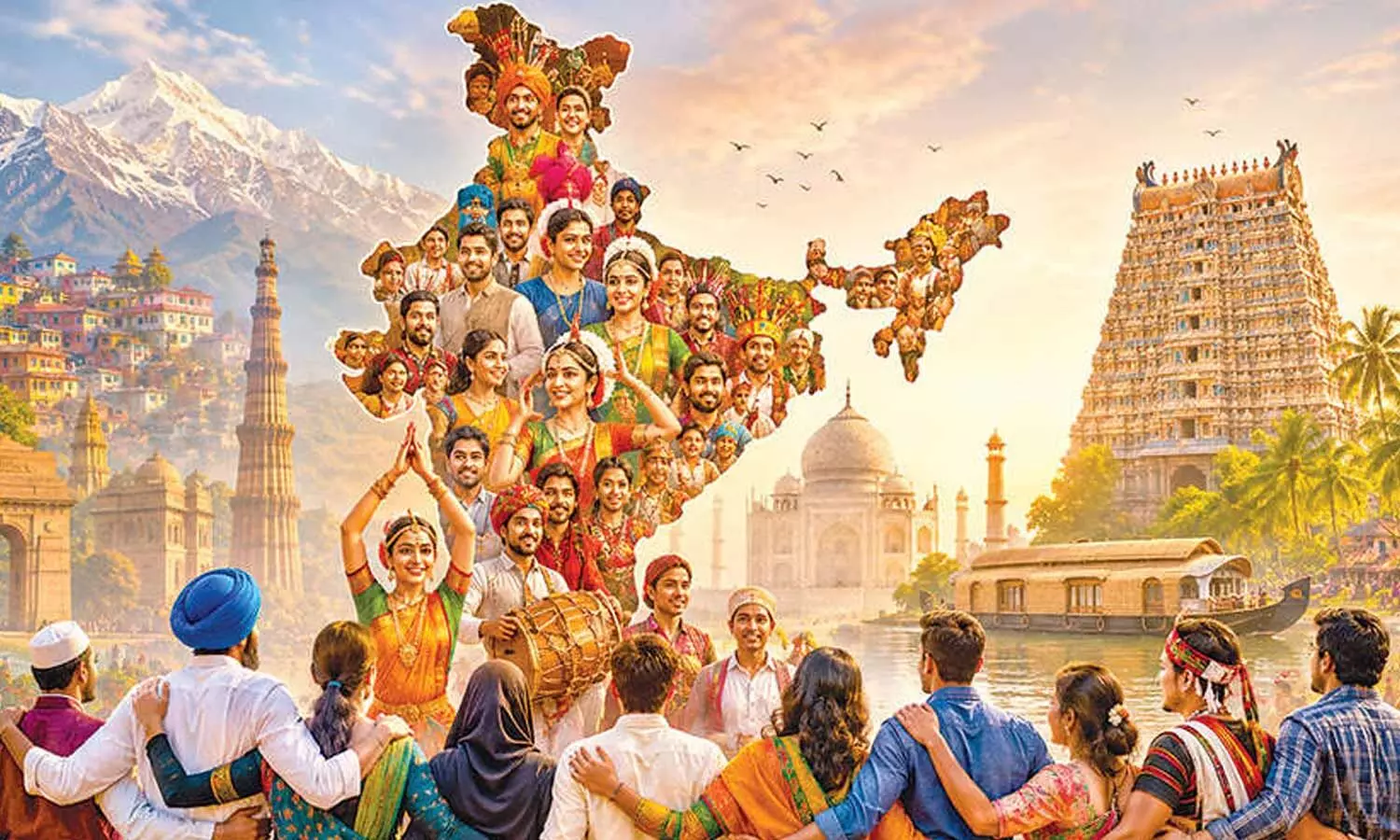
One nation, many identities: How India’s diversity strengthens its national spirit
India’s identity has never been defined by a single language, culture, cuisine, tradition or way of life. It is a country where different identities do not necessarily compete with one another; instead, they exist side by side, often influencing and enriching each other. From the mountains of Kashmir to the coasts of Kerala, from the streets of Mumbai to the villages of the Northeast, India’s diversity is not simply a demographic reality it is an important part of what makes the country’s national spirit distinctive.
The idea of India has always been remarkably expansive. A person can identify deeply with their state, language, community or cultural heritage while also feeling an equally strong connection with the larger Indian identity. There is no requirement to give up one identity to embrace another. In many ways, the strength of the Indian experience lies precisely in this ability to accommodate multiple identities.
Language is perhaps one of the clearest examples. India’s linguistic landscape is vast, with people speaking hundreds of languages and dialects across the country. Language is closely connected to family, history and cultural memory. Yet linguistic differences have rarely prevented Indians from building connections across regions. A Tamil song can find listeners in Delhi, a Punjabi film can become popular in Bengaluru, and Malayalam cinema can develop a following far beyond Kerala. Digital platforms and popular culture have only accelerated this exchange.
Food tells a similar story. Indian cuisine is often described as one broad category, but the reality is far more fascinating. The food traditions of Punjab are dramatically different from those of Bengal, Gujarat or Nagaland. Yet Indian households routinely borrow from one another. A dish that originates in one region can become part of everyday life in another. Festivals, weddings and social gatherings frequently bring together different culinary traditions, creating an informal cultural exchange that happens without much thought.
Festivals offer another window into this diversity. Across the country, different communities celebrate their own traditions while also participating in festivals beyond their immediate cultural background. Diwali, Eid, Christmas, Gurpurab, Pongal, Bihu, Onam, Durga Puja and numerous regional celebrations become occasions for communities to share their traditions with others. This interaction creates familiarity, and familiarity often becomes the foundation for social cohesion.
India’s diversity is also visible in its arts and popular culture. Music, cinema, dance, literature and handicrafts have travelled across geographical boundaries for generations. The popularity of regional cinema among audiences outside its traditional markets is a contemporary example of this cultural curiosity. Indians are increasingly comfortable consuming stories in languages they may not speak, because emotions and experiences often travel beyond language.
For younger Indians in particular, identity is becoming increasingly layered. A young person may be deeply connected to their regional roots while being equally comfortable with global culture. They may speak their mother tongue at home, communicate in English or Hindi at work, follow Korean music, watch a Telugu film and celebrate a festival rooted in their family tradition. These combinations do not necessarily dilute their Indian identity. Instead, they demonstrate how identity can evolve without losing its roots.
This is where the idea of national spirit becomes important. Patriotism does not always have to be expressed through grand gestures. It can also be found in everyday interactions the willingness to learn another Indian language, try another region’s food, respect a different tradition or celebrate someone else’s cultural heritage.
The strongest form of national unity may not be uniformity at all. It may be the ability to remain different while recognising a shared belonging.
India’s diversity also creates an opportunity for dialogue. Differences in customs, beliefs and lifestyles can sometimes create misunderstandings, but they can also encourage people to listen, learn and find common ground. A country as diverse as India constantly requires its citizens to negotiate these differences. That process, although not always easy, can strengthen the social fabric when approached with curiosity and respect.
There is also an economic and creative dimension to this diversity. Regional traditions have become increasingly important to tourism, handicrafts, food, entertainment and entrepreneurship. Local art forms and indigenous knowledge are finding new audiences, while regional creators are using technology to take their work to national and international platforms. What was once considered geographically limited can now become part of a much larger cultural conversation. Ultimately, India’s national spirit does not emerge despite its diversity; it emerges because of it. The country’s many identities represent different histories, experiences and aspirations, but they coexist within a shared national story. That story continues to evolve with every generation. As India looks towards the future, preserving this diversity will be as important as celebrating national achievements. A strong nation does not necessarily mean a nation where everyone speaks the same language, follows the same traditions or thinks in exactly the same way. It can mean a nation where differences are given space, identities are respected and people continue to find common ground. One nation does not need one identity. India’s strength lies in being able to carry many identities within one larger sense of belonging and that may be one of its greatest expressions of national spirit.
India condemns attacks on commercial vessels in Black Sea, reiterates call for dialogue and diplomacy
'Is democracy in India being undermined like China, Russia and North Korea': Gehlot on FIR against Rahul, Priyanka Gandhi
SSB pays tribute to bravehearts killed in Maoist attack 15 years ago
SSB pays tribute to bravehearts killed in Maoist attack 15 years ago
Pixel Moments to Politics For Cong As BJP Celebrates Modi@25
Dramatic face-off near Jantar Mantar. Rahul and Priyanka sit on the road
MPs vs Police. Chaos and High Drama Unfold on Delhi Roads
Henri Kagan, Kenso Soai Win 2026 Nobel Chemistry Prize for Autocatalysis
AP cabinet approves 12 agenda items
High Courts should not suggest custodial interrogation of accused, says Supreme Court


