






- 'Is democracy in India being undermined like China, Russia and North Korea': Gehlot on FIR against Rahul, Priyanka Gandhi
- Delhi Seemapuri Building Collapse: Several Feared Trapped As Rescue Operation Underway
- Claude Users Can Work Across Google Docs, Sheets and Slides In-App
- Rapido Ride Turns Into Nightmare After Captain Flees With Injured Passenger
- 7 Must-Watch OTT Releases For Your Dussehra Holidays
- ‘His Lips Turned Blue’: Dentist Recalls 45-Minute Effort To Save Flydubai Pilot Smit Machchhar
- Airtel Postpaid Plans Bring Free International Roaming From Rs 499
- 'Politics means nation building to him': Rajnath Singh on PM Modi's 25 years in public service
Ordinary lives, extraordinary truths
In Short
There are stories that entertain us, stories that disturb us, and then there are stories that quietly remain with us long after the last page has been turned.

Share :
Ordinary lives, extraordinary truths
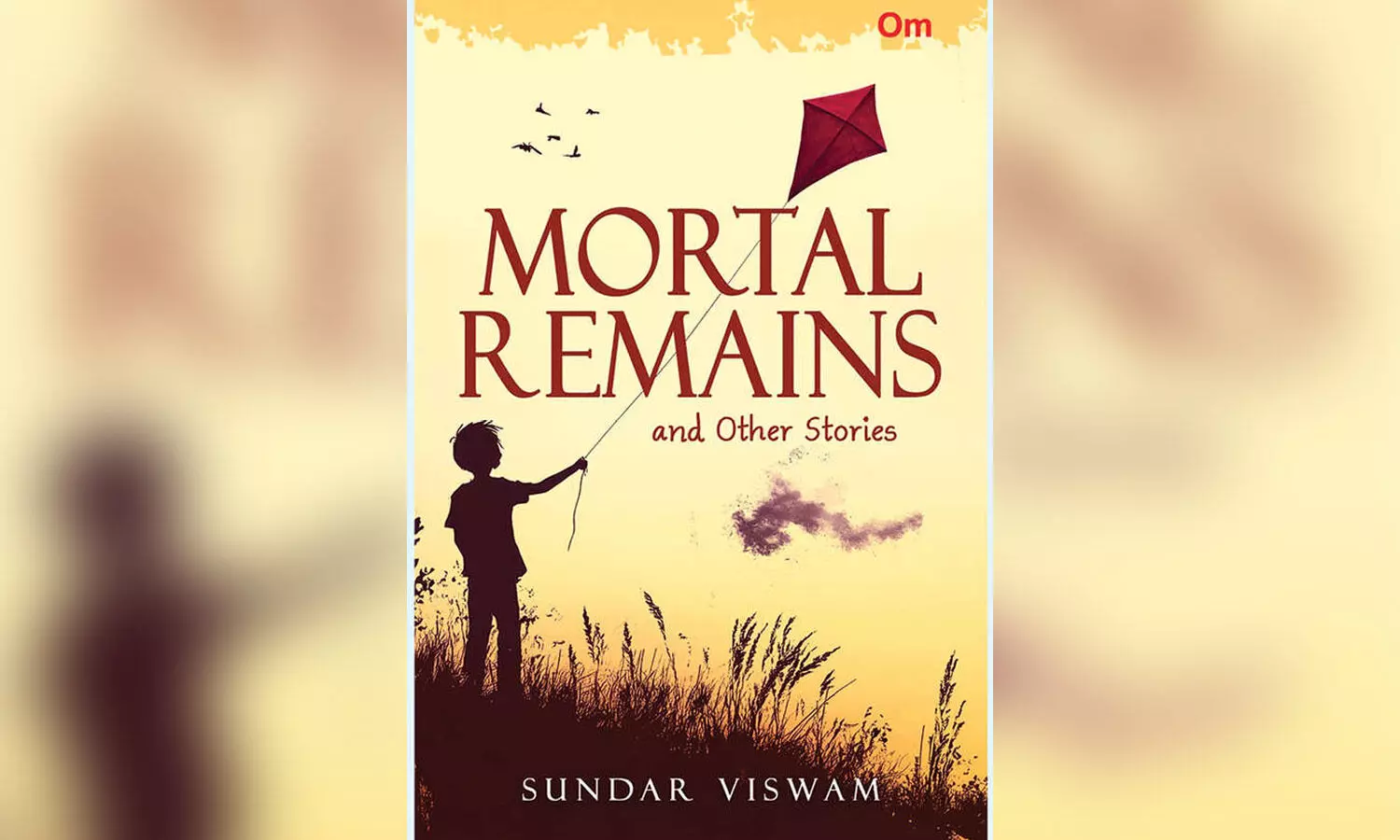
Sundar Viswam’s ‘Mortal Remains and Other Stories’ explores love, friendship, morality, betrayal and the complexities of human nature
There are stories that entertain us, stories that disturb us, and then there are stories that quietly remain with us long after the last page has been turned. Mortal Remains and Other Stories by Sundar Viswam belongs to the third category. This thoughtfully conceived collection explores the contradictions, vulnerabilities, desires and moral dilemmas that shape ordinary human lives. Sundar possesses a perceptive eye for apparently insignificant moments that suddenly acquire enormous emotional consequences. A kite drifting through the sky, a wedding invitation, a chance encounter on a train, a rumour in a small community or an unexpected twist of fate becomes the starting point for deeper explorations of friendship, family, love, ambition, morality and betrayal.
The title story, “Mortal Remains”, is perhaps the collection’s most introspective piece. Its celebrated writer, chained to his compulsion to write, becomes a compelling metaphor for the creative individual who continues to live through his art even when life itself appears burdensome. “The Red Kite” transforms carefree childhood friendship and rivalry into a heartbreaking memory, while “Manda oh my Manda!” explores the fragile boundary between affection and self-interest. “The Invitation” demonstrates how an apparently harmless social ritual can expose long-suppressed bitterness within a family. In “Falling Out”, friendship gradually disintegrates as hidden perceptions and a painful secret surface, while “Brother in Need” brings adolescence face to face with corruption and insecurity. The collection acquires a wider social dimension through stories dealing with destiny, principles, migration and moral choice. “The God of Chance” gives coincidence an almost human personality as two lovers struggle against circumstances that repeatedly keep them apart. “Regrettably, Yours” offers a perceptive glimpse into the immigrant experience, where professional success cannot completely silence anxiety created by uncertain status. “A Matter of Principle” examines how deeply held convictions can collide, leaving individuals struggling to protect their own choices. “Just Token” enters the uneasy territory between honesty and temptation, testing a man’s confidence in his integrity when confronted with everyday corruption.
Perhaps the greatest strength of Mortal Remains and Other Stories is its understanding that human beings are rarely what they appear to be. Beneath affection there may be insecurity, beneath honesty temptation, beneath success fear, and beneath ordinary relationships emotions that have remained unspoken for years. “Pleasanton”, centred on an American community unsettled by the rumour of an Indian lottery winner, exposes the prejudices, anxieties and aspirations beneath a seemingly pleasant surface. Across these eleven stories, the author combines social observation with emotional insight and a gentle vein of irony.
Sundar’s characterisation is one of the collection’s notable strengths. His characters are neither entirely virtuous nor completely flawed; they are recognisably human, shaped by circumstances, desires, insecurities and choices. Their personalities emerge naturally through action, dialogue, hesitation and silence rather than excessive description. This gives them psychological credibility and emotional depth. His language complements this approach. The prose is lucid, controlled and accessible without sacrificing literary quality. Sundar avoids unnecessary ornamentation and allows situations to carry their own emotional weight. His narrative voice moves effortlessly between tenderness, irony, observation and introspection. The simplicity of his language becomes a strength, creating immediacy while leaving room for the reader to discover deeper meanings. “Mortal Remains and Other Stories” ultimately reminds us that extraordinary literature can emerge from ordinary lives. Sundar Viswam looks closely at familiar human experiences and reveals the complexity hidden within them. His stories do not merely entertain; they invite reflection and, ultimately, hold up a quiet mirror to ourselves.
(Dr Rupali Sethi is a noted Literary Critic, book reviewer and scholar of Hindi and English Literature.)
India condemns attacks on commercial vessels in Black Sea, reiterates call for dialogue and diplomacy
'Is democracy in India being undermined like China, Russia and North Korea': Gehlot on FIR against Rahul, Priyanka Gandhi
SSB pays tribute to bravehearts killed in Maoist attack 15 years ago
SSB pays tribute to bravehearts killed in Maoist attack 15 years ago
Pixel Moments to Politics For Cong As BJP Celebrates Modi@25
Dramatic face-off near Jantar Mantar. Rahul and Priyanka sit on the road
MPs vs Police. Chaos and High Drama Unfold on Delhi Roads
Henri Kagan, Kenso Soai Win 2026 Nobel Chemistry Prize for Autocatalysis
AP cabinet approves 12 agenda items
High Courts should not suggest custodial interrogation of accused, says Supreme Court


