






- 'Is democracy in India being undermined like China, Russia and North Korea': Gehlot on FIR against Rahul, Priyanka Gandhi
- Delhi Seemapuri Building Collapse: Several Feared Trapped As Rescue Operation Underway
- Claude Users Can Work Across Google Docs, Sheets and Slides In-App
- Rapido Ride Turns Into Nightmare After Captain Flees With Injured Passenger
- 7 Must-Watch OTT Releases For Your Dussehra Holidays
- ‘His Lips Turned Blue’: Dentist Recalls 45-Minute Effort To Save Flydubai Pilot Smit Machchhar
- Airtel Postpaid Plans Bring Free International Roaming From Rs 499
- 'Politics means nation building to him': Rajnath Singh on PM Modi's 25 years in public service
Technology, spirituality and the search for human balance
In Short
‘Revelations’, Book I, ended with the inclusion of machines as the sixth element, setting off a new age called Machiary.
Share :
Technology, spirituality and the search for human balance
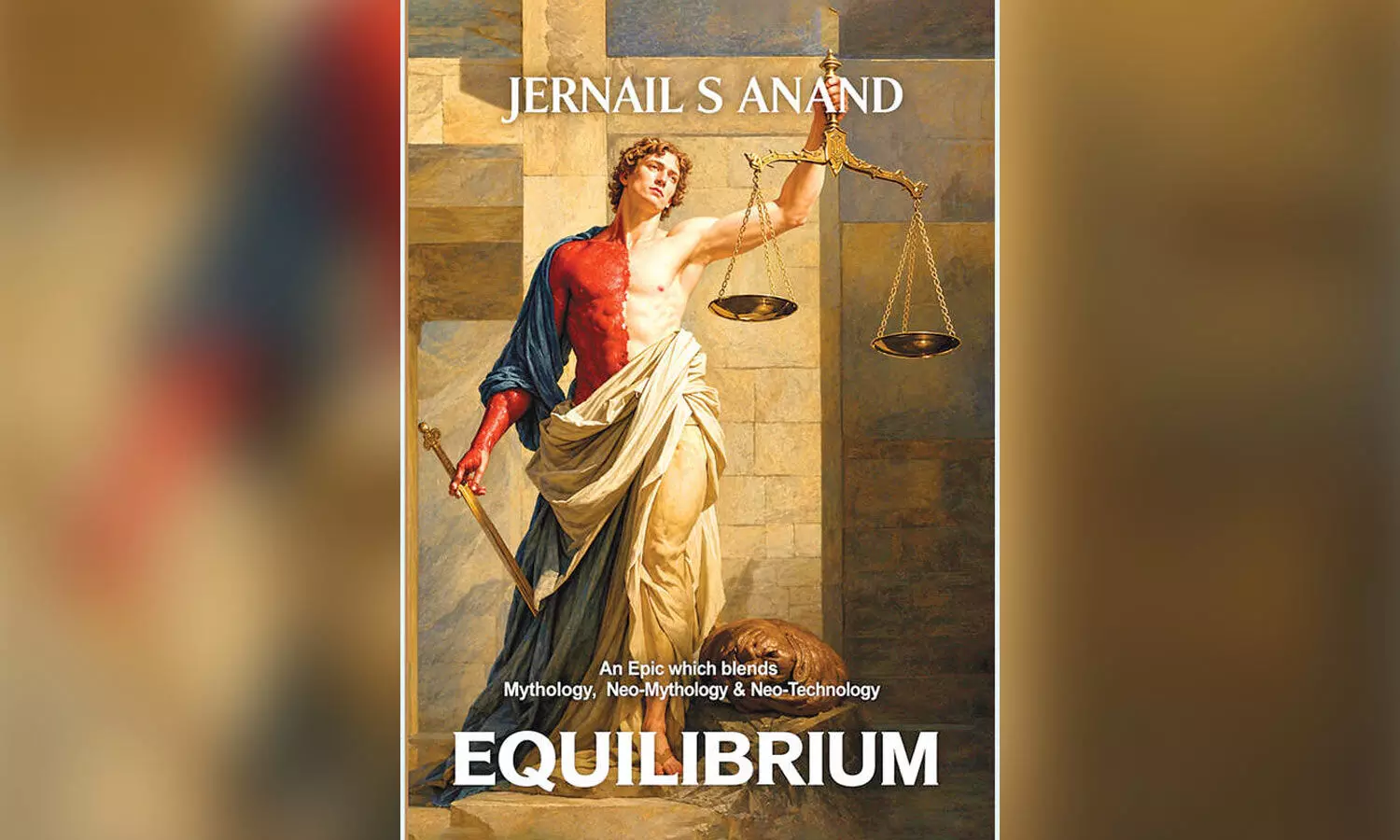
‘Equilibrium’, Book II of the Cosmic Regeneration Trilogy by living epic poet Dr Jernail Singh Anand, is the first major epic to treat technology as sacrament, not sin. Anand, credited with more than 210 books, including 20 epics, is a polymath and architect of 21st-century ethical literature. A fictional narrative in verse, blending Neo-Mythology, Mythology and Neo-technology, ‘Equilibrium’ belongs beside Harari’s ‘Homo Deus’ and Ishiguro’s ‘Klara and the Sun’. It is a spiritual counter-narrative to Silicon Valley fatalism, attempting an equilibrium in which man, machines and myth could survive in a holistic balance.
The epic drama debates cosmic issues in an exalted epic style, and larger-than-life mythological and neo-mythological figures—God, Brahma, Dharmraj, Lustus and Satan—keep strutting about, lending an aural grandeur to the epic, which opens with an AI lab designing a half-human, half-robotic man. Dodge, a successor of Shakuni from the Kingdom of Deception, writes ‘Chhal Tantra’ as a counter-narrative to ‘Panchtantra’, which is released by Lustus, an ominous development in itself.
‘Revelations’, Book I, ended with the inclusion of machines as the sixth element, setting off a new age called Machiary. The questions of imparting greater consciousness to the elements and making a Futuristic Man in complete surrender mode, disabling the 5Rs—Revolt, Rage, React, Revenge and Regret—are rejected, as God dismisses this prototype of man as a grotesque figure controlled by AI:
“I want his errors. His regrets.
His penitence. His fears. His prayers.
Only I do not want him to challenge
Divine spheres.” [God: Canto VII]
The idea of Associated Responsibility, a modification of Karma theory, accuses all who support a criminal act or sin as co-conspirators. The dramatic discourses present a friendly face of Evil, which is subservient to the diktats of God, inflicting suffering and pain in order to ennoble mankind. Woman is presented not as an object of desire but as guardian of cosmic balance.
The last sections offer comic relief when Satan thanks St. Craza for digitally compressing Hell in order to make space for flooding millions. Lustus’s appeal to relinquish their monstrous features and move like gentlefolks speaking English is granted. The proposal to extend greater consciousness to elements is also declined by God, because that would incriminate elements in the theory of Karma as involved actors, whereas they are obligated to stay aloof.
Commenting on the philosophical vision of Dr Anand, Italian scholar Domenico Pisana feels that his poetics are deeply rooted in Indian philosophy and spiritual traditions, such as the wisdom of the Vedas and the Upanishads. Mauro Montacchiesi feels that Anand is one of the few authors capable of contemplating the human condition on a cosmic scale without losing his tenderness for the individual.
In fact, Anand has not just written an epic; he has built an ark for human values and launched it into the digital flood. Every moment in history has its philosophers. As the printing press had Erasmus and the atomic age had Camus, the AI age has Anand. ‘Equilibrium’ functions as scripture for humanists. Anand claims the epic, a form Europe long called its own, and Indianises the digital age before the West can mythologise it. Place this next to Tagore and Aurobindo. It is India writing the world’s next origin story.
India condemns attacks on commercial vessels in Black Sea, reiterates call for dialogue and diplomacy
'Is democracy in India being undermined like China, Russia and North Korea': Gehlot on FIR against Rahul, Priyanka Gandhi
SSB pays tribute to bravehearts killed in Maoist attack 15 years ago
SSB pays tribute to bravehearts killed in Maoist attack 15 years ago
Pixel Moments to Politics For Cong As BJP Celebrates Modi@25
Dramatic face-off near Jantar Mantar. Rahul and Priyanka sit on the road
MPs vs Police. Chaos and High Drama Unfold on Delhi Roads
Henri Kagan, Kenso Soai Win 2026 Nobel Chemistry Prize for Autocatalysis
AP cabinet approves 12 agenda items
High Courts should not suggest custodial interrogation of accused, says Supreme Court


