






- PM Modi calls for rules-based maritime order
- 'Is democracy in India being undermined like China, Russia and North Korea': Gehlot on FIR against Rahul, Priyanka Gandhi
- Delhi Seemapuri Building Collapse: Several Feared Trapped As Rescue Operation Underway
- Claude Users Can Work Across Google Docs, Sheets and Slides In-App
- Rapido Ride Turns Into Nightmare After Captain Flees With Injured Passenger
- 7 Must-Watch OTT Releases For Your Dussehra Holidays
- ‘His Lips Turned Blue’: Dentist Recalls 45-Minute Effort To Save Flydubai Pilot Smit Machchhar
- Airtel Postpaid Plans Bring Free International Roaming From Rs 499
The significance of 3 types of Dhritis in life
In Short
Inner strength is what helps us stay focused, disciplined and steady through life’s challenges. In the Bhagavad Gita, this strength is described as ‘Dhriti’, which manifests in Sattvik, Rajasik and Tamasik forms
Share :

The significance of 3 types of Dhritis in life
Successful people, when they resolve to achieve something; they consistently work towards their goals and achieve them. It sounds simple, yet just a handful of people are able to do it. The quality that makes all the difference is ‘Dhriti’. Dhriti is the strength that upholds and sustains life.
There are 3 types of Dhritis: Sattvik, Dhriti and Tamasic. Let me give you an example: many people cannot tolerate even the smallest insults. Insults or criticism throw them off completely. This shows a lack of Dhriti.
Sattvik Dhriti (the Dhriti born of ‘Sattva’ or positivity) is that which upholds the mind, sustains the ‘Prana’ (life-force), brings one-pointed focus in life, and controls our five senses, keeping them from going wayward. Contrary to people who react to the smallest insults, you’ll also find people who have immense inner strength, who remain calm and poised in the face of the meanest insults. That inner strength is Dhriti.
In Bhagavad Gita, Lord Krishna tells Arjuna, that the unwavering perseverance (Dhriti) by which a person controls the functions of the mind, the vital airs (Panchvayus), and the senses, that firmness, is Sattvik Dhriti.
We cannot practice yoga for a day and then return to a life of indulgence. It should not be that one moment we are meditating, and the next moment our mind is carried away by cravings. That is not the sign of Sattvik Dhriti.
Rajasik Dhriti is the mental strength associated with the expectation, or greed of a reward. Our state of mind, enthusiasm, behaviour, and action are attached to the expected positive outcome. Lord Krishna says that when our actions are driven by a particular phase (or situation), or by desires for rewards or material gains, the inner firmness (or sense of perseverance) that drives them is called Rajasik Dhriti.
The vows or pledges which people take up out of excitement or feverishness are Rajasik vows. For example, many people perform rituals to receive certain rewards from the Divine. Some ladies observe the Solah Somvar fast- a ritualistic fast observed for 16 consecutive Mondays, believed to please Lord Shiva- so that they get a good life partner, or until they find a well-paying job. When we practice religious rituals with the hope of securing material gains or fulfilling petty desires, it is a sign of Rajasik Dhriti. We don’t do it out of love for the Divine. Such people keep themselves hungry thinking that by doing so, God will grant their wishes and desires. They don’t stay hungry for God. And, what does God have to gain from the fasting’s of His devotees?
Rajasik vows aren’t born from a stable mind steadfast in righteousness. Now such actions, or their results, may be right or wrong, aligned with one’s Dharma or not.
Next comes Tamasik Dhriti which is the firmness or perseverance by which an evil-minded person doesn’t give up sleep, fear, anxiety, sorrow and vanity. What are the signs of Tamasik Dhriti? Such a person is very lazy and sleeps a lot. For them, their sleep is the most important thing and nothing else matters to them.
Tamasik Dhriti fills one’s heart with fear. A lazy person is always afraid of something or the other. One who keeps themselves busy and happy never fears anything. One who continues to remain idle and do nothing soon comes under the grip of fear. And then soon after, this fear is followed by sorrow and depression. Such people keep thinking, ‘Oh, what about me? What will happen to me? Who will look after me in my old age? Who will perform my last rites?’ They remain extremely attached to the body even after their death.
One needs Dhriti (inner strength), whether Sattvic Dhriti or Rajasik Dhriti, to succeed in spiritual and worldly lives, respectively. Tamasik Dhriti is needed to have a restful sleep. A balance of all 3 Dhritis paves the way for overall success.
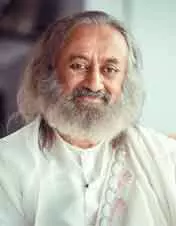
(The author is a global humanitarian leader and spiritual master who founded The Art of Living in1981. As Gurudev turns 70 and The Art of Living steps into the 45th year of making life a celebration on this planet, month long celebrations are underway at The Art of Living International centre with eminent personalities from the sphere of politics, entertainment, arts, academia and faith arriving at the centre for thoughtful conversations, cultural showcases and launch of several service initiatives.)
On the day marking his 25 years at the helm, PM Modi calls on LK Advani
Pixel Moments to Politics For Cong As BJP Celebrates Modi@25
Dramatic face-off near Jantar Mantar. Rahul and Priyanka sit on the road
Telangana Meets Record Power Demand, Says Bhatti Vikramarka
MPs vs Police. Chaos and High Drama Unfold on Delhi Roads
Henri Kagan, Kenso Soai Win 2026 Nobel Chemistry Prize for Autocatalysis


