






- 'Is democracy in India being undermined like China, Russia and North Korea': Gehlot on FIR against Rahul, Priyanka Gandhi
- Delhi Seemapuri Building Collapse: Several Feared Trapped As Rescue Operation Underway
- Claude Users Can Work Across Google Docs, Sheets and Slides In-App
- Rapido Ride Turns Into Nightmare After Captain Flees With Injured Passenger
- 7 Must-Watch OTT Releases For Your Dussehra Holidays
- ‘His Lips Turned Blue’: Dentist Recalls 45-Minute Effort To Save Flydubai Pilot Smit Machchhar
- Airtel Postpaid Plans Bring Free International Roaming From Rs 499
- 'Politics means nation building to him': Rajnath Singh on PM Modi's 25 years in public service
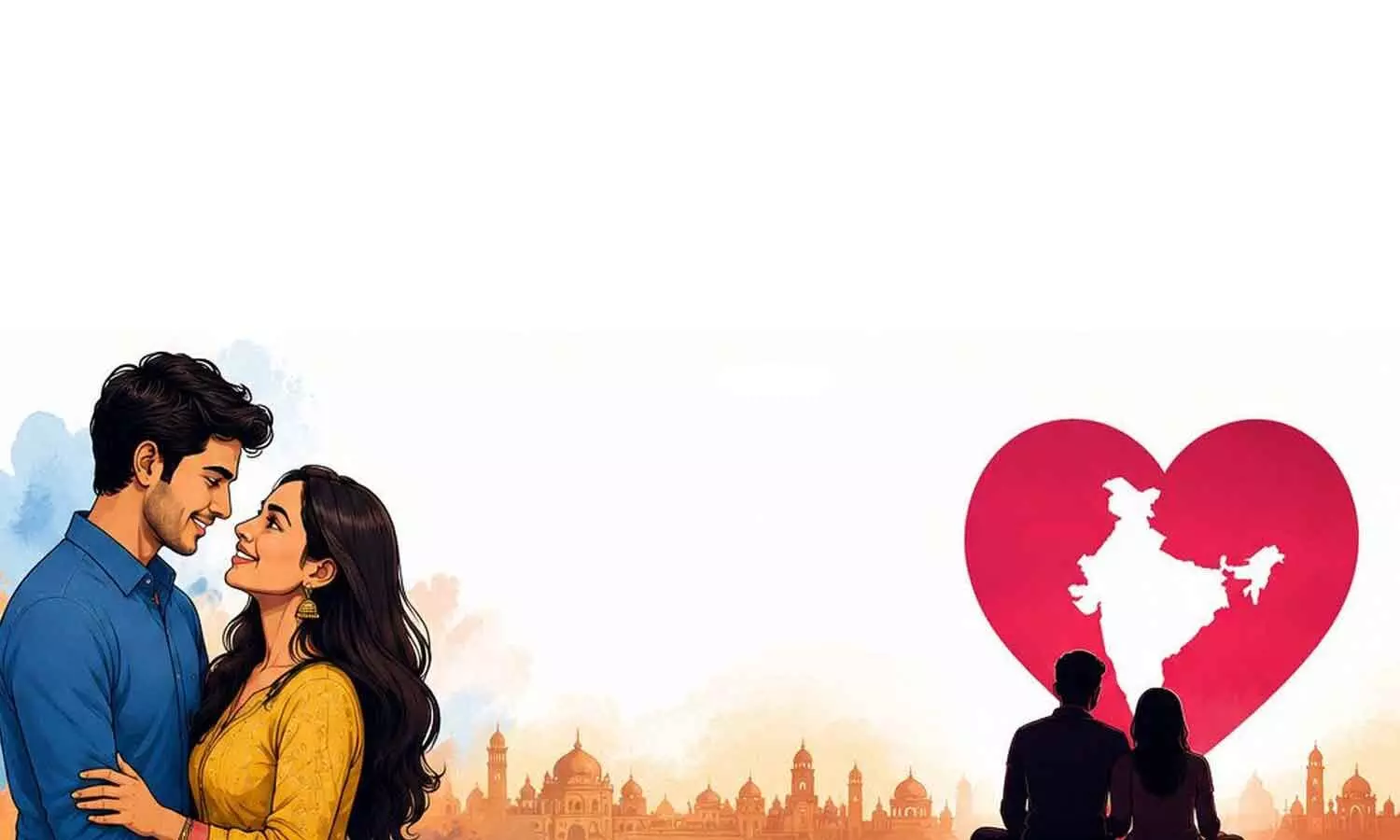
From “forever” to “are we compatible?”: How India is quietly rewriting the rules of love
In Short
Love in India is becoming less about fitting into a fixed idea of “forever” and more about understanding emotional needs, individuality and compatibility. As relationships evolve, couples are increasingly questioning what companionship and commitment mean to them
Share :
From “forever” to “are we compatible?”: How India is quietly rewriting the rules of love
For ages, Indian love was subject to one simple rule: meet someone nice, marry them, settle down, and stay with them forever. The idea of “forever” was viewed not just as a romantic thing but rather a norm people were expected to follow.
However, all that took a dramatic change when new lifestyles came into existence, people started making online connections, and began caring more about their own happiness. No wonder why nowadays the question has shifted from “Are we going to be together forever?” to “Are we compatible as people?”
When “Happily Ever After” and Reality Collide
In fairy tales, love is ever-lasting; however, it barely describes what happens in years ten, fifteen, or twenty of a marriage. Long-term relationships involve everyday routines. Both partners must work, take care of the household duties, care for their children and elderly parents, deal with various financial pressures, and cope with a plethora of daily demands. Thus, romance may become another item in their already tight schedule. This is when the current notion of compatibility appears.
For some married men and women, companionship means being able to talk to someone who listens. For some, it means feeling attractive once again or finding someone who understands them better. The desire is not always about replacing something in the marriage; it can also refer to exploring the self that is inaccessible within the family.
Relationship Status in India Does Not Represent Reality
For many years, relationships in India have been viewed almost in the same way as biographies. A single person is free; a married person is settled. However, in reality, relationships are not so smooth. People can be married and desire something new; they can love their families and want more personal space; they can be satisfied with one aspect of their relationships, and not be happy in another.
According to Sybil Shiddell, Country Manager, Gleeden India, “The attitude of Indians towards relationships is evolving. Individuals are coming to accept the idea that commitment, companionship, desire and individuality can peacefully coexist within their emotional lives. Hence, at Gleeden, one can find people who look for connections that suit them rather than conform to the traditional definition of a relationship.”
The Forever Plan Now Requires More Questions
Marriage in India has always been related to family, customs, traditions, and loyalty to each other. However, by now marriage in India is also perceived as a relationship that has to be emotionally relevant for each party involved. The thing is people change. Their priorities change. Their jobs change. Their friends change. Even the way people perceive themselves changes.
And as two people who used to grow together are departing from each other’s path, the concept of companionship becomes more complicated. Nevertheless, that doesn’t mean marriage is on its way out. It just looks like people begin to understand that being loyal to another person and having all their emotional needs satisfied by that person are two different things.
Date but Keep the Wedding Ring in Picture
The emergence of discreet dating is noteworthy in India, where marriage is still very important emotionally and socially. This culture is not abandoning the idea of long-term relationships. Rather, the culture is questioning whether a relationship should really meet every possible emotional, social, and personal need. For some people, this questioning may lead to more profound discussions within the marriage. In other cases, the questioning may imply exploring connections privately via the related apps.
The difference is important. While traditional dating platforms may present some complications due to relationship status, Gleeden considers this aspect to be already part of the context. Users log in to the platform knowing that those they meet can have their own relationships and lives. This clarity changes the nature of interaction.
The New Indian Love Story Features More Than One Chapter
Maybe the love revolution of India is not about whether to choose between modernity or tradition but about how to accommodate the complexity of the situation. The generation that grew up thinking about love as a binary is now attempting to deal with a new reality characterized by the need for personal identity, emotional attachment, privacy, and excitement.
While the notion of “forever” seems to be true, so are the questions related to feelings: Are we happy? Are we content? Can we understand one another? What are we? What is the significance of being together for us? India may not be changing the idea of marriage but it surely changes the way people think of marriage.
India condemns attacks on commercial vessels in Black Sea, reiterates call for dialogue and diplomacy
'Is democracy in India being undermined like China, Russia and North Korea': Gehlot on FIR against Rahul, Priyanka Gandhi
SSB pays tribute to bravehearts killed in Maoist attack 15 years ago
SSB pays tribute to bravehearts killed in Maoist attack 15 years ago
Pixel Moments to Politics For Cong As BJP Celebrates Modi@25
Dramatic face-off near Jantar Mantar. Rahul and Priyanka sit on the road
MPs vs Police. Chaos and High Drama Unfold on Delhi Roads
Henri Kagan, Kenso Soai Win 2026 Nobel Chemistry Prize for Autocatalysis
AP cabinet approves 12 agenda items
High Courts should not suggest custodial interrogation of accused, says Supreme Court


