






- 'Is democracy in India being undermined like China, Russia and North Korea': Gehlot on FIR against Rahul, Priyanka Gandhi
- Delhi Seemapuri Building Collapse: Several Feared Trapped As Rescue Operation Underway
- Claude Users Can Work Across Google Docs, Sheets and Slides In-App
- Rapido Ride Turns Into Nightmare After Captain Flees With Injured Passenger
- 7 Must-Watch OTT Releases For Your Dussehra Holidays
- ‘His Lips Turned Blue’: Dentist Recalls 45-Minute Effort To Save Flydubai Pilot Smit Machchhar
- Airtel Postpaid Plans Bring Free International Roaming From Rs 499
- 'Politics means nation building to him': Rajnath Singh on PM Modi's 25 years in public service
Redefining spaces beyond decoration through the language of Indian sculpture
In Short
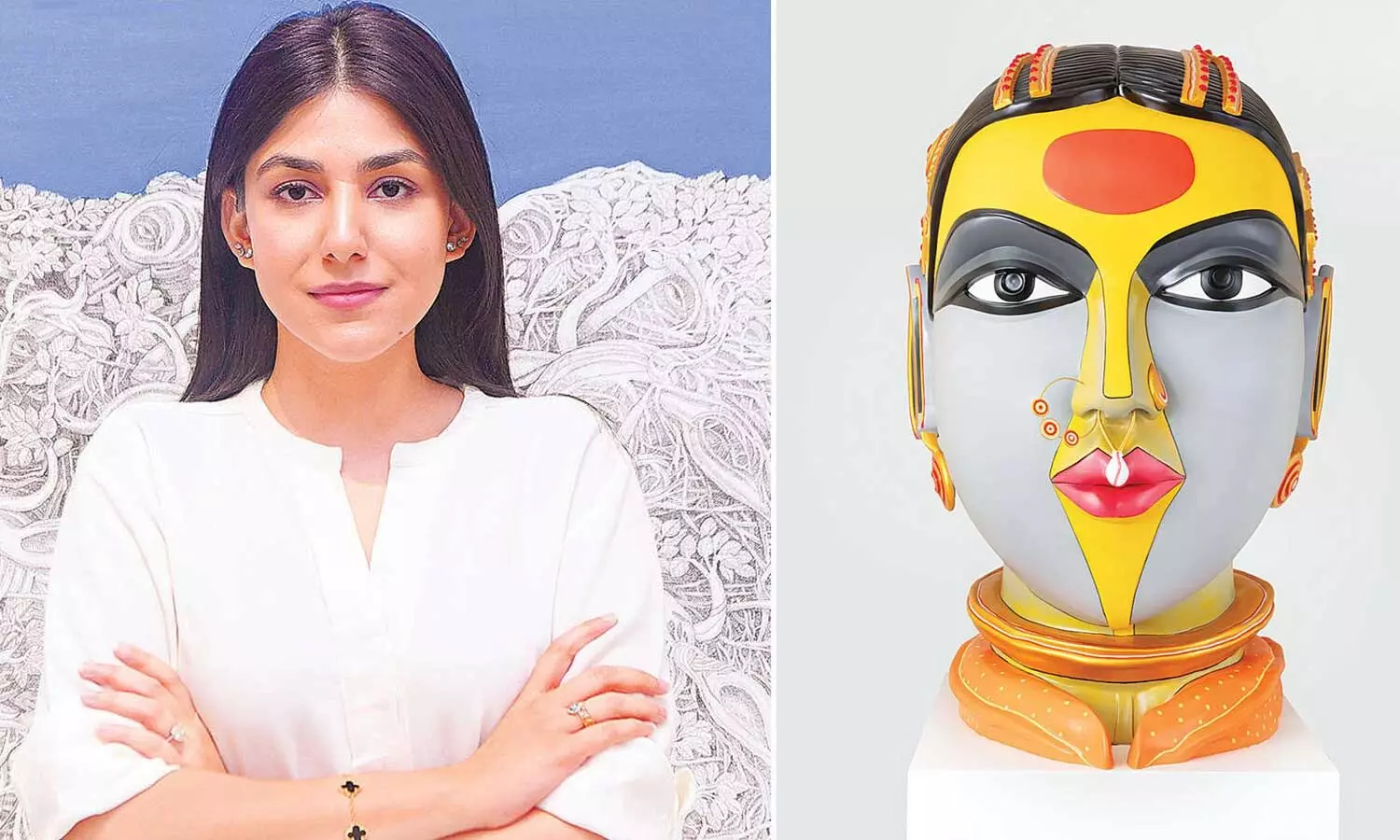
Sanya Malik of Sculpted India brings modern and contemporary Indian sculpture into the world of interior design at Design Democracy 2026 in Hyderabad. The exhibition explores how sculptural art can transform living spaces while showcasing works by renowned Indian artists and emerging talents
Share :
Redefining spaces beyond decoration through the language of Indian sculpture
Upon entering a well-designed space, the interaction between furniture, lighting and textiles often defines its function and aesthetic. However, even the most beautiful interiors can feel incomplete when the objects within them lack meaning and character. According to Sanya Malik of Sculpted India, sculpture offers a way to bring greater depth and identity to living spaces.
“That is when sculpture steps in. Being situated at the intersection of art, architecture and design, three-dimensional art gives more to an interior than just another decorative object. It brings life into it, creating an active part of the environment that grows and changes under the influence of light and shadows and the people who surround it,” she says.
India has a rich sculptural tradition that spans centuries, from ancient architectural reliefs to bold experiments in modern art. Yet, sculpture has often received less attention than two-dimensional art within the modern art landscape. Malik believes Sculpted India can help change that perception.
“In an attempt to address the shortcomings of this perspective, through Sculpted India, our aim was to transform this discourse for the better,” she explains.
As part of Design Democracy 2026 in Hyderabad, Sculpted India presents a curated selection of modern and contemporary Indian sculptures. The exhibition features works by renowned artists such as Thota Vaikuntam, Krishen Khanna, MF Husain, Himmat Shah and Jogen Chowdhury, alongside innovative works by emerging and contemporary artists, including Dhananjay Singh, Phaneendra Nath Chaturvedi and Yashika Sugandh.
The exhibition brings together a diverse range of materials and forms, with artworks exploring themes of identity, nature, human existence and architecture. From the figurative approaches of Vaikuntam and Khanna to HimmatShah’s experimental engagement with materials, the collection highlights the relevance and versatility of three-dimensional art.
“Our vision with Sculpted India is to build an enduring cultural movement that takes sculpture out of restrictive environments and integrates it directly into the spaces where we live and gather. By showing how three-dimensional forms interact with spatial design, we hope to inspire a new generation of collectors to experience Indian art not just as something to look at, but as something to live alongside,” Malik says.
For interior design enthusiasts, architects and collectors, incorporating sculpture into modern spaces offers an opportunity to move beyond conventional decoration. As interiors increasingly become expressions of personal identity, sculptures introduce cultural significance and individuality through their shapes, sizes, textures and materials.
Malik highlights how sculptural works can establish a dialogue with architecture, creating a dynamic relationship between art and its surroundings. Whether monumental or intimate, sculptures can influence the atmosphere of a space through contrasts, textures and visual harmony.
“With the exhibition Sculpted India, our purpose goes further than just presenting artworks in a gallery space. Our aim is to start a cultural movement in which sculptures become part of our lives by learning about how physical forms relate to architectural structures. This will lead to a newfound appreciation of Indian modern and contemporary sculptures,” she adds. Through Sculpted India, Malik hopes to encourage a deeper engagement with Indian sculpture, bringing art into everyday environments and highlighting its role in shaping the way people experience and connect with the spaces around them.
India condemns attacks on commercial vessels in Black Sea, reiterates call for dialogue and diplomacy
'Is democracy in India being undermined like China, Russia and North Korea': Gehlot on FIR against Rahul, Priyanka Gandhi
SSB pays tribute to bravehearts killed in Maoist attack 15 years ago
SSB pays tribute to bravehearts killed in Maoist attack 15 years ago
Pixel Moments to Politics For Cong As BJP Celebrates Modi@25
Dramatic face-off near Jantar Mantar. Rahul and Priyanka sit on the road
MPs vs Police. Chaos and High Drama Unfold on Delhi Roads
Henri Kagan, Kenso Soai Win 2026 Nobel Chemistry Prize for Autocatalysis
AP cabinet approves 12 agenda items
High Courts should not suggest custodial interrogation of accused, says Supreme Court


