






Biographies are great knowledge sources

Biographies and memoirs are a rich source of education and enlightenment for young readers as they inspire resilience by showcasing real-life struggles, foster empathy by offering perspectives beyond their own experience, and teach valuable life lessons through the achievements and mistakes of others. These narratives motivate them to pursue goals, build self-awareness, and provide historical context, helping them understand different cultures and eras.
An autobiography is that much more interesting when the narrative is laced with wit and humour. Also, if it is self-effacing. The reader should be left with the feeling of having experienced a sense of empathy with the author, rather than feel overawed by the achievements or accomplishments of the raconteur. The narration should be in a readable style, providing entertainment while, at the same time, being informative and enlightening.
The most common media for autobiographies, biographies and memories are books and movies.
As an example, we have ‘Einstein: His Life and Universe by Walter Isaacson’ by the author of the acclaimed bestseller ‘Benjamin Franklin’, this is the first full biography of Albert Einstein since all his papers have become available. It delves into the secrets of how Einstein’s mind worked and what made him a genius. It shows how the imagination that distinguished his science sprang from the rebellious nature of his personality; a fascinating story, a testament to the connection between creativity and freedom, it reflects the triumphs and tumults of the modern era.
Based on the newly released papers and personal letters, this book explores how an imaginative, impertinent patent clerk - a struggling father in a difficult marriage who could not get a teaching job or a doctorate - became the mind reader of the cosmos, the locksmith of the mysteries of the atom and the universe. It shows how Einstein’s success came from questioning conventional wisdom and marveling at mysteries that struck others as mundane, leading him to embrace a morality and politics based on respect for free minds, free spirits, and free individuals.
The ‘Wings of Fire’ is an autobiography by visionary scientist Dr A P J Abdul Kalam, who, from very humble beginnings, rose to become the President of India. It is full of insights, personal moments and life experiences of Dr Kalam, which provide an understanding of his journey of success. By narrating his life journey, the author evokes the belief that everyone is born with the strength and potential to make a tangible change in the world; how he inspired himself to achieve dreams and how he went about accomplishing so much is what the book captures interestingly. The book recollects many anecdotes and stories from childhood, his time at school and college; the time spent at the Langley Research Center, NASA and Wallops Flight Facility get a lot of attention. Every common man who aspires to achieve success, by grit and hard work, should share his story.
The ‘Story of My Experiments with Truth,’ the autobiography of Mahatma Gandhi, is a very popular and influential book. It covers the period from his birth (1869) to the year 1921, describing his childhood, his school days, his early marriage, his journeys abroad, his legal studies and practice. The book is about the experiments of Gandhi with truth and the ‘Satyagraha’ movement, demanding the truth and nothing else. This is the very idea that helped him to fight against racism, violence and colonialism; eventually helped him to achieve his dream of an independent India.
Another autobiography, penned by Jawaharlal Nehru, was written during Nehru’s 1934-1935 imprisonment. It documents his life, emotional journey, and personal evolution alongside the Indian independence movement. It highlights his transition from an aristocratic childhood to a Gandhian follower, blending personal introspection with political analysis and advocating for a secular, socialist, and industrial India.
‘My Own Boswell’ is yet another autobiography of Justice M. Hidayatullah, formerly the Chief Justice of India and the Vice-President of India. It provides an instructive insight into the working of several institutions in India and abroad. It grips interest from the beginning to the end and is a model of writing, moderate but courageous, wide but pithy, instructive but never dull and, above all, fully human and natural.
An extremely inspiring and educating autobiography is ‘The Stone that Speaketh’, which is about the life and times of Durgabai Deshmukh, a prominent Indian freedom fighter, social reformer, and member of the Constituent Assembly. The book chronicles her 59-year journey in public service and the development of Andhra Mahila Sabha, the well-known institution dedicated to the causes of education, health/medical care, and the welfare of women, children and physically/mentally challenged.
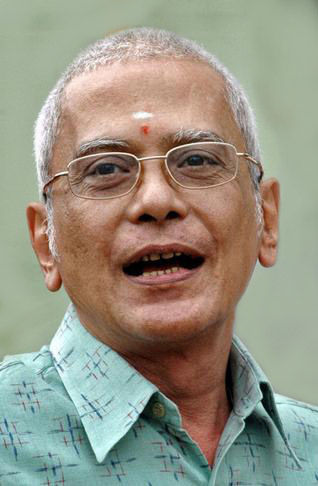
In my childhood, I had the privilege of calling her ‘pinni’ or maternal aunt in Telugu. Durgabai and my mother were close friends as schoolchildren in Kakinada in the 1900s, and often indulged in innocent mischief, together. When Mahatma Gandhi came to the then Madras (now, Chennai) to lay the foundation stone for the building of Andhra Mahila Sabha, Durgabai placed me, a premature child three months old and just beginning to get normal, in the hands of the Mahatma, who blessed me. I was therefore originally named Mohan Das. Because of our association with that great lady, I am now a Trustee of the Sabha and my wife Usha its elected President.
Also belonging to the category of autobiographies is ‘Mein Kampf’, the autobiographical and political manifesto of Adolf Hitler, the leader of the Nazi Party of Germany in the 1930s and 40s. The book outlines many of Hitler’s political beliefs, his political ideology, and his plans for Germany and the world.
There is as much to learn from the lives and times of people such as Mother Teresa or Gandhiji, as there is from those such as Hitler. If some offer illustrations on how best to serve humanity through selfless sacrifice, others serve as abject lessons on the traits that need to be shunned.
Great people often use self-effacing humor to humanize themselves, reduce arrogance, and acknowledge their limitations. These comments, often from literary, scientific, or historical figures, demonstrate a high degree of confidence that doesn’t need constant ego validation, showcasing a charming modesty about their own fame or accomplishments.
Talking about autobiographies here is one self-effacing quote which I found very instructive as well as amusing. “People say that I am creative. I couldn’t agree more as I create most of my own problems!”
(The writer was formerly Chief Secretary, Government of Andhra Pradesh)
Sunetra Pawar warns leaders against ‘unnecessary interference’, hints at tough decisions
NCW summons comedians More, Jangra over Rs 370 biryani row
CM Fadnavis outlines ‘Viksit Maharashtra 2047', sets target for $5 trillion economy
Pakistan trying to reshape authority through 28th Constitutional Amendment: Report
Mir, Shah knocks help Afghanistan A get four-run win over India A via DLS method
Pro-Khalistan groups continue to provoke youth, advance own political agendas: Report


