






Gas and fuel crisis is neither new to India nor the world

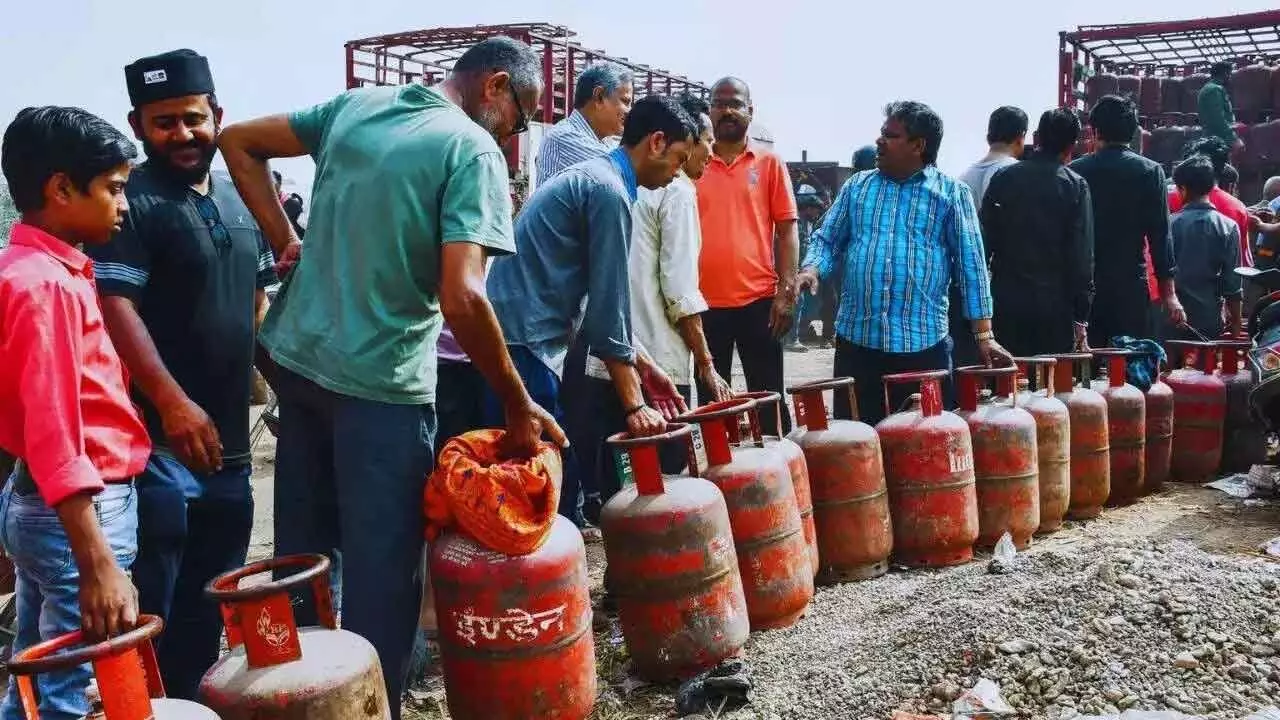
Seeing the present crisis unfolding as regards the shortage of cooking gas and fuel for vehicles, I have been transported back to the 1960’s. As a kid, I would join the long queues outside fair price shops with my mom, waiting for sugar and kerosene. The mystery of those serpentine lines lingered, till my mother would excitedly announce, ‘stocks arrived’! We would rush to grab our monthly quota—5kg sugar, 10 liters kerosene for a family of six! Often, the shop would shut down in the middle of the month. The ‘Lord of the shop’ would secretly sell it all to the highest bidder, leaving the people with empty hands.
The fuel situation in India up to the 1990s was characterized by severe scarcity, long queues and a slow transition from traditional cooking fuels to LPG. Kerosene was the primary fuel for the masses while LPG (gas) was a luxury, and petrol expensive and often rationed due to global oil stocks. Of course, there were not too many two wheelers and four wheelers per family. In those days, the ‘primus’ kerosene stove was a staple in city homes as a replacement for traditional wood chulha. Those were the days of waitlists for gas connections, kerosene stove dramas, and the prized Nutan stove smuggled from Delhi for its fuel efficiency.
I remember the ritual of pumping up the pressure stove, the thrill of pinning and pruning the wicks just right, and the occasional burst of flame when it got too pumped up. Severe shortages were common particularly after the geopolitical events that like we have now, wars in the world or wars with Pakistan, forcing families to rely on limited rations. Those were simpler times amidst scarcity. Of course, most of it being man-made then and even now. No political support or sloganeering, no electronic media interviews and no social media platforms, but I learnt only to understand the situation and act.
In the 1970s, gas connections were a luxury. We had booked one, but years went by with no sign of it arriving. That was when we moved to Dehradun, and it seemed like our wait would continue indefinitely. But fate had other plans—a friend working with ONGC, freshly transferred to Assam, came to our rescue. ONGC employees there enjoyed domestic piped gas connections, and ‘gifted’ to us what was his. For years, the connection stayed in his (or rather, his father’s) name. Then one day, Cal Gas announced an amnesty scheme for ‘illegal’ connections—pay a nominal fee, and we’d be the legitimate owners. We jumped at it, and finally, we had our own gas connection.
But the gas connection was just the beginning of our adventure. Getting the refill was a whole different story—sometimes it felt like climbing Mount Everest! We were initially allotted just one cylinder, so when it ran out, we’d be stuck with kerosene for weeks. Procuring it was another uphill task. Dehradun’s refills came from Assam, and during the rainy season and during the severe winter period, it would take up to two months to arrive. When the refill finally came, it was a celebration! But don’t expect it to be delivered home—no way! You would have to ride your scooter to the gas go down, with a slip from the gas agency located in another corner and pray the lot had arrived. And if you were lucky, you’d manage to load the cylinder onto your scooter, with your wife holding it tight or a 10-year-old kid balancing behind you. It was quite a sight, seeing two-wheelers loaded with gas cylinders, a common spectacle back then. By the end of 90s, two cylinders became more common but procuring refills was still high pressure, with consumers facing long waits for deliveries. Global opening in 90s and gradual improvement in LPG availability, reduced the reliance on rationed kerosene. Fast forward to today, and gas connections are a norm, thanks to the government’s welfare schemes for women. Those days are now a distant memory, and we are all enjoying the convenience of gas at home.
Back then petrol was subjected to severe rationing in many places, and its price was largely sensitive to geopolitical turmoil. During the 1973 war between Israel and Egypt, Jordan and Syria the (OAPEC) Organization of Arab Petroleum Exporting Countries reduced oil shipments to countries supporting Israel. The oil spot market price increased from 3 dollars to more than 20 dollars. During the fall of the Shah of Iran in 1979 and the Iran-Iraq war in 1980 the price of oil rose almost daily with the geo-political turmoil and the cost of oil skyrocketed. With the war in Gulf countries the effect was seen in all countries dependent on them for oil and India was no exception. We Indians tend to hit the panic button fast, don’t we?
Next thing you know, everyone’s gone into hoarding mode, stocking up for the apocalypse. Petrol was no exception—people started filling up their ‘tanks’ and storing extra ‘cans’ just in case! The petrol story was a whole different ball game. Just when you think things were looking up, the queue season would roll around, and chaos would ensue! Long lines at petrol stations, men standing with their vehicles for hours on end after office hours—it was the norm. Petrol bunks introduced separate queues for ladies, but let’s be real. I was one of the few women who could handle both two-wheelers and four- wheelers, and our family friends knew it!
Word spread, and suddenly I had a fan club showing up at my place in the evenings, it wasn’t my charming personality, though—it was the petrol they were after! I would ride their two wheelers to the pump, get them filled, sometimes switch between different stations to avoid detection. The petrol attendants never suspected a thing! Those were crazy times, and I am pretty sure those days won’t be back.
India is managing the current scarcity due to the war; it is a tough situation. The government assures there is no immediate fuel shortage risk, with sufficient crude oil stocks and increased LPG production. With the government monitoring the situation closely, the prices are stable for now.
Sunetra Pawar warns leaders against ‘unnecessary interference’, hints at tough decisions
NCW summons comedians More, Jangra over Rs 370 biryani row
CM Fadnavis outlines ‘Viksit Maharashtra 2047', sets target for $5 trillion economy
Pakistan trying to reshape authority through 28th Constitutional Amendment: Report
Mir, Shah knocks help Afghanistan A get four-run win over India A via DLS method
Pro-Khalistan groups continue to provoke youth, advance own political agendas: Report


