






Time to contain electrical fires, the silent killers

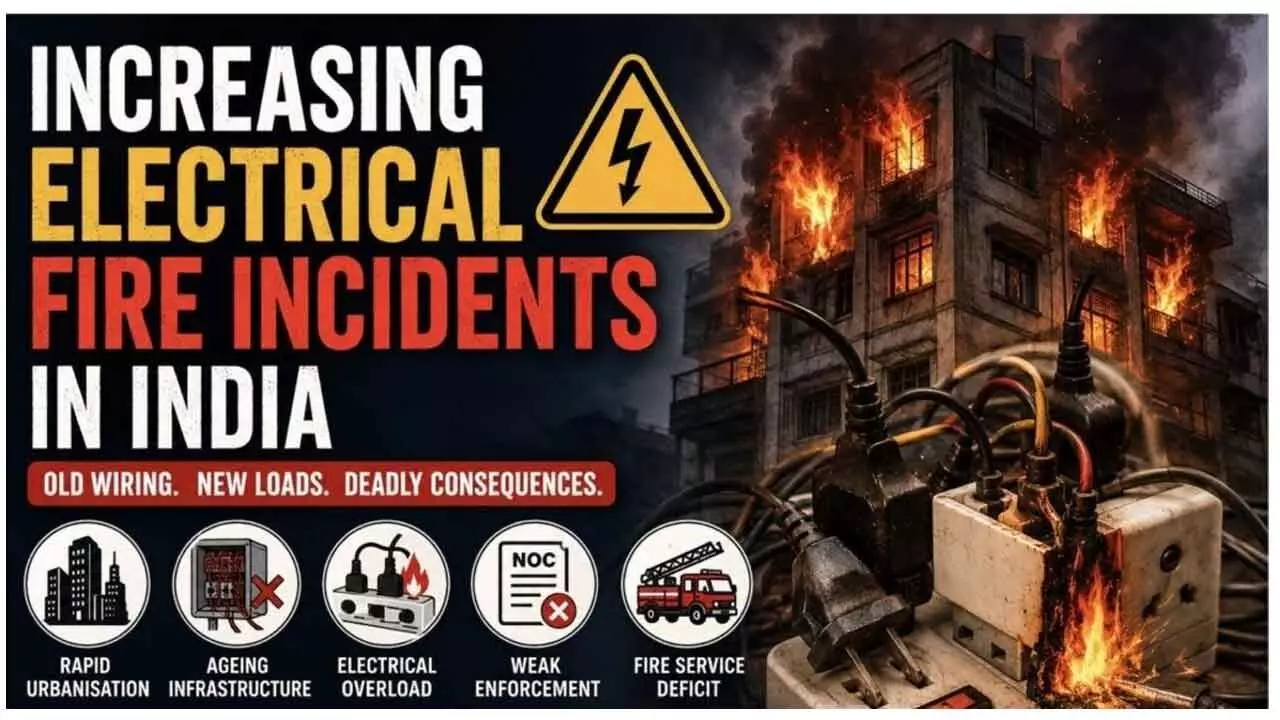
India faces a growing electrical safety crisis with rising electrical fires and electrocution deaths. Discover the need for stricter inspections, modern infrastructure, safety regulations, and a National Commission for Electricity Safety to protect lives and property.
By all appearances, India is progressing rapidly-soaring skylines, expanding cities, smart appliances, electric vehicles, data centres and round-the-clock power supply. Yet beneath this development story is a silent and growing national crisis: electrical fires and electrocution deaths.
Nearly 40 Indians reportedly lose their lives every day due to electrical accidents and electrical fires. Thousands more suffer injuries, loss of homes, destruction of businesses and lifelong economic distress. Despite this alarming scale, electricity safety continues to remain one of the most neglected aspects of public governance.
The recent fire tragedies in Delhi, including the heart-breaking Hauz Khas incident involving former Competition Commission chairman Dhanendra Kumar, has yet again exposed the dangerous state of electrical safety in urban India. Overloaded air-conditioners, ageing wiring, poor earthing, loose connections and absence of effective protection systems are increasingly turning homes and commercial buildings into death traps.
What makes the situation more worrying is that India’s urban growth is happening vertically and aggressively, even in Tier-2 and Tier-3 cities, without matching upgrades in electrical infrastructure and safety enforcement. Buildings are rising faster than safety systems.
The problem is not the absence of regulations. We already have the Central Electricity Authority (CEA) Safety Regulations and the National Electrical Code. The real issue is weak implementation, poor inspections and lack of accountability.
In many states, electrical inspections have unfortunately become little more than paperwork exercises. Safety certification often ends with issuance of No Objection Certificates rather than rigorous technical scrutiny. This culture must change urgently.
The time has come for a national electricity safety movement backed by strong institutions, modern engineering practices and strict enforcement.
The first urgent reform should be mandatory third-party electrical safety inspections. Independent agencies, on the lines of quality certification bodies, should periodically inspect all high-rise buildings, malls, hospitals, educational institutions and commercial complexes. Thermal imaging, harmonics analysis, insulation testing and earthing verification should be mandated before energisation and during periodic renewals.
Second, scientific load studies must become mandatory for individual connections and large buildings. The electrical demand profile of Indian households has transformed dramatically over the past decade. Several air-conditioners, EV chargers, lifts, pumps and high-load appliances are now common, but many buildings still operate on obsolete sanctioned loads and old wiring systems. This mismatch is a major cause of overheating and fires.
Third, India needs standard operating procedures (SOPs) for electrical emergencies. Fire departments, utilities, district administrations and building operators must work under coordinated emergency protocols for electrical accidents, shutdown procedures and rescue operations. Mock drills should become mandatory for all major establishments. Equally important is strict implementation of electricity safety manuals and regular maintenance protocols. Electrical systems deteriorate over time. Earthing systems corrode, insulation weakens and protection devices fail if not periodically tested. Yet preventive maintenance comes into focus only after tragedy strikes.
There is also a strong humanitarian dimension to this issue. Compensation to victims of electrical accidents in many states remains grossly inadequate. During administrative reforms in Tripura, compensation for electricity accident deaths was increased from Rs 2.5 lakh to Rs 7.5 lakh recognising the severe social and economic impact on affected families. Similar reforms are needed across India with a uniform national compensation framework.
Most importantly, the country now needs a National Commission for Electricity Safety. India created dedicated institutions for disaster management, renewable energy and environmental protection when emerging challenges demanded focused attention. Electrical safety deserves the same seriousness.
Such a commission should maintain a national database of electrical accidents, investigate major incidents, recommend corrective measures, standardise safety practices, coordinate with states and lead nationwide awareness campaigns.
Electricity today is no longer a luxury. It powers transport systems, industries, hospitals, homes, communication networks and the digital economy. As India moves towards electric mobility and deeper electrification, electrical safety can no longer remain a secondary issue.
Electrical fires are not merely accidents. In most cases, they are preventable engineering failures combined with governance failures.
India cannot wait for more tragedies before acting decisively.
(The writer is a former Chairman of TERC)
Bihar: EOU raids Hajipur Municipal Council Accountant’s premises, Rs 2 crore cash recovered
PM Modi delivering corruption-free governance: K’taka BJP
Delhi L-G orders repair of rainwater harvesting systems ahead of monsoon
World Bank lifts India growth outlook despite Gulf war
WHO releases updated heat-health action plans guidance
SC to hear Meenakshi Natarajan's plea against Rajya Sabha nomination rejection tomorrow


