






Your smartwatch may know something about your heart before you do: Care docs

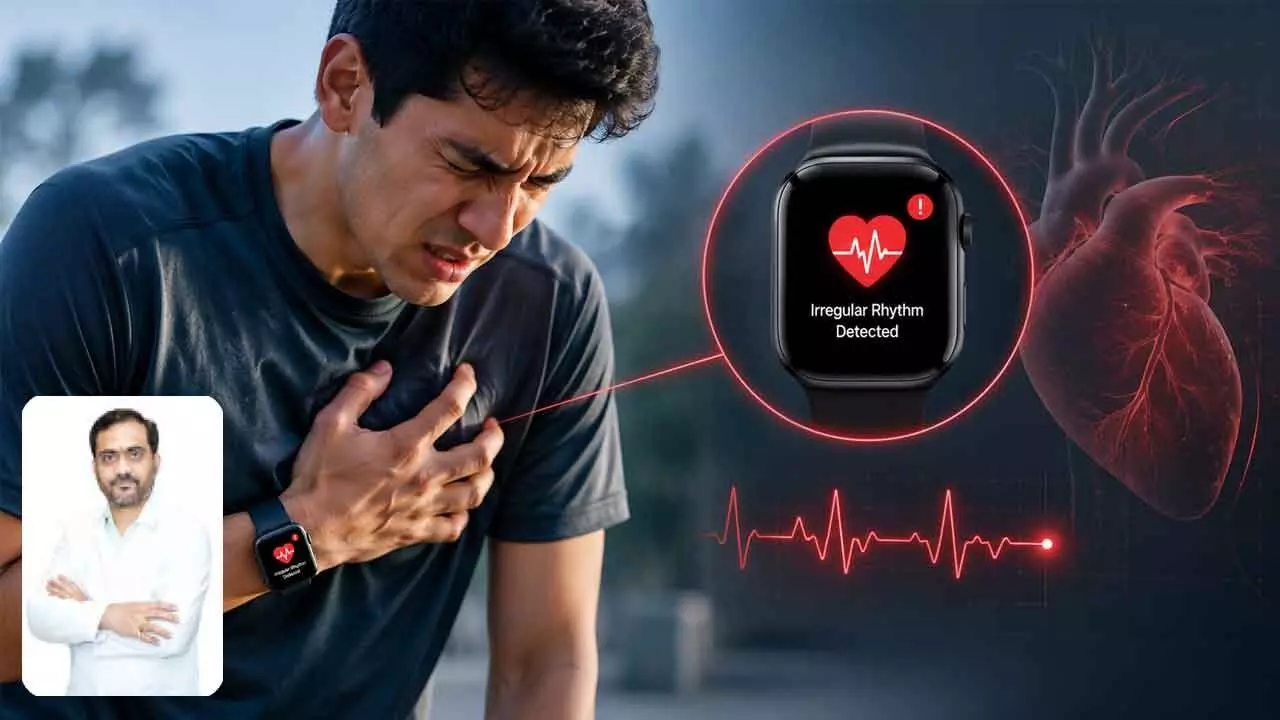
Cardiologists urge public to take wearable device notifications seriously during World Heart Rhythm Week as arrhythmia cases rise among younger populations
Hyderabad: A notification flashing on a smartwatch warning of an irregular heart rhythm is increasingly proving to be the first crucial sign of serious cardiovascular conditions. Cardiologists at CARE Hospitals state they are seeing a rise in patients seeking medical consultations after receiving abnormal rhythm alerts on fitness trackers. These routine notifications help identify previously undetected heart rhythm disorders, preventing severe complications like stroke, heart failure, and sudden cardiac arrest.
As the global community observes World Heart Rhythm Week from June 1 to June 7, specialists are urging people not to ignore symptoms such as palpitations, dizziness, unexplained fatigue, or breathlessness. This year’s global awareness initiative by the Arrhythmia Alliance features the theme Your Heart, Your Rhythm, Your Story, highlighting early detection. Amongst the most common disorders is Atrial Fibrillation, which affects over 60 million people worldwide and increases stroke risks five-fold if left untreated. Driven by stress, sedentary lifestyles, obesity, and hypertension, these conditions are no longer limited to older adults, increasingly affecting younger individuals.
Medical experts recently treated a 42-year-old IT professional who ignored episodes of rapid heartbeat until he collapsed at home. Further evaluation revealed a serious arrhythmia requiring specialized electrophysiology treatment to successfully restore his rhythm. In another complex case, a 42-year-old man presenting with missed heartbeats showed frequent Premature Ventricular Contractions via a 24-hour Holter monitor. A cardiac MRI confirmed Right Ventricular Cardiomyopathy, a genetic muscle disorder. Doctors performed an advanced epicardial ablation procedure to address extensive scar tissue, significantly improving his health. Additionally, a 28-year-old entrepreneur experiencing sudden palpitations while driving underwent a state-of-the-art catheter ablation procedure to successfully correct an electrical conduction abnormality.
While smartwatches are screening aids rather than diagnostic tools, they are playing an important role in prompting early medical evaluation. Ramakrishna SVK, Clinical Director of Cardiac Electrophysiology at CARE Hospitals, Banjara Hills, explained that modern minimally invasive procedures allow clinicians to accurately diagnose and treat these dangerous rhythm disorders. He advised anyone experiencing recurrent chest fluttering, fainting, or unusually rapid heart rates to seek immediate medical attention to reduce long-term risks.
Shivakarthik Danda journey: From Guntur to Tollywood’s most promising character actor
HIMSHIKHAR 2026, IIT Mandi and NSDC collaboration setting new NEP standard
Congress to launch 3-month national campaign against inflation, exam scams
Why Indian Cuisine Is Becoming a Mainstream Choice in the American Dining Scene
Vivo X500 Series Leak Hints at Bigger Battery, New Chipsets and Enhanced Cameras
Iran Declares closure Of Strait Of Hormuz After Fresh US military strikes


