






- 'Is democracy in India being undermined like China, Russia and North Korea': Gehlot on FIR against Rahul, Priyanka Gandhi
- Delhi Seemapuri Building Collapse: Several Feared Trapped As Rescue Operation Underway
- Claude Users Can Work Across Google Docs, Sheets and Slides In-App
- Rapido Ride Turns Into Nightmare After Captain Flees With Injured Passenger
- 7 Must-Watch OTT Releases For Your Dussehra Holidays
- ‘His Lips Turned Blue’: Dentist Recalls 45-Minute Effort To Save Flydubai Pilot Smit Machchhar
- Airtel Postpaid Plans Bring Free International Roaming From Rs 499
- 'Politics means nation building to him': Rajnath Singh on PM Modi's 25 years in public service
AP to move SC against HC verdict on 34% BC quota
In Short
The High Court also found that the data relied upon by the state, including the Unified Family Survey, did not satisfy the requirements for determining BC political reservations under the Supreme Court's Vikas Kishanrao Gawali framework

Share :
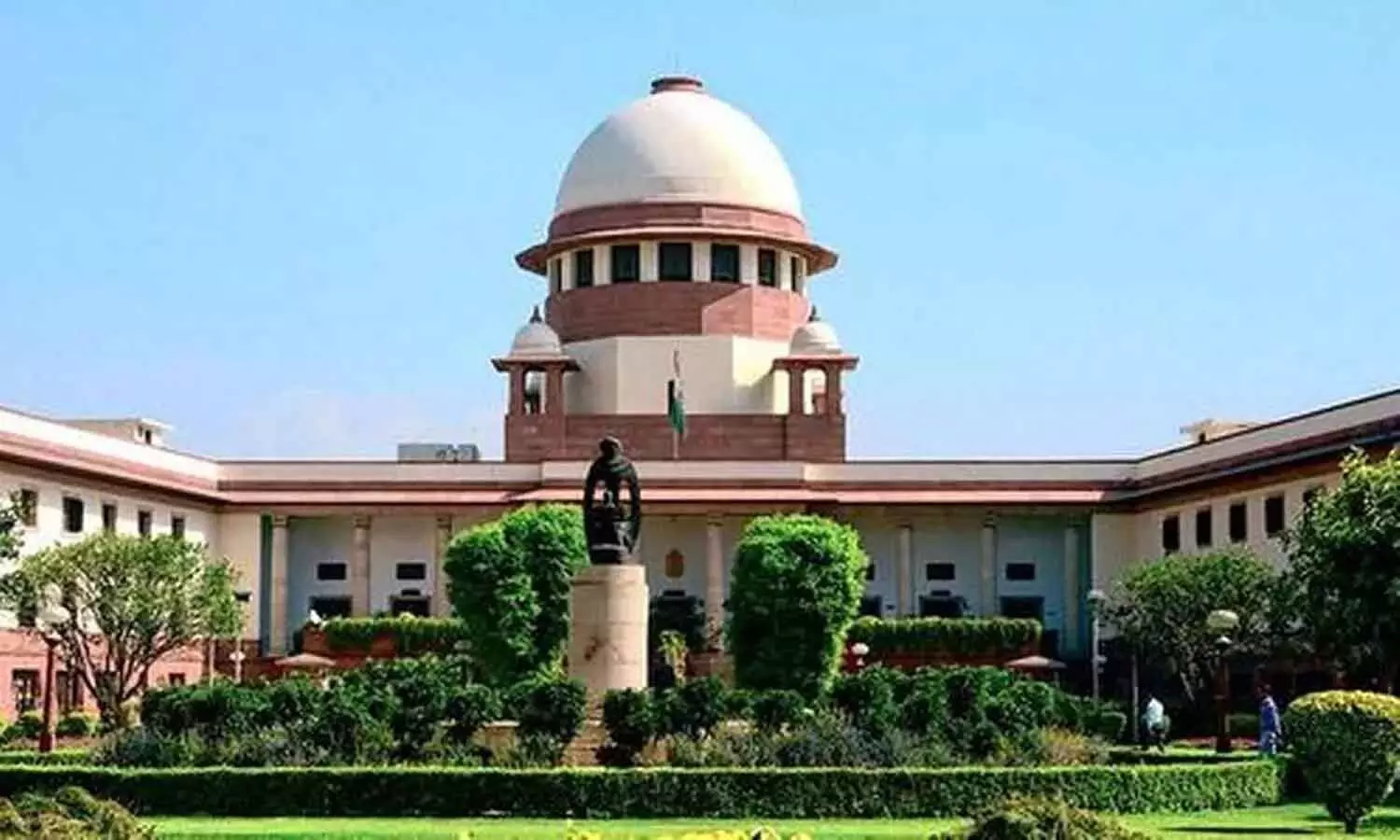
Supreme Court of India
Amaravati: The Andhra Pradesh government is set to challenge in the Supreme Court the High Court verdict striking down its orders providing enhanced 34 per cent reservation for Backward Classes (BCs) in local body elections, with Chief Minister N Chandrababu Naidu directing the Advocate General and legal department officials to file a Special Leave Petition (SLP) at the earliest. The petition is expected to be filed either on Saturday or Monday. Naidu held consultations with legal experts in Delhi on Friday and directed the government to engage senior advocates to argue the case on behalf of the Panchayat Raj and Municipal Administration departments.
The move follows the October 1 judgment of a division bench headed by Chief Justice Lisa Gill and Justice Challa Gunaranjan of AP High Court, which set aside G.O. 105 providing 34 per cent BC reservation in rural local bodies and G.O. 1065 providing 33.33 per cent in urban local bodies. The court held that the combined reservations for SCs, STs and BCs exceeded the 50 per cent ceiling laid down in Supreme Court precedents.
The High Court also found that the data relied upon by the state, including the Unified Family Survey, did not satisfy the requirements for determining BC political reservations under the Supreme Court's Vikas Kishanrao Gawali framework. The court said the state would have to undertake the prescribed empirical exercise before revisiting the issue.
The government had relied on the Rajeev Ranjan Mishra Commission and survey data while fixing the quota. During the hearing, however, the High Court had questioned the state over relying on a commission report that had not been made public and sought details of the data forming the basis for the 34 per cent quota.
The legal challenge now puts the 50 per cent reservation ceiling and the adequacy of empirical data at the centre of the dispute. The Supreme Court's earlier judgments require states seeking local body reservations for BCs to satisfy the prescribed conditions, including a dedicated commission's empirical inquiry and compliance with the overall reservation ceiling.
At the same time, the High Court has directed the state government and State Election Commission to initiate the local body election process within six weeks. The terms of several local bodies had already expired in March and April 2026.
The Supreme Court proceedings could therefore have a direct bearing on the timetable and structure of the forthcoming local body elections. Any change to that position would depend on the orders passed by the apex court after the state files its appeal.
The government has maintained that it remains committed to its 34 per cent BC reservation promise, making the Supreme Court challenge both a significant legal contest and a politically important test for the coalition government.
India condemns attacks on commercial vessels in Black Sea, reiterates call for dialogue and diplomacy
'Is democracy in India being undermined like China, Russia and North Korea': Gehlot on FIR against Rahul, Priyanka Gandhi
SSB pays tribute to bravehearts killed in Maoist attack 15 years ago
SSB pays tribute to bravehearts killed in Maoist attack 15 years ago
Pixel Moments to Politics For Cong As BJP Celebrates Modi@25
Dramatic face-off near Jantar Mantar. Rahul and Priyanka sit on the road
MPs vs Police. Chaos and High Drama Unfold on Delhi Roads
Henri Kagan, Kenso Soai Win 2026 Nobel Chemistry Prize for Autocatalysis
AP cabinet approves 12 agenda items
High Courts should not suggest custodial interrogation of accused, says Supreme Court


